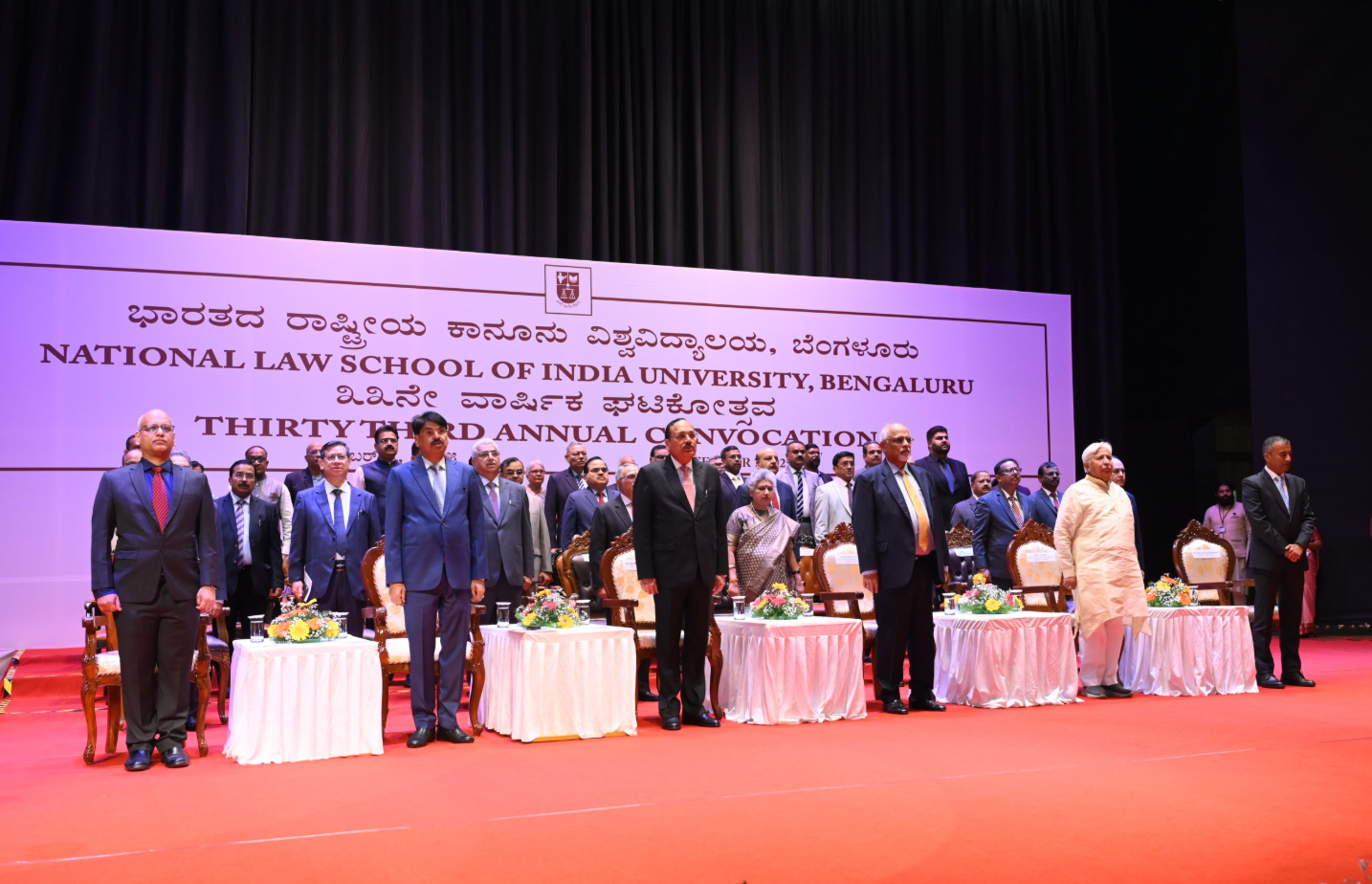
The Student Bar Council (SBC) of NALSAR University of Law has extended its support to the graduating Batch of 2026 at the National Law School of India University (NLSIU), Bengaluru, following the cancellation of the university's convocation amid controversy surrounding the participation of Chief Justice of India (CJI) Surya Kant.
In a statement issued in solidarity with NLSIU students, the NALSAR SBC expressed concern over reports that graduating students were allegedly asked to issue a public letter "re-inviting" the CJI to the convocation after earlier objections had been raised regarding his attendance.
The Council stated that students had already agreed to the CJI's participation in view of his statutory position as Chancellor of NLSIU. However, it argued that any subsequent requirement compelling students to publicly reaffirm the invitation would be problematic and deserving of criticism.
According to the statement, information available to the Council suggested that the NLSIU administration itself did not request such a public letter. The Council noted that the precise sequence of events could only be clarified by the direct stakeholders involved.
The SBC further observed that if the demand originated from the office of the Chief Justice of India, it would be "incredibly unfortunate" because it would prioritize institutional image over the interests of graduating students. The Council praised the students for maintaining their earlier position of dissent despite the consequences.
The controversy emerged after students and alumni of NLSIU raised objections to the proposed participation of CJI Surya Kant and Bar Council of India Chairman Manan Kumar Mishra in the university's convocation ceremony. Following the dispute, NLSIU announced the cancellation of its 2026 convocation, citing unavoidable circumstances, with degrees to be awarded separately.
The NALSAR SBC also highlighted the broader implications of the episode, arguing that compelling students to choose between attending a once-in-a-lifetime academic milestone and maintaining their dissent could discourage future acts of democratic expression within legal academia.
The development marks another chapter in an ongoing debate within India's legal education community concerning student activism, institutional autonomy, academic freedom, and engagement with constitutional officeholders.