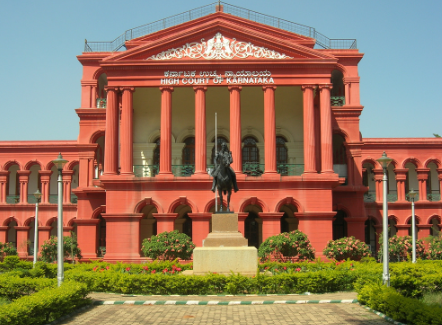
Karnataka Explores Supreme Court Challenge After High Court Strikes Down SC/ST Quota Hike
The Karnataka government is considering legal options, including approaching the Supreme Court, after the Karnataka High Court struck down provisions of a 2022 state law that increased reservation for Scheduled Castes (SCs) and Scheduled Tribes (STs) in educational institutions and state government employment.
On October 12, 2026, a Division Bench comprising Chief Justice Vibhu Bakhru and Justice K.S. Hemalekha held that Sections 3 and 4 of the Karnataka Scheduled Castes and Scheduled Tribes (Reservation of Seats in Educational Institutions and of Appointments or Posts in the Services under the State) Act, 2022, were unconstitutional to the extent challenged.
The legislation raised the SC reservation quota from 15% to 17% and the ST quota from 3% to 7%, while retaining the 32% quota for Other Backward Classes (OBCs). The combined reservation consequently increased from 50% to 56%.
High Court Relies on the 50% Reservation Ceiling
The High Court held that the 50% reservation ceiling, established by the Supreme Court in Indra Sawhney v. Union of India (1992), is a binding constitutional principle rather than a flexible guideline. Although exceptional circumstances may justify a departure, the Bench found that population proportions and the State's assessment of inadequate representation did not, by themselves, establish such circumstances.
The Court held that Section 3 violated Articles 14 and 15 of the Constitution by taking the aggregate reservation beyond the 50% ceiling. Section 4, concerning reservations in state government appointments and posts, was also struck down as unconstitutional for violating Articles 14 and 16.
Consultation with Constitutional Commissions
The Bench also addressed the requirement to consult the National Commission for Scheduled Castes and the National Commission for Scheduled Tribes under Articles 338(9) and 338A(9) of the Constitution. It observed that consultation on a major policy decision affecting these communities must be meaningful and precede the decision. Communications sent after enactment could not substitute for prior consultation.
Government Considers Further Legal Action
Following the judgment, Karnataka Deputy Chief Minister G. Parameshwara said the government would examine the ruling and consider available legal options. The government has also raised concerns about the implications for appointments already made under the enhanced reservation framework.
The issue has generated political debate over affirmative action, representation of historically disadvantaged communities and the constitutional limits on reservation. The State's position is that the enhanced quotas were intended to address representation concerns; the High Court found that the justification presented did not establish extraordinary circumstances permitting the overall ceiling to be exceeded.
The judgment does not mean that all reservation measures in Karnataka have been invalidated. The challenged provisions concerned the enhancement of SC and ST quotas that raised the aggregate reservation beyond 50%. Any further challenge before the Supreme Court and its outcome will determine the next stage of the dispute.
Source: South First, The News Minute and LiveLaw reports published on October 13, 2026.