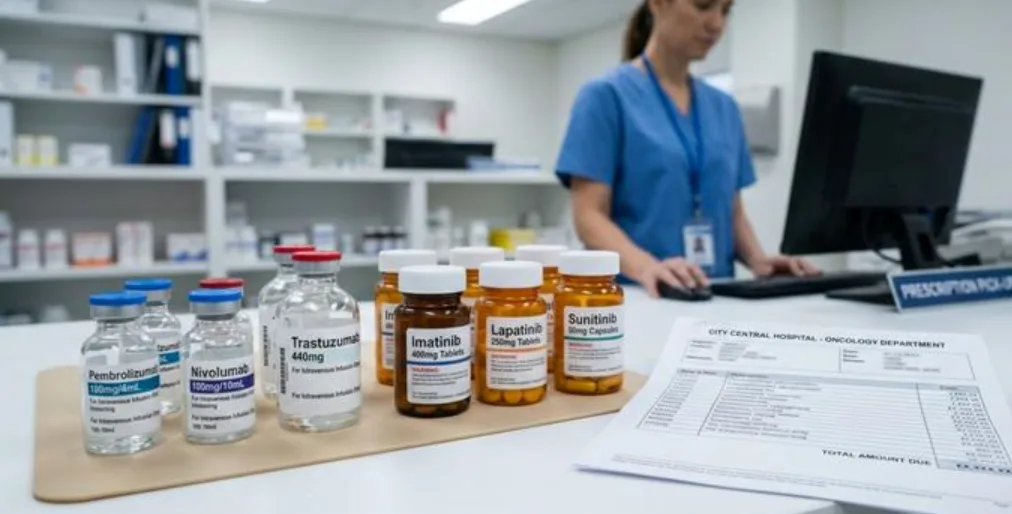
New Delhi, 23 October 2026: The Union Government has capped trade margins at 30% for 137 non-scheduled anti-cancer medicines, in a move aimed at reducing excessive mark-ups and improving access to cancer treatment. The revised prices will take effect from 9 November 2026.
Supreme Court Scrutiny of Drug Pricing
The regulatory intervention follows scrutiny by the Supreme Court of India into substantial differences between the prices at which medicines are supplied to retailers and the maximum retail prices (MRPs) charged to consumers. During hearings concerning medicine-price regulation, the Court expressed concern over instances where an anti-cancer drug supplied to a retailer for ₹2,700 carried an MRP of ₹27,000.
The proceedings highlighted concerns about the affordability of life-saving medicines and the adequacy of existing regulatory mechanisms, particularly for medicines not covered by conventional ceiling-price controls.
Government Caps Trade Margins
The National Pharmaceutical Pricing Authority (NPPA), under the Department of Pharmaceuticals, Ministry of Chemicals and Fertilizers, introduced the measure under Paragraph 19 of the Drugs (Prices Control) Order, 2013. The decision covers 137 identified non-scheduled anti-cancer medicines recommended by an expert committee under the Directorate General of Health Services.
The list includes medicines used in immunotherapy and treatments for several cancers. Examples include pembrolizumab, durvalumab, osimertinib, bevacizumab and denosumab. The expected reduction in MRP varies according to the existing price structure of each medicine and may reach 70%.
Compliance Requirements
Manufacturers must submit revised price information to the NPPA within seven days of publication of the Gazette notification. Retailers, hospitals and medical institutions must charge the revised prices from 9 November 2026 and display updated price lists. Hospitals are also required to display the revised prices on their websites.
State Drug Controllers will oversee compliance by manufacturers, distributors, retailers and medical institutions. Pharmaceutical companies must maintain existing production and supply levels to help prevent shortages of the affected medicines.
Legal Framework and Wider Implications
Paragraph 19 of the Drugs (Prices Control) Order, 2013 empowers the NPPA to fix or revise the prices of drugs in extraordinary circumstances and in the public interest. The measure builds on the 2019 trade-margin rationalisation exercise, which covered 42 anti-cancer medicines and led to price reductions across hundreds of brands.
The latest intervention underscores the relationship between judicial scrutiny, executive regulation and the public interest in access to essential healthcare. However, the actual savings for patients will depend on the individual medicine, its existing price and the implementation of the revised pricing requirements.
Source: Press Information Bureau, Ministry of Chemicals and Fertilizers, Government of India; National Pharmaceutical Pricing Authority.