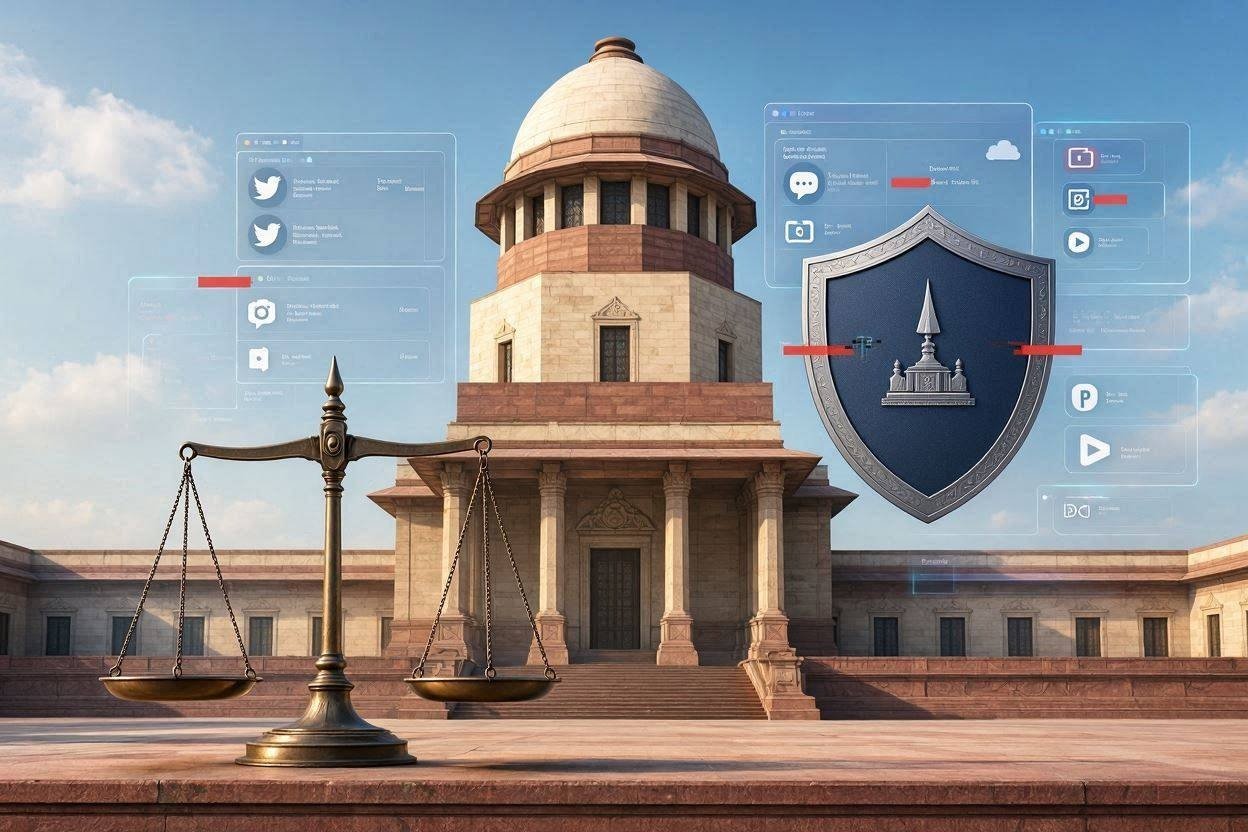
New Delhi, July 24, 2026: The Supreme Court of India has issued an interim order restricting the unauthorized sharing of audio and video recordings of court proceedings across social media and digital platforms.
The order prohibits the extraction, editing, dissemination, uploading, reposting, transmission, storage, hosting, and monetisation of recordings of judicial proceedings without prior approval from the competent judicial authority. The directive applies to proceedings of both the Supreme Court and High Courts.
According to the Court, any person or platform seeking to share recordings of court proceedings must obtain prior permission from the Secretary General of the Supreme Court or the Registrar General of the concerned High Court, as applicable.
The decision comes amid growing concerns regarding the circulation of selectively edited clips of court hearings on social media platforms. The Court observed that unauthorized dissemination can distort judicial proceedings, misrepresent judicial observations, and undermine public confidence in the administration of justice.
The interim order forms part of the judiciary's broader efforts to regulate the use of digital recordings generated through live-streaming and virtual hearing mechanisms introduced in recent years. The Supreme Court has previously examined concerns relating to unauthorized recording, artificial intelligence-based manipulation, and misuse of courtroom content online.
Importantly, the Court clarified that the order does not restrict bona fide news reporting of court proceedings. Journalists and media organizations may continue reporting on hearings and judicial developments in accordance with applicable laws and ethical standards.
Legal observers note that the ruling seeks to strike a balance between transparency in judicial functioning and the need to preserve the integrity, dignity, and accuracy of court proceedings. The order is expected to have significant implications for content creators, legal commentators, social media platforms, and digital publishers who regularly share clips from courtroom proceedings.
The matter remains under consideration, and further guidelines on the management, circulation, and use of court hearing recordings may be issued by the judiciary in the future.