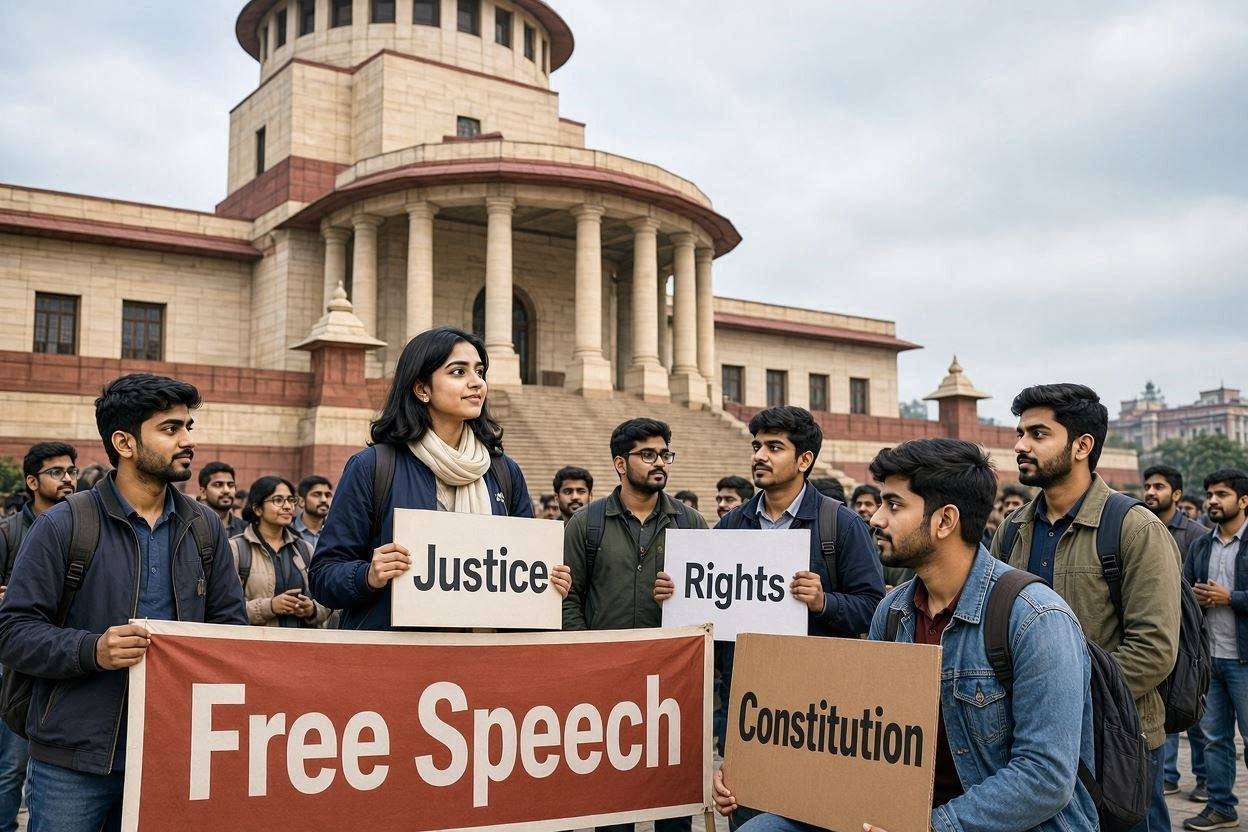
Supreme Court Protects Student Protesters, Orders No Coercive Action
The Supreme Court of India has granted interim protection to student protesters involved in nationwide demonstrations over alleged examination paper leaks and systemic irregularities, directing authorities not to take any coercive action against them pending further proceedings.
A Bench led by Chief Justice of India Surya Kant, along with Justices Joymalya Bagchi and V. Mohana, was hearing a batch of petitions alleging police brutality against student protesters as well as petitions concerning violence against police personnel and journalists during the protests.
Recognising the seriousness of the allegations, the Court directed all concerned authorities to ensure that no coercive measures are taken against protesting students who do not possess criminal antecedents. At the same time, the Court clarified that ongoing investigations in registered FIRs may continue in accordance with law.
The Bench further ordered the immediate release of students below 18 years of age who were arrested or detained during the protests, provided they do not have any criminal background.
To preserve evidence and ensure accountability, the Court directed authorities to maintain and safeguard all relevant materials, including CCTV footage, drone recordings, body-camera footage, wireless communications, and PCR logs connected to the incidents.
In a significant move aimed at protecting privacy rights, the Court also ordered that personal information and digital data relating to protesters must be preserved and should not be placed in the public domain. Authorities were instructed to ensure that such data remains protected pending further orders.
During the hearing, the Bench observed that merely because an agitation is taking place, the use of force such as lathi charges cannot automatically be justified. The Court expressed concern over allegations of excessive force and indicated that an independent investigation mechanism, potentially led by a retired Supreme Court judge, may be considered to examine the incidents.
Notices have been issued to the Union Government and several State Governments. The matter is expected to be taken up for further consideration after responses are filed.
The order underscores the Supreme Court's commitment to balancing public order concerns with constitutional protections relating to peaceful protest, personal liberty, due process, and privacy.