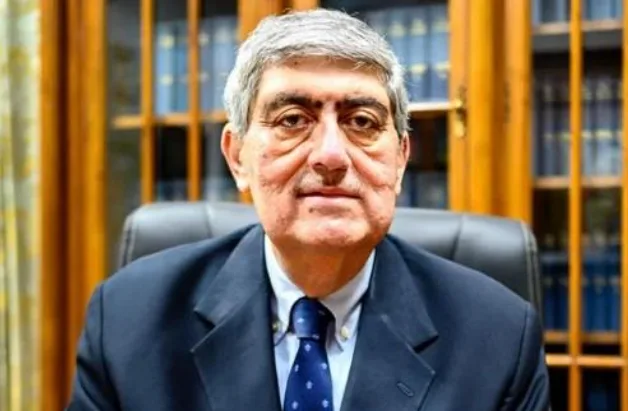
Justice Sanjay Kishan Kaul Says CJI Chandrachud Asked Him to Take ‘Middle Path’ in PMLA Case
New Delhi, 25 October 2026: Former Supreme Court judge Justice Sanjay Kishan Kaul has recounted that former Chief Justice of India (CJI) D.Y. Chandrachud advised him to exercise caution and take a “middle path” while hearing petitions seeking reconsideration of the Supreme Court's judgment upholding key provisions of the Prevention of Money Laundering Act, 2002 (PMLA). Justice Kaul also raised concerns about the removal of a judicial appointments matter from his bench during proceedings concerning delays in judicial appointments.
Disagreement Over the PMLA Review Petitions
In an interview with journalist Karan Thapar of The Wire, discussing his memoir Without Fear or Favour, Justice Kaul described an interaction with the then CJI Chandrachud when a three-judge bench headed by him was scheduled to hear petitions seeking reconsideration of the Supreme Court's 2022 decision in Vijay Madanlal Choudhary v. Union of India.
According to Justice Kaul's account, Justice Chandrachud called him to his chambers and suggested that he proceed cautiously if he intended to hear the matter. Justice Sanjiv Khanna was reportedly present during the conversation.
Justice Kaul said he chose to proceed with the hearing because he believed that withdrawing from the matter would raise questions about his judicial integrity. He maintained that he had consistently proceeded with cases whenever he considered it appropriate to do so.
Background of the PMLA Case
In 2022, the Supreme Court in Vijay Madanlal Choudhary v. Union of India upheld several important provisions of the PMLA. These included provisions concerning the Enforcement Directorate's powers of arrest, search and seizure, and the stringent twin conditions governing bail under Section 45 of the Act.
The subsequent petitions sought reconsideration of aspects of that judgment. Justice Kaul said that repeated requests for adjournments meant the matter remained pending as his retirement approached. The bench was eventually dissolved shortly before his retirement in December 2023.
Questions Over the Transfer of a Judicial Appointments Matter
Justice Kaul also spoke about a separate matter concerning delays in judicial appointments that had been heard by a bench comprising him and Justice Sudhanshu Dhulia. The proceedings concerned delays by the Union Government in acting on recommendations made through the Supreme Court Collegium.
According to Justice Kaul, the matter was removed from his bench while the bench was seeking to press for action on pending recommendations. He said he was subsequently informed that a procedural issue concerning the assignment of the matter had been recorded on the file.
Justice Kaul expressed dissatisfaction with the manner in which the matter was withdrawn. He said he had conveyed his concerns to the then CJI and considered the episode unusual. However, when asked whether the government had pressured the CJI to remove the case from his bench, Justice Kaul said that he could not say so definitively.
Judicial Independence and the Collegium System
The revelations have renewed discussion about judicial independence, the administrative powers of the Chief Justice of India and the process through which cases are allocated to benches of the Supreme Court.
The collegium system governs recommendations for the appointment and elevation of judges to the higher judiciary. The relationship between the judiciary and the executive in processing those recommendations has long been a subject of constitutional debate.
Justice Kaul has also expressed reservations about discussing proposed judicial appointments with the government before formal deliberations by the Collegium. He has distinguished such preliminary discussions from consultation after the Collegium has considered candidates.
Conclusion
Justice Kaul's account raises important questions about judicial administration, case allocation and the safeguards necessary to preserve public confidence in the independence of the judiciary. His statements form part of his personal account of events during his tenure and should be distinguished from any judicial finding that independently establishes the allegations.
Source: LiveLaw, report by Gursimran Kaur Bakshi, published on 25 October 2026, drawing on Justice Kaul's interview with Karan Thapar of The Wire.