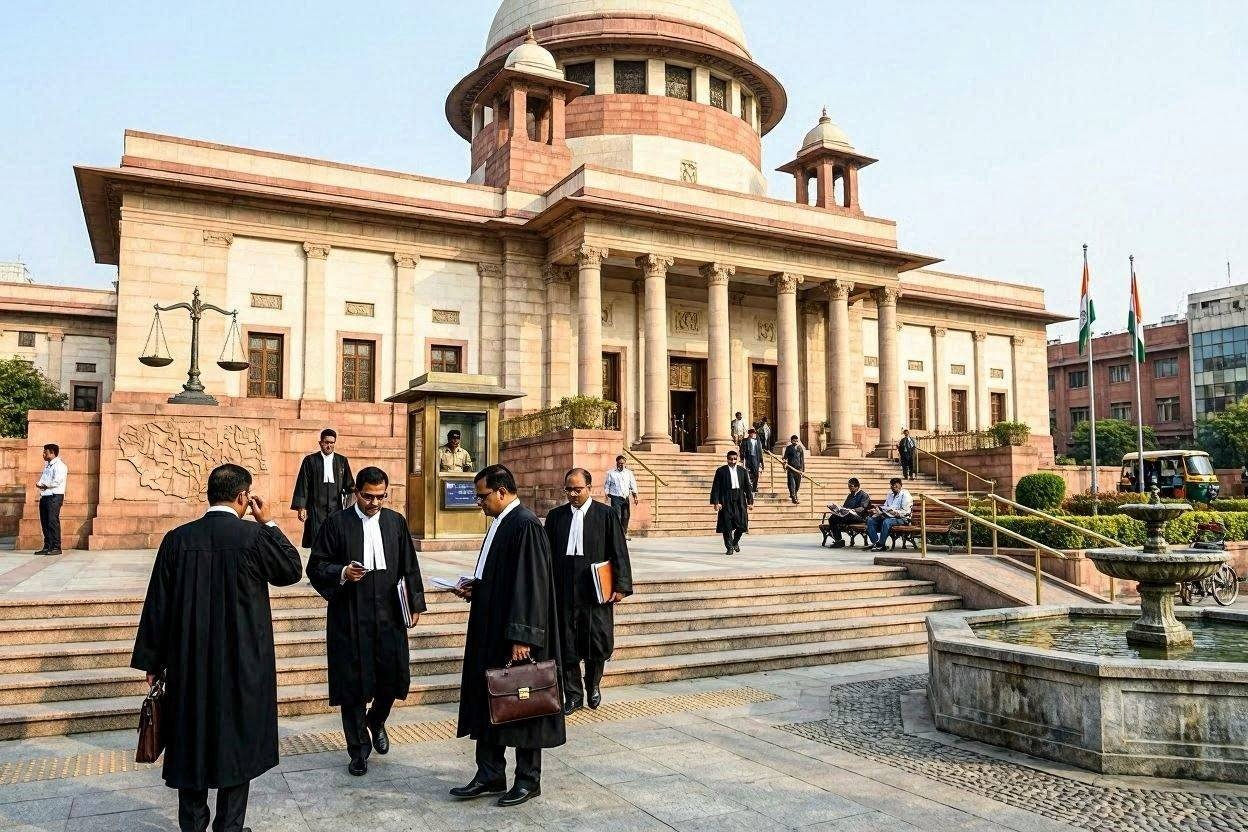
Supreme Court Orders Nationwide Court Washroom Audit
In a significant step towards improving judicial infrastructure and ensuring dignified access to justice, the Supreme Court of India has directed a nationwide audit of washroom facilities across High Courts, district courts, and taluka courts.
The direction was issued by a Bench comprising Chief Justice of India Surya Kant, Justice Joymalya Bagchi, and Justice V. Mohana while hearing a petition highlighting the inadequate sanitation facilities available in courts, particularly for women advocates and litigants. The petition raised concerns regarding the absence of separate washrooms, ladies' bar rooms, and other essential amenities in several court complexes across the country. [1]
The Court observed that access to clean and functional washroom facilities is not merely an administrative concern but a matter of human dignity and constitutional rights. Stressing that basic sanitation infrastructure is indispensable in judicial institutions, the Bench noted that governments cannot avoid their obligations by citing financial constraints. [1]
To address the issue systematically, the Supreme Court directed all States and Union Territories to undertake a comprehensive, time-bound fact-finding exercise regarding the availability and condition of washrooms in courts under their jurisdiction. The audit is expected to identify deficiencies and facilitate the implementation of corrective measures.
During the proceedings, the Bench remarked that if additional resources were required, governments could explore alternative revenue-generation measures rather than neglecting fundamental infrastructure needs. The Court underscored that ensuring dignified conditions in courts is essential for advocates, litigants, judicial officers, and court staff alike. [1]
The order is expected to trigger nationwide reforms in court infrastructure and may pave the way for improved accessibility, hygiene, and working conditions within the judicial system. Legal observers have described the decision as an important recognition of the connection between access to justice and the availability of basic civic amenities.
The matter remains under the Court's consideration as authorities begin the process of assessing and upgrading sanitation facilities across court complexes nationwide.
Reference: Sarika Tyagi v. Union of India.