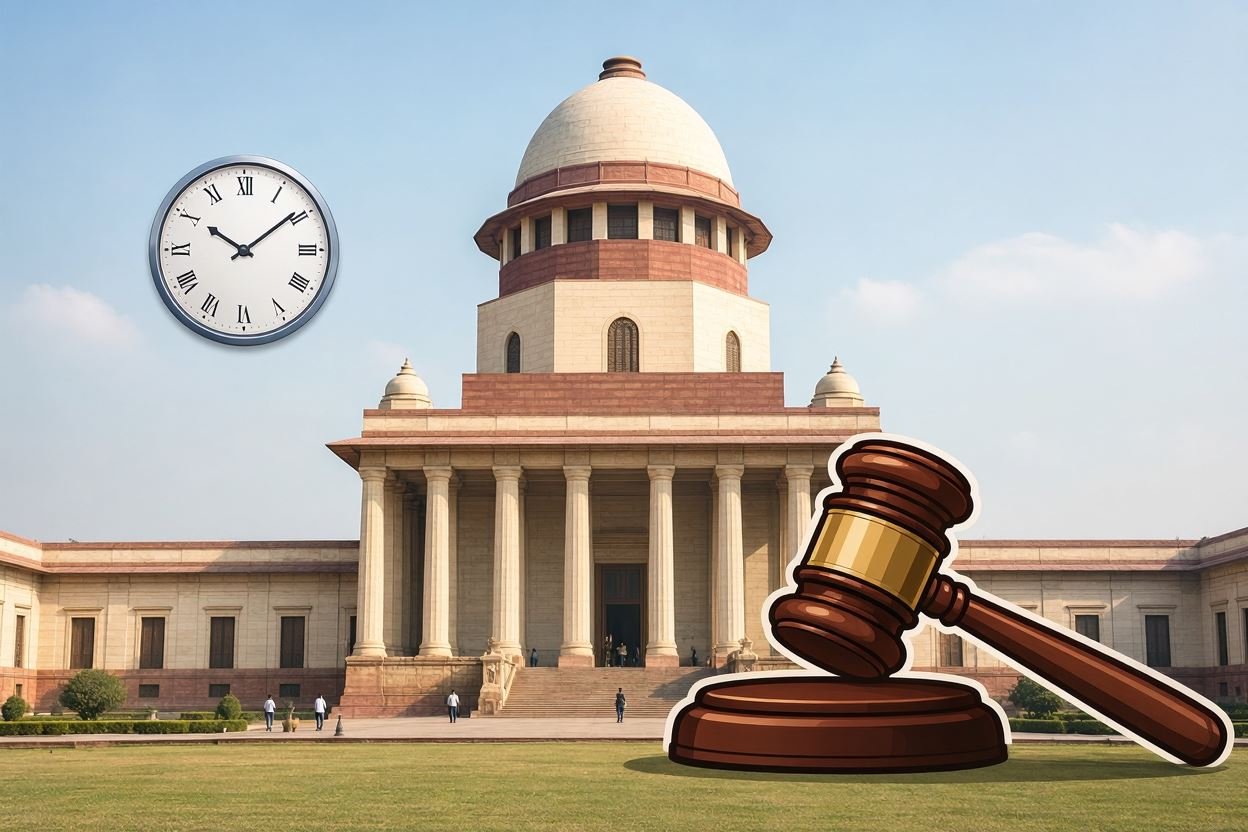
Supreme Court Directs High Courts to Deliver Reserved Judgments Within Three Months
In a landmark move aimed at improving judicial efficiency and strengthening public confidence in the justice delivery system, the Supreme Court of India has directed all High Courts to ordinarily pronounce reserved judgments within three months from the date they are reserved.
The ruling was delivered by a Bench led by Chief Justice of India Surya Kant and Justice Joymalya Bagchi while addressing a series of petitions concerning prolonged delays in the pronouncement of judgments by various High Courts. The Court observed that such delays can cause significant prejudice to litigants and undermine the constitutional promise of timely justice.
Invoking its powers under Article 142 of the Constitution, the Supreme Court issued a comprehensive framework governing the pronouncement of reserved judgments, uploading of judgments, accountability mechanisms, and remedies available to litigants affected by delays.
Key Directions Issued by the Supreme Court
- High Courts should endeavor to pronounce reasoned judgments within three months of reserving them.
- Cases involving personal liberty, including bail applications, criminal appeals where the accused is in custody, and death references, must receive heightened priority.
- Where urgent relief is necessary, courts may pronounce the operative portion of the order first and upload the detailed judgment within a stipulated period.
- Reasoned judgments pronounced in open court should ordinarily be uploaded within 24 hours.
Accountability and Monitoring Mechanism
To ensure compliance, the Supreme Court directed High Courts to introduce administrative monitoring measures. Registrars General must periodically track reserved matters and place delayed cases before the Chief Justice of the concerned High Court.
If a judgment remains undelivered beyond three months, the matter must be brought to the attention of the Chief Justice. If the delay persists even after an additional period, the Chief Justice may consider assigning the matter to another Bench for fresh hearing.
Remedies for Litigants
The Court also recognized the rights of litigants affected by delayed judgments. Parties may seek early pronouncement if the prescribed timelines are exceeded. In certain situations, litigants may request reassignment of the matter to another Bench where prolonged delays continue.
Article 21 and Timely Justice
The Supreme Court underscored that the constitutional guarantee of life and personal liberty under Article 21 extends throughout the judicial process. Delay in pronouncing reserved judgments, particularly in criminal matters, can adversely affect individuals awaiting decisions that directly impact their liberty and legal rights.
The judgment seeks to address the long-criticized “reserve and forget” phenomenon, where matters remain undecided for extended periods after hearings conclude. By establishing uniform timelines and accountability measures, the Court aims to promote transparency, efficiency, and greater public trust in the judiciary.
The ruling is expected to have a far-reaching impact on judicial administration across India and may serve as a significant step toward reducing procedural delays in High Courts.