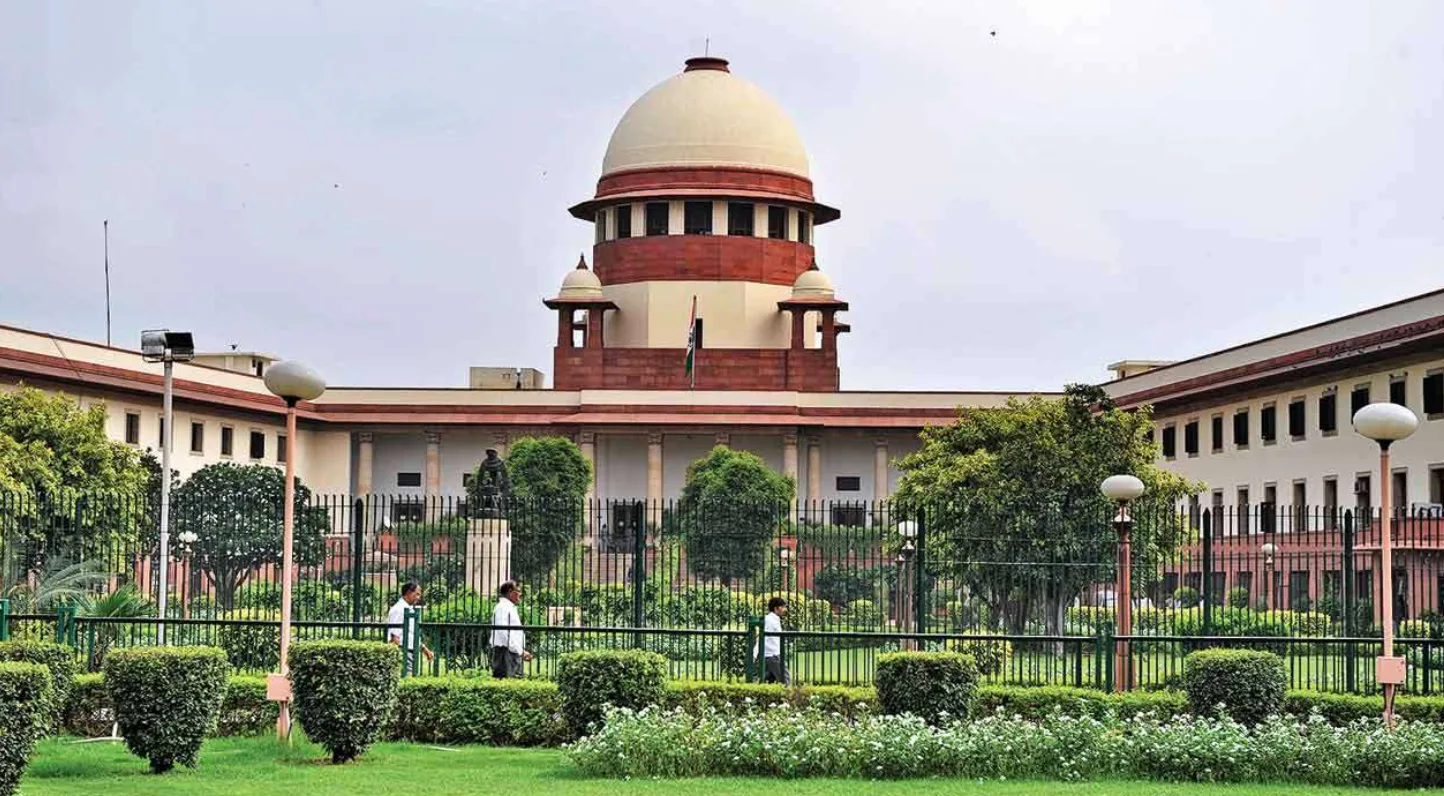
Supreme Court Reaffirms Limits on Legislative Power to Override Judicial Decisions
The Supreme Court of India has reiterated that the legislature cannot nullify binding judicial decisions by simply reenacting provisions that have previously been declared unconstitutional without curing the defects identified by the Court. The ruling reinforces the constitutional principles of separation of powers, judicial independence and the supremacy of the Constitution.
The observations came in Madras Bar Association v. Union of India & Anr. (2025 INSC 1330), decided on November 19, 2025, while examining the constitutional validity of the Tribunal Reforms Act, 2021.
Background of the Case
The Madras Bar Association challenged various provisions of the Tribunal Reforms Act, 2021, which dealt with the qualifications, appointment procedures, tenure, salaries and service conditions of tribunal chairpersons and members.
The challenge arose against the background of earlier Supreme Court decisions that had invalidated similar provisions concerning tribunal appointments and service conditions. Despite those judicial pronouncements, the legislature introduced substantially similar provisions through the 2021 Act.
The petitioners contended that the legislation effectively attempted to circumvent binding judicial directions and undermined the independence of tribunals.
Supreme Court's Observations
The Court examined whether Parliament could disregard earlier judicial pronouncements and reenact provisions that had already been found constitutionally defective.
It clarified that although Parliament has the power to legislate prospectively and retrospectively within its constitutional competence, it cannot simply reproduce invalidated provisions or declare judicial decisions ineffective through a statutory provision.
The Court explained that a legislature may remove the foundation of a judicial decision by genuinely curing the constitutional defect identified in the earlier law. However, merely changing the form of legislation without addressing the underlying infirmity would amount to an impermissible legislative override.
Referring to NHPC Ltd. v. State of Himachal Pradesh, the Court reiterated that validating legislation must remove the basis of the earlier judgment. A retrospective amendment must also be reasonable, non-arbitrary and consistent with constitutional limitations.
Tribunal Reforms Act, 2021 Declared Unconstitutional
Upon examining the provisions of the Tribunal Reforms Act, 2021, the Court found that several provisions substantially reproduced measures that had already been judicially invalidated.
The Court held that merely transferring substantially similar provisions into a separate statute, while retaining language intended to override previous judicial decisions, did not cure the constitutional defects.
Accordingly, the impugned provisions were struck down for violating the principles of separation of powers and judicial independence.
Directions Issued by the Court
The Supreme Court directed the Union Government to establish a National Tribunals Commission within four months from the date of the judgment. The proposed commission must operate in accordance with principles ensuring independence, transparency and uniformity in the appointment and administration of tribunals.
The Court also clarified protections concerning the service conditions of certain tribunal members appointed under the earlier framework.
Legal Significance
The decision reinforces the constitutional distinction between legitimate legislative correction and impermissible legislative interference with judicial decisions.
It establishes that retrospective legislation is not automatically unconstitutional. However, such legislation must genuinely remove the defect identified by the Court rather than merely attempt to defeat an unfavourable judicial pronouncement.
The judgment is significant for constitutional law, tribunal administration and the doctrine of separation of powers. It also reiterates that judicial review remains an essential safeguard against unconstitutional legislative action.
Source: Supreme Court of India, Madras Bar Association v. Union of India & Anr., 2025 INSC 1330, decided on November 19, 2025.