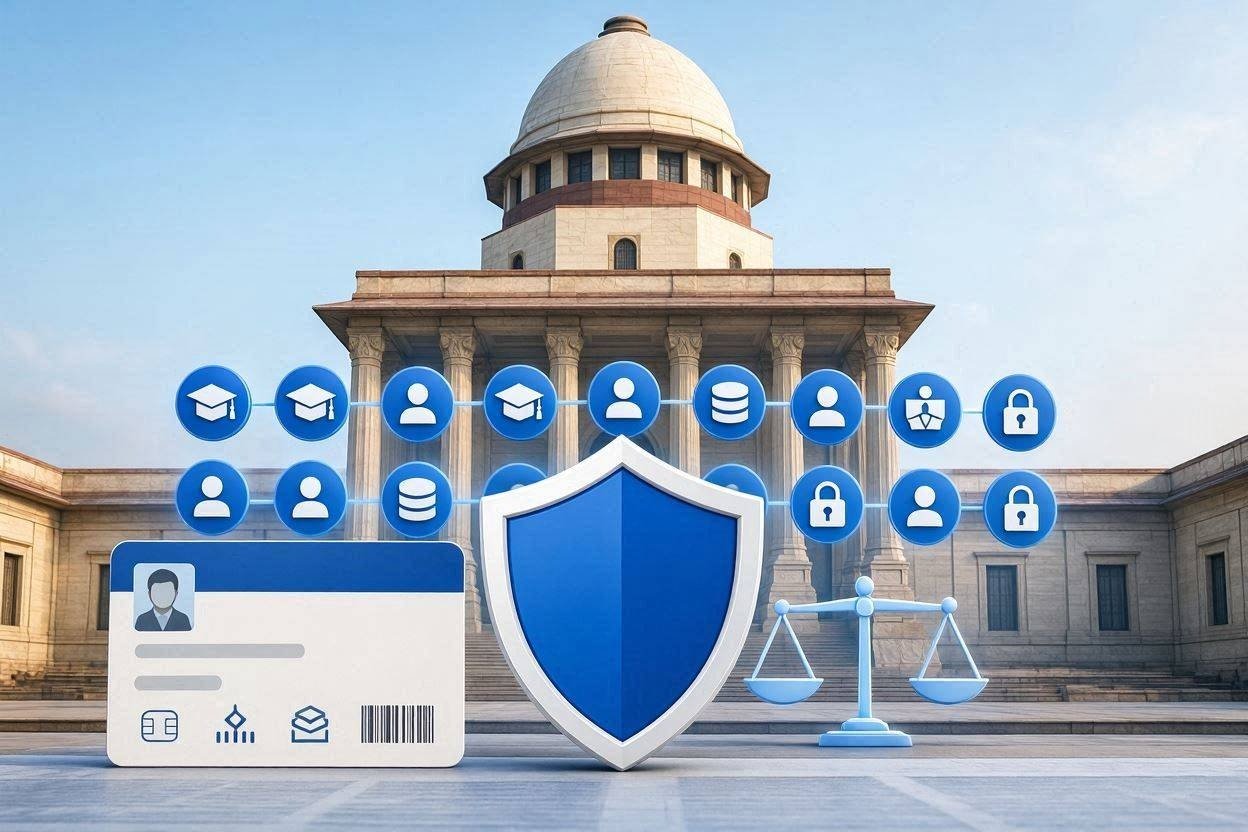
The Supreme Court of India has directed the Central Government and the Central Board of Secondary Education (CBSE) to amend the consent form used for generating APAAR (Automated Permanent Academic Account Registry) IDs, ensuring that parents are explicitly given the option to refuse consent or opt out of the scheme.
The direction came while the Court was hearing petitions challenging aspects of the Aadhaar-linked APAAR initiative. Petitioners raised concerns regarding privacy, informed consent, and the collection and processing of children's personal data. The Court noted that if participation in the APAAR system is voluntary, the consent form must clearly reflect that position.
The Supreme Court endorsed the principles laid down by the Orissa High Court, which had previously held that parents must be provided with a genuine choice regarding enrolment in the APAAR system. The High Court had observed that a consent mechanism that only permits approval without an option to decline undermines the concept of informed consent.
During the proceedings, the Court indicated that it would require CBSE to implement these safeguards nationwide. The revised consent form is expected to include explicit "refuse consent" and "opt-out" provisions, enabling parents to make informed decisions about their children's participation in the programme.
The Court also addressed concerns relating to the storage, processing, and sharing of student information. It emphasized that educational authorities must ensure compliance with the Digital Personal Data Protection Act, 2023, and adopt adequate safeguards to protect children's personal data.
APAAR is a digital academic identity initiative designed to create a lifelong educational record for students. While authorities argue that the scheme will simplify academic record management and student mobility, critics have raised concerns regarding Aadhaar linkage, data security, consent mechanisms, and the rights of minors.
The Supreme Court's intervention reinforces the importance of informed consent, privacy protections, and responsible handling of children's data in large-scale digital governance initiatives. The ruling is expected to influence future implementation of educational technology programmes involving personal data collection across India.