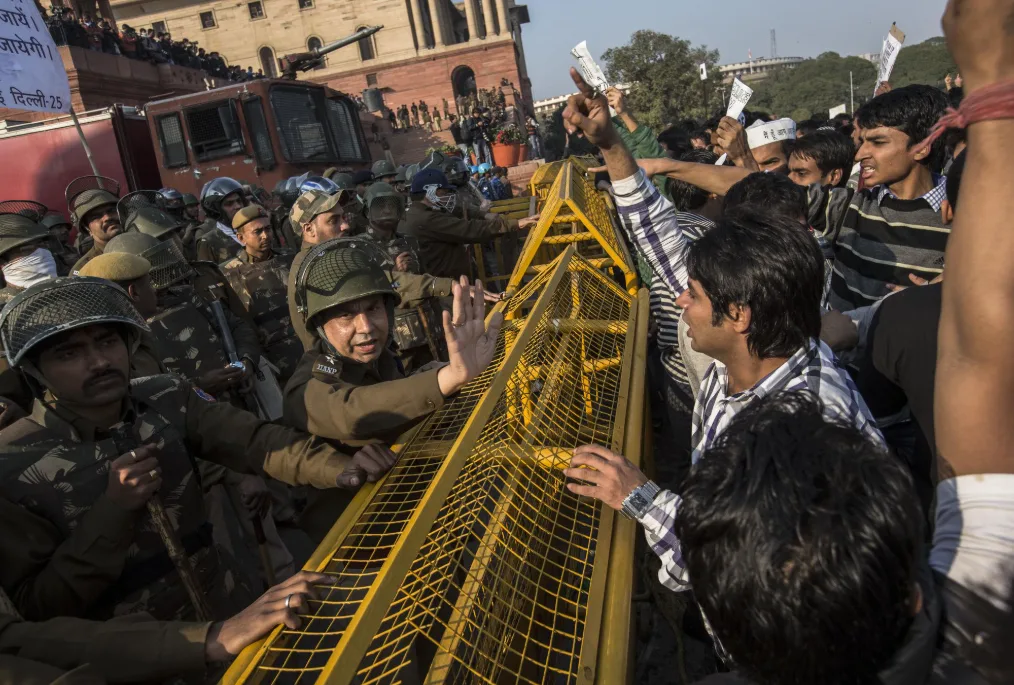
New Delhi, November 3, 2026: The Supreme Court of India has emphasised that no individual or organisation can claim an indefinite right to occupy a designated protest site, observing that every section of society must have an equal opportunity to exercise its constitutional right to peaceful assembly.
A three-judge Bench comprising Chief Justice of India Surya Kant, Justice Joymalya Bagchi and Justice V. Mohana made these observations while hearing a batch of petitions arising from demonstrations in Delhi against Chief Election Commissioner Gyanesh Kumar. The proceedings involve allegations of police excesses, mass detentions, restrictions on public movement and disputes concerning the designation of protest sites.
Supreme Court Emphasises Equal Right to Protest
During the hearing, the Bench observed that a designated protest site cannot remain occupied by one organisation indefinitely, as other groups, including farmers, workers, journalists and trade unions, must also have the opportunity to demonstrate.
The Court indicated that protest permissions should specify the duration for which a designated site may be occupied. It stressed that the constitutional right to protest must be exercised in a manner that does not prevent others from exercising the same right.
Balancing the Right to Protest with the Right to Livelihood
The proceedings also involved a petition filed by the Kirana Committee Delhi and other traders' associations, which alleged that prolonged demonstrations had adversely affected commercial activities and caused substantial financial losses.
Representing the traders, Senior Advocate Mukul Rohatgi highlighted the difficulties faced by businesses, small traders and daily-wage workers. He sought restrictions on protests and demonstrations in Delhi during the festive period.
However, the Bench emphasised that the dispute involved competing constitutional interests, particularly the right to peaceful protest and the right to carry on trade, business and earn a livelihood. The Court asked the traders' associations to implead the protest organisers and submit an assessment of their alleged financial losses.
Petitions Alleging Police Excesses and Unlawful Detentions
Several connected petitions before the Supreme Court raise allegations of excessive police force, unlawful detention of protesters, custodial assault, barricading and restrictions on internet access and public movement.
Lawyers' associations and journalists' organisations have also raised concerns regarding the alleged detention and manhandling of advocates and media personnel during the demonstrations. Some petitioners have sought accountability, independent investigation and appropriate safeguards against arbitrary police action.
Facial Recognition Technology and Protest Surveillance
The Court also issued notice on a petition questioning the legal framework governing the use of facial recognition technology to identify protesters and the collection and security of their personal data. The proceedings raise important questions concerning the right to privacy and the limits of surveillance by law enforcement authorities.
Further Proceedings
Considering the wide range of legal issues involved, the Supreme Court decided to divide the connected petitions into nine categories for separate hearings. The Bench also sought proposed schedules and time estimates from the lawyers appearing in the matters to facilitate an organised hearing.
Legal Significance: The proceedings bring into focus the constitutional balance between peaceful assembly under Article 19(1)(b), freedom of expression under Article 19(1)(a), and the right to practise any profession or carry on trade and business under Article 19(1)(g). They also raise questions concerning the legality of police action, procedural safeguards against unlawful detention and privacy implications of surveillance technologies.
The Supreme Court's observations are part of ongoing proceedings and should not be treated as a final adjudication of the allegations of police excesses or the competing claims of the parties.