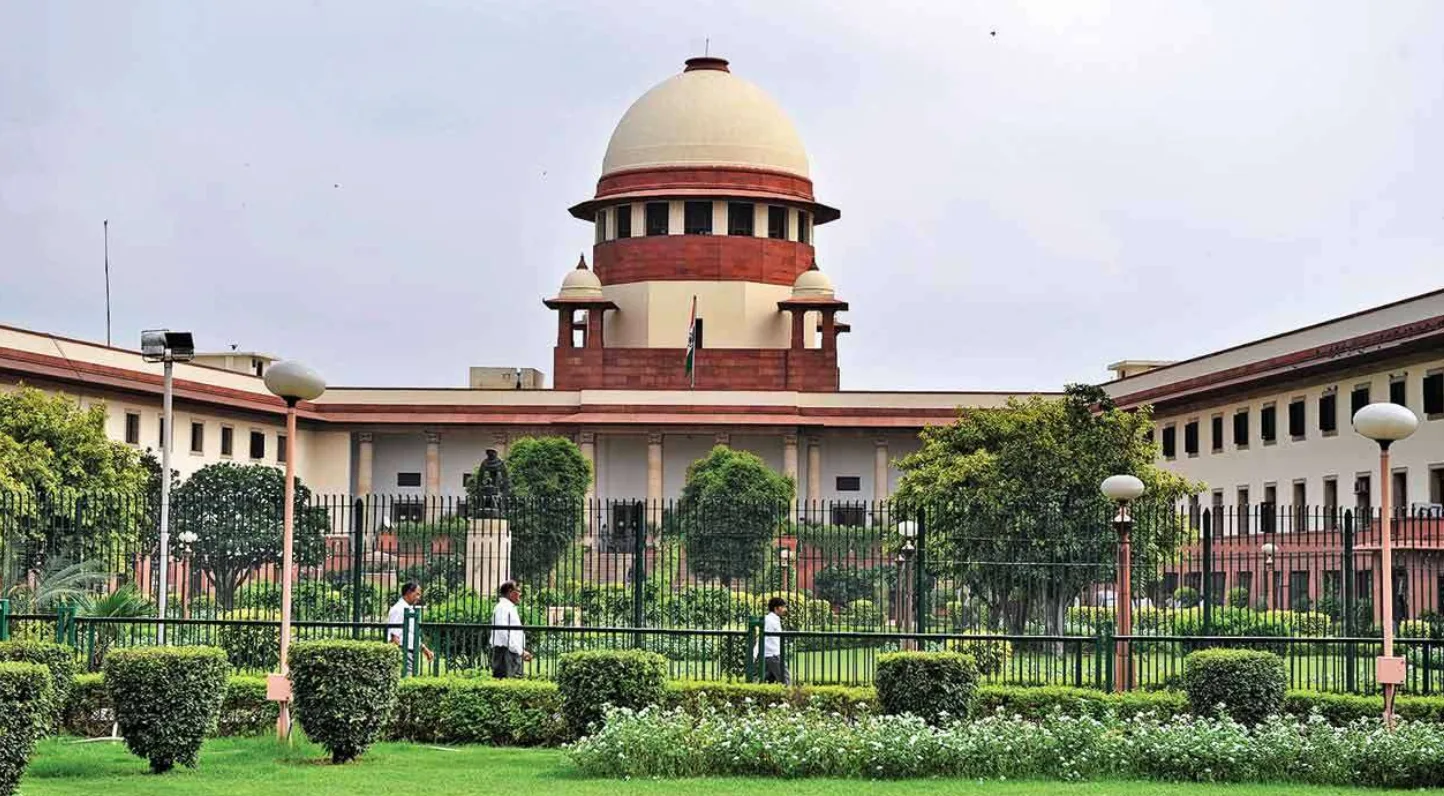
The Supreme Court of India has quashed criminal proceedings against a husband accused of dowry death and cruelty, observing that calling his wife “stupid” and “useless”, even if accepted as true, cannot by itself constitute an offence of criminal cruelty or intimidation.
A Bench comprising Justice B.V. Nagarathna and Justice Manmohan delivered the judgment on November 2, 2026, in Piyush S/o Deepak Narlawar v. State of Maharashtra and Others (2026 INSC 1183). The Court set aside the Bombay High Court's order refusing to quash the criminal proceedings against the husband.
Background of the Case
The couple married on January 3, 2021, and subsequently moved to Toronto, Canada, in February 2022. On June 11, 2023, the wife died after falling from the 22nd floor of their residential apartment building.
Following her death, her father lodged FIR No. 212/2023 on June 30, 2023, alleging that the husband and his family members had subjected her to physical and mental harassment over dowry demands. The complaint alleged demands for 15 tolas of gold before marriage, a gold ring and bracelet during Diwali, and three additional tolas of gold in 2022. It also alleged that the husband called his wife “stupid” and “useless” and had slapped her once.
The FIR invoked Sections 304B (dowry death), 323 (voluntarily causing hurt), 498A (cruelty by husband or relatives) and 504 (intentional insult) read with Section 34 of the Indian Penal Code, along with Sections 3 and 4 of the Dowry Prohibition Act, 1961.
A handwritten note recovered from the apartment referred to the deceased's difficulties in finding employment and her feelings of failure. Canadian investigative authorities found no signs of struggle or foul play. The Toronto Police subsequently closed their investigation in January 2024.
Proceedings Before the High Court
The husband, along with his parents and sister, approached the Bombay High Court seeking quashing of the FIR under Section 482 of the Code of Criminal Procedure, 1973.
The High Court quashed the proceedings against the husband's parents and sister but refused to grant similar relief to him. Subsequently, a chargesheet was filed and non-bailable warrants were issued against the husband.
Aggrieved by the High Court's decision, the husband approached the Supreme Court.
Supreme Court's Observations on Verbal Abuse
While examining the allegations of verbal abuse, the Supreme Court observed that calling the deceased “stupid” and “useless”, even if accepted prima facie, could not independently qualify as an offence of cruelty or criminal intimidation.
“The allegation that the appellant used to call the deceased ‘stupid’ and ‘useless’, even if accepted prima facie, cannot to any extent qualify as an offence of cruelty or criminal intimidation. At best, it reflects on the temperament of the husband, but it cannot be given a criminal colour so grave as to become the reason for the suicide of his wife.”
The Bench emphasised that the term 'cruelty' must be established through specific instances of commission or omission. General and vague allegations of harassment, without details of the alleged offending conduct, cannot independently justify the continuation of criminal proceedings.
No Sufficient Evidence of Dowry Demand
The Supreme Court also examined the allegations concerning dowry demands and financial transactions between the families.
It observed that the alleged dowry demands related to 2021 and 2022, but there was no complaint regarding such demands between the marriage and the wife's death. The Court also noted that the suicide note did not mention the husband, his family or any alleged dowry demand.
Regarding the 15 tolas of gold, the Bench noted that the jewellery had been given to both the husband and the deceased as a wedding gift. It observed that such a gift, when not attributable to an unlawful demand, could not automatically be treated as dowry.
The Court further considered the exchange of gifts during Diwali and the transfer of Rs. 1,00,000 by the deceased's brother. It found that these transactions, viewed in their surrounding circumstances, did not establish an unlawful dowry demand.
Accordingly, the Bench held that there was no cogent material establishing a dowry demand having a reasonable nexus with the woman's death.
Section 304B IPC: Requirement of Dowry-Related Harassment
For an offence under Section 304B IPC, the prosecution must establish that the woman's death occurred under the circumstances specified in the provision and that she was subjected to cruelty or harassment by her husband or his relatives for, or in connection with, a dowry demand soon before her death.
The Supreme Court found that the essential ingredients of dowry death were not established against the appellant. In the absence of cogent evidence supporting the alleged dowry demand and its connection with the woman's death, the offence under Section 304B IPC could not be attracted.
Reliance on State of Haryana v. Bhajan Lal
The Bench relied on the principles laid down in State of Haryana v. Bhajan Lal, particularly the categories under which criminal proceedings may be quashed to prevent abuse of the process of law.
The Court observed that the allegations of cruelty, mental harassment and voluntarily causing hurt were vague and general in nature, without specific instances establishing the alleged offences.
It further emphasised that courts must exercise caution while examining matrimonial complaints and scrutinise allegations carefully to prevent both miscarriage of justice and abuse of the legal process.
Supreme Court's Final Decision
Allowing the appeal, the Supreme Court set aside the Bombay High Court's order dated January 8, 2025, and quashed FIR No. 212/2023 registered at Satara Police Station, District Aurangabad Town, along with all consequential proceedings against the husband.
The Court also acknowledged the family's grief over the loss of their daughter but emphasised that the husband and his family could not be subjected to criminal prosecution without evidence demonstrating their involvement in the alleged offences.
Legal Significance of the Judgment
The decision reiterates that criminal proceedings arising out of matrimonial disputes must satisfy the essential ingredients of the offences alleged. Mere name-calling, without supporting circumstances and evidence, cannot automatically be treated as criminal cruelty or intimidation.
It also reinforces the importance of specific allegations, credible supporting material and a demonstrable connection between alleged dowry-related harassment and a woman's death before criminal proceedings under dowry-related provisions can continue.
Case: Piyush S/o Deepak Narlawar v. State of Maharashtra and Others
Citation: 2026 INSC 1183
Bench: Justice B.V. Nagarathna and Justice Manmohan
Date of Judgment: November 2, 2026
Decision: Appeal Allowed; FIR and consequential proceedings quashed.