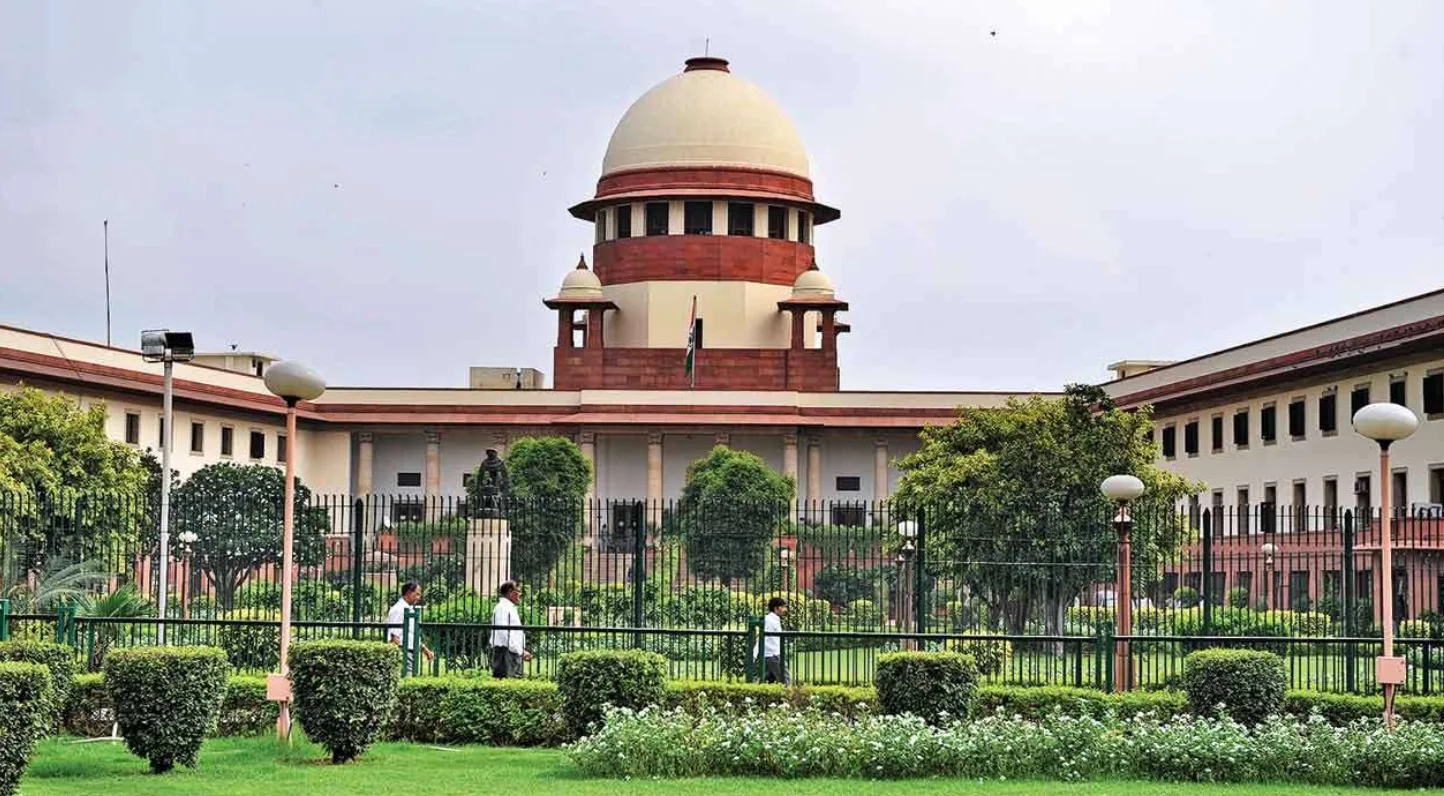
Supreme Court Clarifies Burden of Proof in Disproportionate Assets Cases
The Supreme Court of India has reiterated that a public servant accused of possessing assets disproportionate to known sources of income must satisfactorily explain the lawful origin of the excess wealth once the prosecution establishes the foundational facts of the case. The investigating agency is not required to conduct an endless investigation into every possible or hypothetical source of income subsequently claimed by the accused.
The ruling was delivered on October 28, 2026, in V. Gopalakrishanan v. The State of Kerala (2026 INSC 1172), Criminal Appeal No. 5399 of 2025, by a Bench comprising Justice Sanjay Kumar and Justice Sanjeev Sachdeva.
Background of the Case
The appellant, a former Kerala government official who joined service as a Lower Division Clerk in 1971 and was subsequently promoted to Sub-Registrar, was accused of accumulating assets disproportionate to his known sources of income during the period between January 1993 and January 2001.
The prosecution calculated the disproportionate assets at approximately 51.88% of the income available to the appellant and his family during the relevant period. The appellant challenged the assessment, disputing the valuation of a building, household expenditure and certain income calculations.
The trial court had convicted him under Section 13(2) read with Section 13(1)(e) of the Prevention of Corruption Act, 1988. The Kerala High Court upheld the conviction while reducing the sentence to one year's rigorous imprisonment and a fine of ₹2 lakh.
What Did the Supreme Court Hold?
The Supreme Court clarified that the prosecution must first establish the foundational facts, including the public servant's known sources of income, assets, financial resources and expenditure during the relevant check period.
Once the prosecution demonstrates that the assets are disproportionate to the established sources of income, a prima facie case is made out and the evidentiary burden shifts to the accused. The public servant must then provide a satisfactory, credible and verifiable explanation demonstrating that the assets were acquired through lawful sources.
The Bench emphasised that investigating agencies are not required to undertake an open-ended or limitless inquiry into every conceivable source of income that an accused might subsequently claim. Where the accused relies on undisclosed income, the responsibility lies with that individual to establish its existence, legitimacy and availability through reliable evidence.
The Court further observed that merely presenting a plausible explanation is insufficient. The explanation must satisfy the court and be supported by cogent and reliable material. Failure to do so may permit the court to draw an adverse inference against the accused.
Why Did the Court Reject the Appeal?
The appellant disputed the construction cost of a commercial-cum-residential building and the estimated household expenditure. However, the Court found that the material produced by him, including a notebook containing sporadic construction-related entries, was insufficient to substantiate his claims.
Even after considering the appellant's arguments regarding construction costs and household expenditure, the disproportionate assets remained above 26% of his known income. The Court therefore found no reason to interfere with the concurrent findings of the lower courts.
Final Decision
The Supreme Court dismissed the appeal and upheld the conviction under Section 13(2) read with Section 13(1)(e) of the Prevention of Corruption Act, 1988. It also vacated the interim bail granted to the appellant and directed him to surrender before the concerned trial court within two weeks to undergo the remaining sentence.
Legal Significance
The judgment reinforces the distinction between the prosecution's initial burden of establishing disproportionate assets and the accused public servant's subsequent responsibility to account for the excess. It strengthens the evidentiary framework in corruption prosecutions while clarifying that the burden does not shift until the prosecution establishes the necessary foundational facts.
The decision is particularly significant for public servants, anti-corruption investigating agencies and criminal law practitioners dealing with disproportionate assets cases.