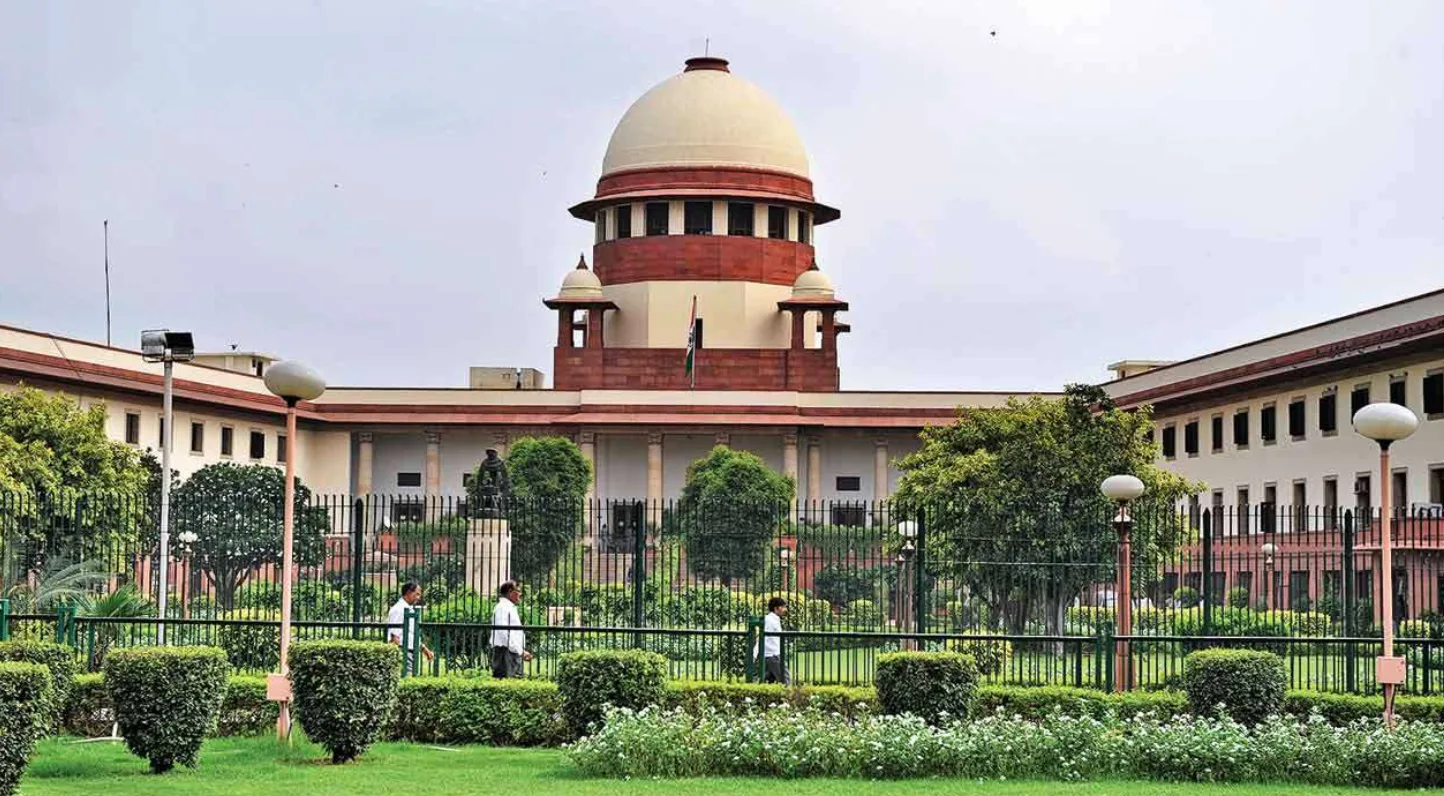
The Supreme Court of India has set aside the anticipatory bail granted to Karnataka-cadre IPS officer Srinath Joshi Mahadev in an alleged corruption and extortion case linked to the Karnataka Lokayuktha Police. The Court directed the officer to surrender within three weeks, while allowing him to seek regular bail in accordance with law.
A Bench comprising Justice Sanjay Kumar and Justice Sanjeev Sachdeva passed the order on October 29, 2026, allowing an appeal filed by the Karnataka Lokayuktha Police against the Karnataka High Court's order dated September 1, 2025, which had granted anticipatory bail to the officer.
Background of the Case
The matter originated from FIR No. 28/2025, registered on June 2, 2025, under the Prevention of Corruption Act, 1988. Initially, the FIR named Ningappa Savantha, a dismissed police constable, who was allegedly impersonating a Lokayuktha official to extort money from public servants by threatening them with corruption-related action.
During the investigation, Srinath Joshi Mahadev, who was serving as a Superintendent of Police in the Lokayuktha Police, was subsequently implicated based on disclosures made by Savantha.
According to the prosecution, the two individuals were in contact, and Savantha frequently visited the Lokayuktha office to meet Mahadev.
The prosecution also pointed out that two mobile phones seized from the officer were allegedly found tampered with and extensively damaged. Their forensic examination report was awaited when the Karnataka High Court granted anticipatory bail.
Why Did the Supreme Court Cancel the Anticipatory Bail?
The Karnataka High Court had granted anticipatory bail to Mahadev on September 1, 2025. One of the considerations was that the officer had appeared before the Investigating Officer pursuant to a notice and had not been arrested.
However, the Supreme Court found that the High Court had not adequately considered the prosecution's material, which warranted deeper examination before ruling out the possibility of custodial interrogation.
The Bench emphasised the seriousness of the allegations, particularly because they concerned a senior police officer accused of allegedly abusing his official position within an institution established to combat corruption.
The Court observed:
"As the very objective of the Lokayuktha's establishment is to check corruption, the allegation against the respondent to the effect that he is himself a part of such corruption, warranted serious consideration."
The Supreme Court further observed that a member of the uniformed service holding the rank of Superintendent of Police could not claim parity with an ordinary individual seeking protection from arrest in the circumstances of the case.
Possibility of Custodial Interrogation
The Supreme Court held that the High Court had prematurely ruled out the possibility of custodial interrogation despite the investigative material requiring further examination.
The Bench observed:
"Given the material procured by the prosecution, which warranted deeper examination, the High Court was not justified in foreclosing the possibility of custodial interrogation by granting anticipatory bail to the respondent."
The Court clarified that merely appearing before the Investigating Officer does not automatically eliminate the need for custodial interrogation where the circumstances and investigative material justify further examination.
Supreme Court's Final Directions
Setting aside the Karnataka High Court's order, the Supreme Court directed Srinath Joshi Mahadev to surrender within three weeks from October 29, 2026.
However, the Court clarified that the officer would remain at liberty to apply for regular bail before the appropriate forum in accordance with law.
Accordingly, the appeal filed by the Karnataka Lokayuktha Police was allowed.
Legal Significance of the Decision
The decision highlights the importance of carefully examining the nature of allegations, the accused person's official position and the materials collected during an investigation while considering applications for anticipatory bail.
It also underscores that an accused person's appearance before an Investigating Officer does not automatically prevent the possibility of custodial interrogation.
Further, the observations draw attention to the responsibility attached to public office, particularly where allegations of corruption involve officials serving in institutions established to investigate and prevent corruption.
Importantly, the Supreme Court's decision concerns the cancellation of pre-arrest protection and does not establish the officer's guilt. The allegations remain subject to investigation and adjudication in accordance with law.
Case Details
- Case Title: Karnataka Lokayuktha Police, Bangalore District v. Srinath Joshi Mahadev, IPS
- Court: Supreme Court of India
- Bench: Justice Sanjay Kumar and Justice Sanjeev Sachdeva
- Date of Order: October 29, 2026
- FIR Number: 28/2025
- Relevant Legislation: Prevention of Corruption Act, 1988
- Subject: Anticipatory Bail, Corruption and Custodial Interrogation