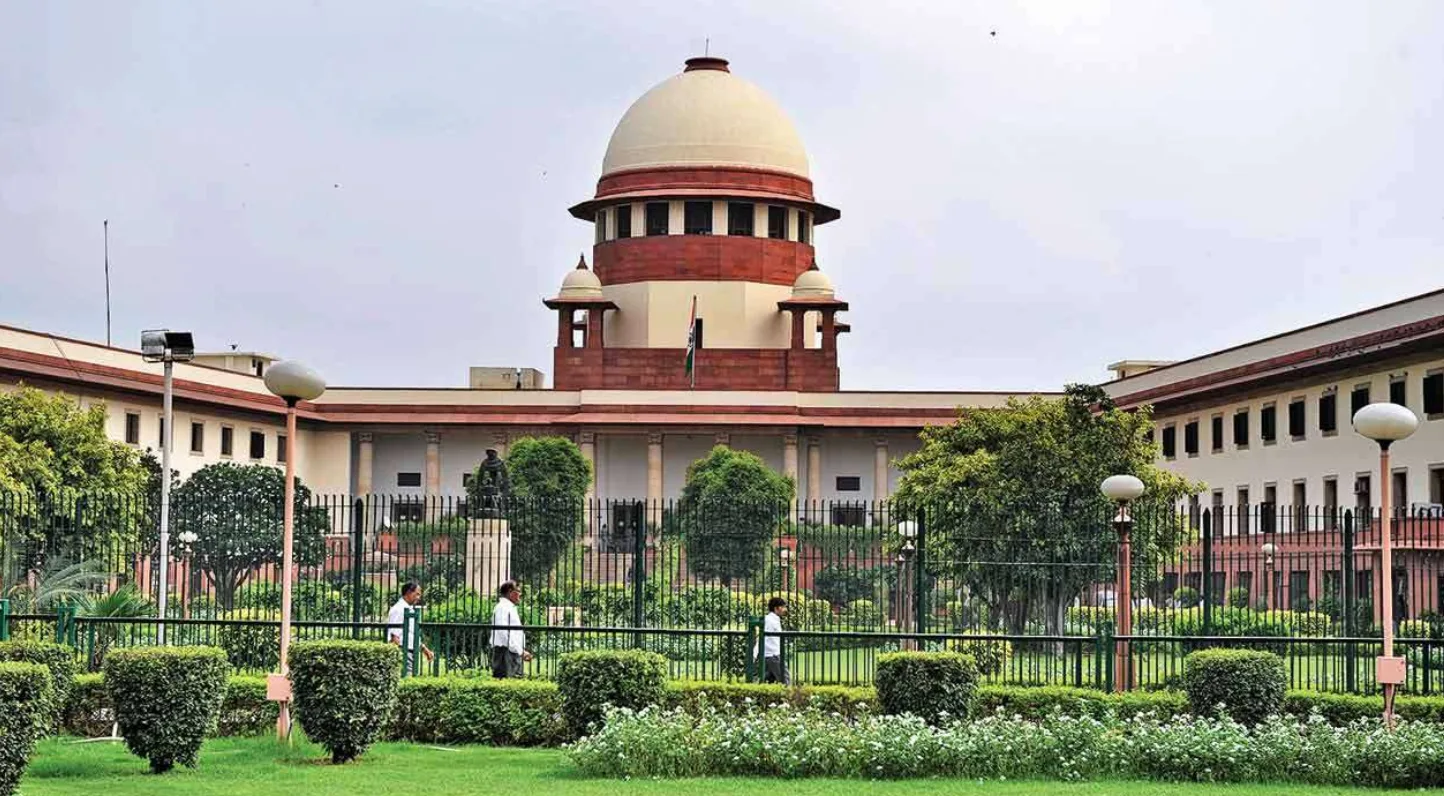
Supreme Court Awards ₹30 Lakh Compensation to Man Jailed for Over 7 Years Despite Acquittal
New Delhi | 16 November 2026
The Supreme Court of India has enhanced compensation to ₹30 lakh for a man who remained imprisoned for more than seven years despite being acquitted in a murder case. The Court highlighted the serious violation of his fundamental right to life and personal liberty under Article 21 of the Constitution and stressed the need for institutional reforms to prevent wrongful incarceration.
Background of the Case
The matter arose from the case of Devilal Gond v. State of Chhattisgarh & Ors. Devilal Gond was arrested on December 7, 2012, in connection with a murder case. Subsequently, a Sessions Court convicted him under Section 302 of the Indian Penal Code on August 14, 2013, and sentenced him to life imprisonment.
However, the Chhattisgarh High Court overturned his conviction and acquitted him on January 20, 2018. The State did not challenge the acquittal, and the decision attained finality.
Despite the acquittal, Gond continued to remain in prison until May 19, 2025. Consequently, he spent more than seven years in unlawful custody after the High Court had already cleared him of the charges.
The State attributed the prolonged detention to a communication and coordination gap between prison authorities and the concerned legal aid officials. The failure to communicate and implement the acquittal order resulted in Gond's continued imprisonment.
Supreme Court Enhances Compensation to ₹30 Lakh
A Bench comprising Justice Augustine George Masih and Justice Sanjeev Sachdeva examined the appeal filed by Gond seeking enhanced compensation for his prolonged illegal detention.
The Chhattisgarh High Court had earlier awarded him compensation of ₹2 lakh. However, considering the extraordinary period of unlawful incarceration and its consequences, the Supreme Court found the amount inadequate.
The Bench observed that the State's explanation revealed serious administrative failures, lack of coordination and institutional dysfunction. It recognised that Gond had lost a significant part of his youth, livelihood, earning opportunities and prospects for education and skill development.
Emphasising the constitutional protection under Article 21, the Court reiterated that no individual can be deprived of personal liberty except according to a procedure established by law.
Accordingly, the Supreme Court enhanced the compensation from ₹2 lakh to ₹30 lakh, taking into consideration both pecuniary and non-pecuniary losses suffered by the appellant.
The State of Chhattisgarh was directed to pay the enhanced compensation within four weeks, after adjusting any amount already paid pursuant to the High Court's order.
Directions Regarding Disbursement of Compensation
The Supreme Court also prescribed safeguards to ensure the proper utilisation and long-term financial security of the compensation amount.
Out of the total ₹30 lakh compensation, ₹5 lakh is to be transferred directly into Gond's savings bank account. The remaining ₹25 lakh must be deposited in an interest-bearing fixed deposit in his individual name.
The monthly interest generated from the fixed deposit will be credited to his savings account. Withdrawal, premature closure or advances against the deposit will require prior permission from the Secretary of the concerned District Legal Services Authority, subject to specified exceptions, including medical emergencies and the creation of long-term income-generating assets.
Supreme Court Highlights Absence of a Statutory Framework
One of the significant observations in the judgment concerned India's lack of a comprehensive statutory framework governing compensation for wrongful incarceration.
The Bench highlighted the need for clear legal principles and parameters to determine compensation for individuals who suffer unlawful detention or wrongful prosecution.
In this context, the Court referred to the Law Commission of India's 277th Report, which examined wrongful prosecution and recommended a framework for compensation and rehabilitation.
The judgment underscores that compensation for violations of fundamental rights should not merely be symbolic but must meaningfully address the harm suffered by the affected individual.
Directions to High Courts for Institutional Reforms
The Supreme Court also emphasised that administrative failures leading to the continued imprisonment of acquitted individuals must be prevented through effective institutional mechanisms.
Taking note of safeguards introduced by the Madhya Pradesh High Court following the Supreme Court's earlier decision in Sohan Singh @ Bablu v. State of Madhya Pradesh, the Bench directed all High Courts to consider adopting similar measures.
Further, the Court asked High Courts to consider establishing an Online Criminal Justice Ecosystem to facilitate seamless communication and information-sharing between different criminal justice institutions, including:
- Police authorities
- Courts and judicial institutions
- Prison and correctional authorities
- Prosecution departments
- Forensic institutions
- Hospitals and other relevant agencies
Such an integrated digital mechanism would help ensure that acquittal orders, release directions and other judicial decisions are communicated and implemented without unnecessary administrative delays.
The Supreme Court further directed that a copy of the judgment be circulated to the Registrar Generals of all High Courts for consideration by their respective Chief Justices.
Legal Significance of the Judgment
The decision reinforces the constitutional responsibility of the State to protect the fundamental right to life and personal liberty under Article 21.
It also demonstrates that administrative negligence cannot become a justification for continuing someone's imprisonment after a competent court has ordered acquittal. The ruling strengthens the principle that constitutional remedies must provide meaningful relief when fundamental rights are violated.
Moreover, the judgment highlights the importance of accountability within prison administration, effective communication of judicial orders and technological integration across the criminal justice system.
By enhancing compensation to ₹30 lakh and calling for institutional reforms, the Supreme Court has drawn attention to the need for stronger safeguards against wrongful incarceration in India.
Case Details
- Case Name: Devilal Gond v. State of Chhattisgarh & Ors.
- Case Number: Criminal Appeal No. 5358 of 2026
- Court: Supreme Court of India
- Bench: Justice Augustine George Masih and Justice Sanjeev Sachdeva
- Judgment Date: 16 November 2026
- Key Constitutional Provision: Article 21 of the Constitution of India
- Compensation Awarded: ₹30 lakh
Source: Supreme Court of India, judgment in Devilal Gond v. State of Chhattisgarh & Ors.