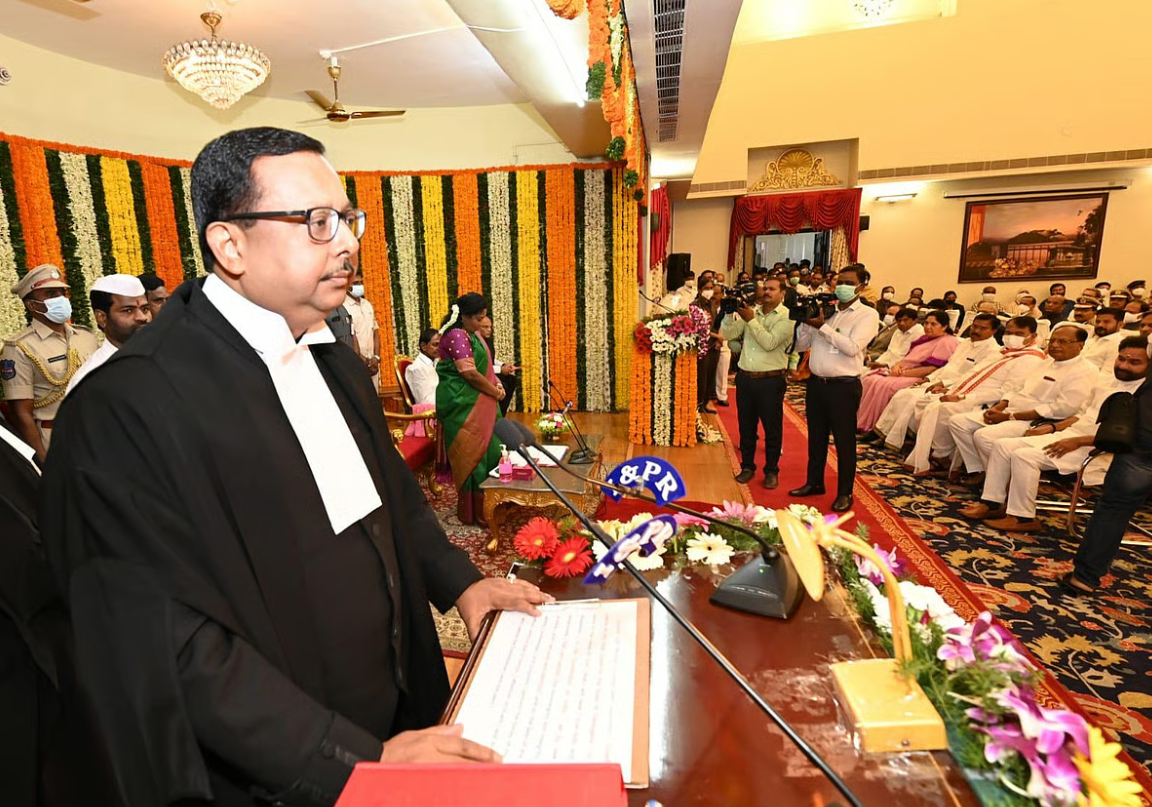
Supreme Court Judge Justice Ujjal Bhuyan has voiced strong concerns regarding the state of civil liberties and freedom of dissent in India, warning that democratic spaces for expressing divergent views are steadily shrinking.
Speaking at the 4th Justice G.P. Singh Memorial Lecture, Justice Bhuyan observed that individuals, particularly students and activists, are increasingly facing criminal proceedings, arrests, and prolonged detention for activities that fall within the realm of peaceful democratic expression.
Justice Bhuyan noted that students protesting on campuses are often arrested and denied bail for extended periods. Even after securing bail, they may be subjected to restrictive conditions that significantly curtail their personal liberty and freedom of expression.
Highlighting the importance of democratic engagement, Justice Bhuyan stated that the right to express views and peacefully demonstrate are fundamental freedoms guaranteed under the Constitution. He emphasized that debate and dissent are essential elements of a healthy democracy.
The judge also referred to cases involving environmental activists and citizens voicing concerns over public issues, observing that such individuals are frequently treated as offenders despite exercising constitutionally protected rights.
In a notable example, Justice Bhuyan mentioned the case involving the arrest of individuals who organized an Iftar gathering on a boat in the Ganga River and allegedly consumed chicken biryani. Questioning the legality of such arrests, he remarked that consuming chicken biryani is not an offence under any law and questioned the rationale for denying bail in such circumstances.
Justice Bhuyan further criticized the growing trend of imposing stringent bail conditions that may effectively suppress dissent. He cited situations where individuals accused of social media posts critical of public officials were granted bail only after being subjected to conditions that restricted their online expression.
According to Justice Bhuyan, the criminal justice system must remain sensitive to constitutional freedoms and avoid actions that create a chilling effect on free speech and peaceful dissent. He stressed that courts play a crucial role in safeguarding civil liberties and ensuring that democratic rights are not undermined through excessive criminalization.
The remarks have reignited discussions on freedom of expression, the right to protest, bail jurisprudence, and the balance between law enforcement and constitutional rights in contemporary India.