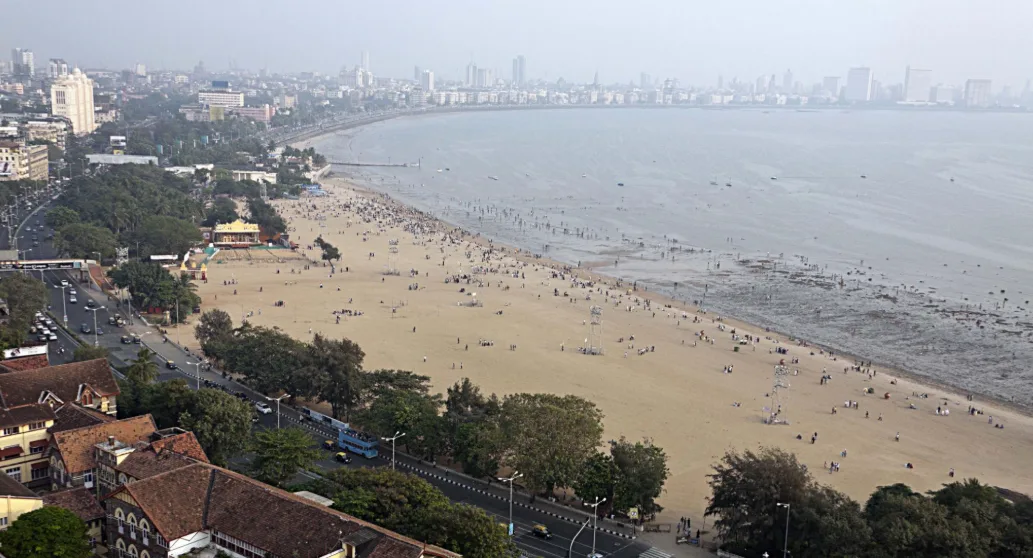
Bombay High Court Refuses Chhath Puja Permission at Girgaon Chowpatty, Says Religious Freedom Is Subject to Public Order
The Bombay High Court has declined to grant immediate interim relief to the Mithila Chhath Puja Sangh, which sought permission to organise Chhath Puja celebrations at Mumbai's Girgaon Chowpatty on November 15 and 16, 2026. The Court reiterated that the freedom of religion guaranteed under Article 25 of the Constitution of India is subject to public order, morality and health.
Background of the Case
The matter arose from a request made by the Mithila Chhath Puja Sangh seeking permission to construct a temporary stage and make arrangements for Chhath Puja celebrations at Girgaon Chowpatty, Mumbai.
The organisation had submitted an application dated September 11, 2026, seeking permission to conduct the celebrations from 3:00 PM on November 15, 2026, until 8:00 AM on November 16, 2026.
However, the DB Marg Police Station refused the request through a communication dated September 17, 2026. The police referred to previous directions of the Bombay High Court concerning the regulation of events at Girgaon Chowpatty and the appointment of a High Power Committee to oversee activities at the beach.
Representation to the Maharashtra Government
Following the rejection by the police authorities, the petitioner submitted a representation to the Chief Minister of Maharashtra on October 7, 2026, seeking the requisite permission for the proposed celebrations.
During the hearing, the petitioner's counsel informed the Court that the representation was still pending before the State Government.
Previous High Court Directions and Monitoring Committee
During the proceedings, the State Government referred to the earlier order passed by the Bombay High Court on June 21, 2018, in Adarsh Chowpatty Pragati Mandal and Others v. State of Maharashtra, in Writ Petition No. 2197 of 1998 along with Writ Petition No. 1963 of 2000.
Under the earlier directions, certain functions covered by the applicable guidelines were required to be conducted only within a designated area measuring 300 x 150 square feet, without deviation unless expressly permitted by the Court.
The Court had further clarified that the Monitoring Committee appointed in relation to Girgaon Chowpatty was a necessary and proper party in proceedings concerning permission to organise functions or erect temporary structures and infrastructure at the beach.
The Bench specifically questioned the petitioner's counsel regarding compliance with these earlier directions, particularly whether permission had been obtained from the Monitoring Committee and whether the Committee had been impleaded as a party to the proceedings. The petitioner's counsel was unable to provide a satisfactory answer.
Bombay High Court's Observations on Article 25
While considering the petition, the Division Bench comprising Justice Advait M. Sethna and Justice Ranjitsinha Raja Bhonsale reiterated the constitutional limitations governing the exercise of religious freedom.
The Court observed:
"Undoubtedly, there is a freedom of conscience, and free profession, practice and propagation of religion. However, the same is subject to public order, morality and health, as provided in the constitutional provision. In other words, there are checks and balances which are provided and required to be followed, under such constitutional mandate."
The Bench emphasised that Article 25 guarantees freedom of conscience and the right to profess, practise and propagate religion. However, the exercise of these rights must remain within the constitutional limitations of public order, morality and health.
Request for an Alternative Venue
During the hearing, the petitioner's counsel also requested the Court to issue directions concerning an alternative location where the Chhath Puja celebrations could be conducted.
The Bench declined to express any opinion on the request. However, it clarified that the petitioner was at liberty to pursue the remedies available under law.
What Did the Court Decide?
Considering the earlier judicial directions and the petitioner's failure to satisfactorily explain compliance with the requirements concerning the Monitoring Committee, the Bombay High Court declined to pass any further interim orders at that stage.
The Court directed that the matter be listed in due course after reopening following the Diwali vacation.
Case Details
- Case Title: Mithila Chhath Puja Sangh v. State of Maharashtra
- Case Number: Writ Petition (Lodging) No. 37429 of 2026
- Court: Bombay High Court
- Bench: Justice Advait M. Sethna and Justice Ranjitsinha Raja Bhonsale
- Date of Order: November 9, 2026
- Constitutional Provision: Article 25 of the Constitution of India
- Petitioner's Counsel: Advocate Jogendra Thakur
Legal Significance
The order reiterates an important constitutional principle: religious freedom is a fundamental right, but it is not absolute. The exercise of religious rights must comply with the restrictions expressly recognised under Article 25 of the Constitution.
The proceedings also highlight the importance of complying with existing judicial directions and procedural requirements when seeking permission to organise public events or construct temporary structures on regulated public property.
Importantly, the Court did not declare Chhath Puja unlawful or impose a general prohibition on its celebration. Its decision concerned the request for immediate permission to hold the event at Girgaon Chowpatty in light of the existing regulatory framework and procedural requirements.