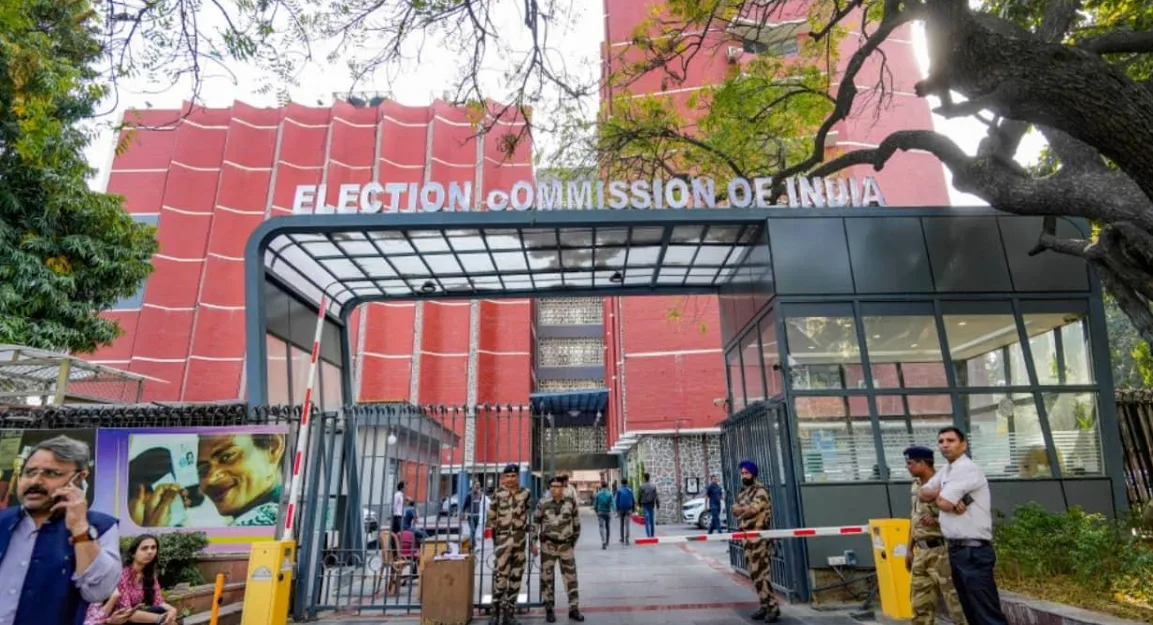
The Election Commission of India (ECI) has informed the Delhi High Court that it is examining serious objections concerning the alleged separatist links of Waris Punjab De before deciding its application for registration as a political party. The Commission has stated that a comprehensive background inquiry by Punjab authorities is still pending.
Background of the Registration Dispute
Waris Punjab De was founded in 2021 by actor-activist Deep Sidhu and is currently headed by jailed Member of Parliament Amritpal Singh. The organisation has sought registration as a political party under Section 29A of the Representation of the People Act, 1951.
The organisation submitted its registration application on January 22, 2025. Following scrutiny, the Election Commission issued a deficiency letter on September 10, 2025, identifying certain shortcomings in the application. The corrected documents were subsequently submitted on January 16, 2026.
The Chief Electoral Officer (CEO) of Punjab submitted a positive verification report concerning the organisation on April 27, 2026. However, the Election Commission subsequently received a serious objection on July 9, 2026, alleging that the organisation had separatist roots and raising concerns regarding its allegiance to India's sovereignty and integrity.
ECI Orders Comprehensive Background Inquiry
Following receipt of the objection, the Election Commission forwarded the matter to the Chief Electoral Officer of Punjab on July 14, 2026, directing a comprehensive background inquiry and requesting a detailed report.
According to the Commission's submissions before the High Court, the inquiry report remains awaited despite reminders to the Punjab authorities.
The ECI has maintained that registration under Section 29A of the Representation of the People Act, 1951, is not merely a routine administrative formality. It argued that the statutory registration process requires meaningful scrutiny, particularly when serious concerns regarding national sovereignty and integrity have been raised.
Legal Framework: Section 29A of the Representation of the People Act, 1951
Section 29A of the Representation of the People Act, 1951, governs the registration of political parties with the Election Commission of India.
Under Section 29A(5), an organisation seeking registration must affirm true faith and allegiance to the Constitution of India and to the principles of socialism, secularism and democracy. It must also undertake to uphold the sovereignty, unity and integrity of India.
The Election Commission has relied on these statutory requirements to justify its decision to undertake further scrutiny before deciding the organisation's registration application.
Election Commission Opposes the Plea for Expedited Registration
Waris Punjab De approached the Delhi High Court seeking an expeditious decision on its pending registration application. The organisation also raised concerns that the delay could affect its opportunity to obtain a common election symbol ahead of the forthcoming Punjab Legislative Assembly elections.
However, the ECI opposed this contention, maintaining that an organisation cannot claim a right to an election symbol before completing the statutory registration process. The Commission further argued that it cannot be compelled through a writ of mandamus to bypass an ongoing background inquiry.
The Commission stated that once the inquiry report is received, further steps will be taken in accordance with Section 29A and the applicable legal procedure.
Delhi High Court Proceedings
The matter was heard by Justice Saurabh Banerjee of the Delhi High Court on November 4, 2026. The Election Commission placed its position before the Court through affidavits, including an additional affidavit dated November 3, 2026.
The Commission informed the Court that the comprehensive background inquiry report from the Punjab Chief Electoral Officer was still awaited. It also indicated that further registration procedures would be undertaken if the report was favourable.
The High Court has listed the matter for further consideration on January 11, 2027.
Legal Significance
The proceedings highlight the relationship between the constitutional freedom to form associations under Article 19(1)(c) of the Constitution of India and the statutory requirements governing the registration of political parties.
The dispute raises important questions concerning the scope of the Election Commission's powers under Section 29A of the Representation of the People Act, 1951, particularly when objections relating to constitutional allegiance and national sovereignty arise during the registration process.
It also highlights the importance of balancing the rights of political organisations with statutory safeguards intended to protect the sovereignty, unity and integrity of India.
Importantly, the allegations concerning separatist links have not been judicially established. The Delhi High Court has not delivered a final ruling on the allegations or on the organisation's eligibility for registration.
Case Update
- Court: Delhi High Court
- Judge: Justice Saurabh Banerjee
- Relevant Legislation: Section 29A, Representation of the People Act, 1951
- Subject: Registration of a political party
- Hearing Date: November 4, 2026
- Next Hearing: January 11, 2027
- Current Status: Background inquiry pending; registration decision awaited
Source: Bar & Bench, The New Indian Express and ThePrint (PTI).