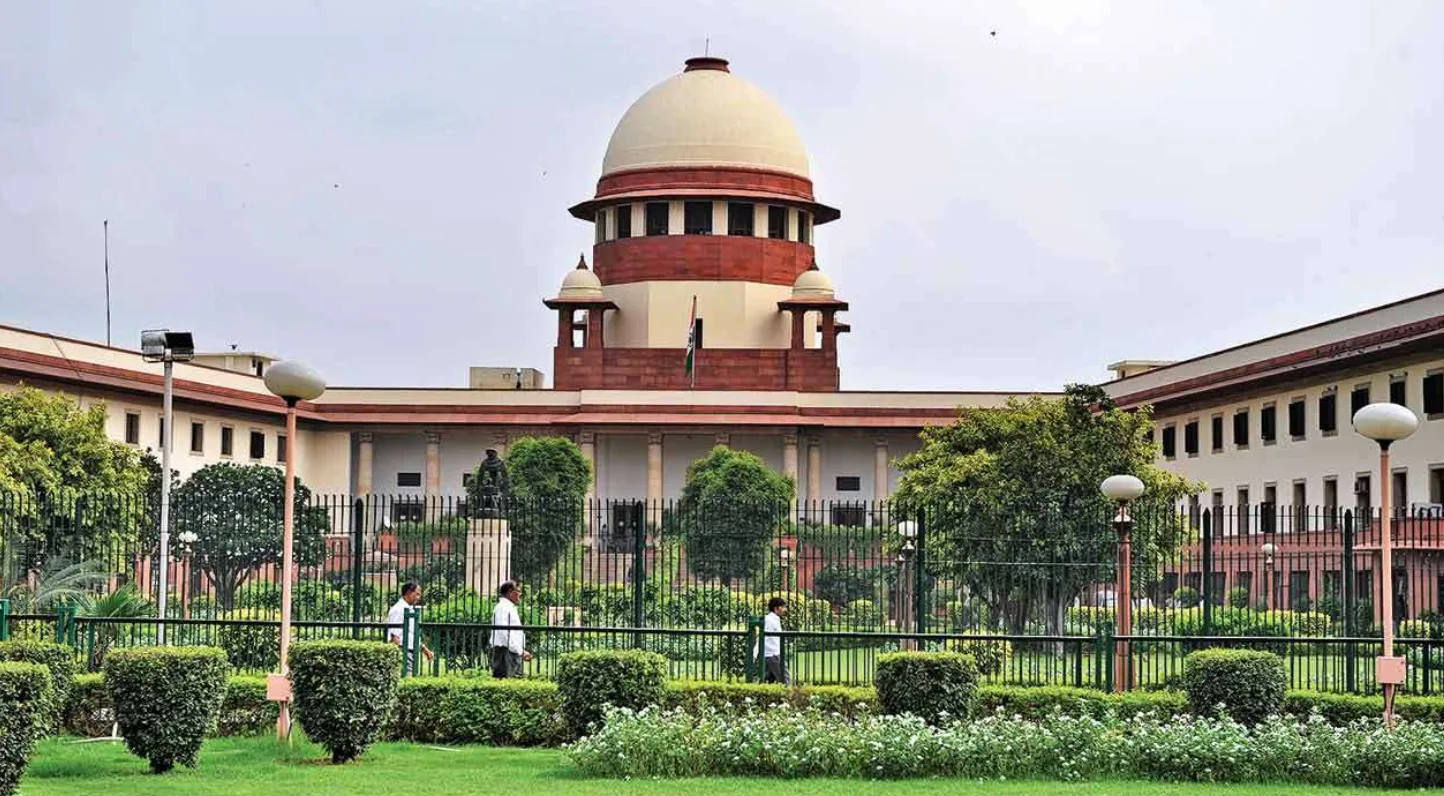
Supreme Court Rejects Centre's Plea for Two-Year Delay in Implementing OBC Creamy Layer Ruling
New Delhi, November 6, 2026: The Supreme Court of India has rejected the Union Government's request for a two-year extension to implement its landmark ruling on determining the creamy layer status of Other Backward Classes (OBCs). The Court also declined the Centre's request to make the judgment applicable only prospectively, reinforcing its interpretation of the existing reservation framework.
A Bench comprising Justice Pamidighantam Sri Narasimha and Justice R. Mahadevan passed the order while considering the Centre's application seeking clarification regarding the implementation of the Court's March 11, 2026 judgment.
Background of the Dispute
The controversy concerns the interpretation of the Government of India's Office Memorandum dated August 8, 1993, and a subsequent clarification issued on October 14, 2004, concerning the identification of the creamy layer among OBC candidates.
In its March 11 judgment, the Supreme Court held that the creamy layer status of an OBC candidate cannot be determined solely on the basis of the salary income of their parents. The Court emphasised that the status and category of the posts held by the parents are also essential considerations.
The Court had observed that treating children of employees working in Public Sector Undertakings and private organisations differently from similarly placed government employees could result in discriminatory treatment.
Centre's Request for Additional Time
The Union Government sought two years to establish equivalence between posts in different organisations and government services and to develop a uniform mechanism for determining OBC creamy layer status.
The Centre also expressed concerns that retrospective implementation could disturb completed recruitment processes, service allocations, seniority positions, promotions and admissions to educational institutions.
However, the Supreme Court found no convincing or reasonable justification for deferring implementation of its March 11 judgment. While rejecting the request for a two-year delay, the Bench extended the compliance period by eight weeks.
Impact on UPSC Civil Services Examination 2025
An important aspect of the ruling concerns candidates selected through the Civil Services Examination (CSE) 2025. Although the UPSC declared the examination results on March 6, 2026, the allocation of services had remained pending.
The Supreme Court directed that the creamy layer principles laid down in its March 11 judgment must govern the allocation of services to OBC candidates selected through CSE 2025.
Protection of Completed Appointments and Seniority
The Court clarified that its judgment would not automatically reopen selections or appointments concluded before March 11, 2026, nor would it independently disturb the existing seniority of other individuals.
It further stated that claims raised by similarly placed individuals in pending proceedings before courts, tribunals or other competent authorities may be decided independently on their merits and in accordance with law.
Constitutional and Legal Significance
The ruling reinforces the importance of equality and non-discrimination under Articles 14 and 16 of the Constitution of India. It also clarifies that income-based considerations cannot be applied in isolation when determining OBC creamy layer status under the relevant framework.
The Supreme Court has left the government free to formulate its own reservation and creamy layer policy, provided that such a policy remains consistent with constitutional requirements and the principles established in the judgment.
Conclusion
The decision marks an important development in reservation jurisprudence. By refusing to defer implementation for two years, the Supreme Court has reinforced its interpretation of the OBC creamy layer framework while protecting completed appointments and settled seniority positions from automatic reopening.
Source: The Indian Express, LiveLaw and Supreme Court of India.