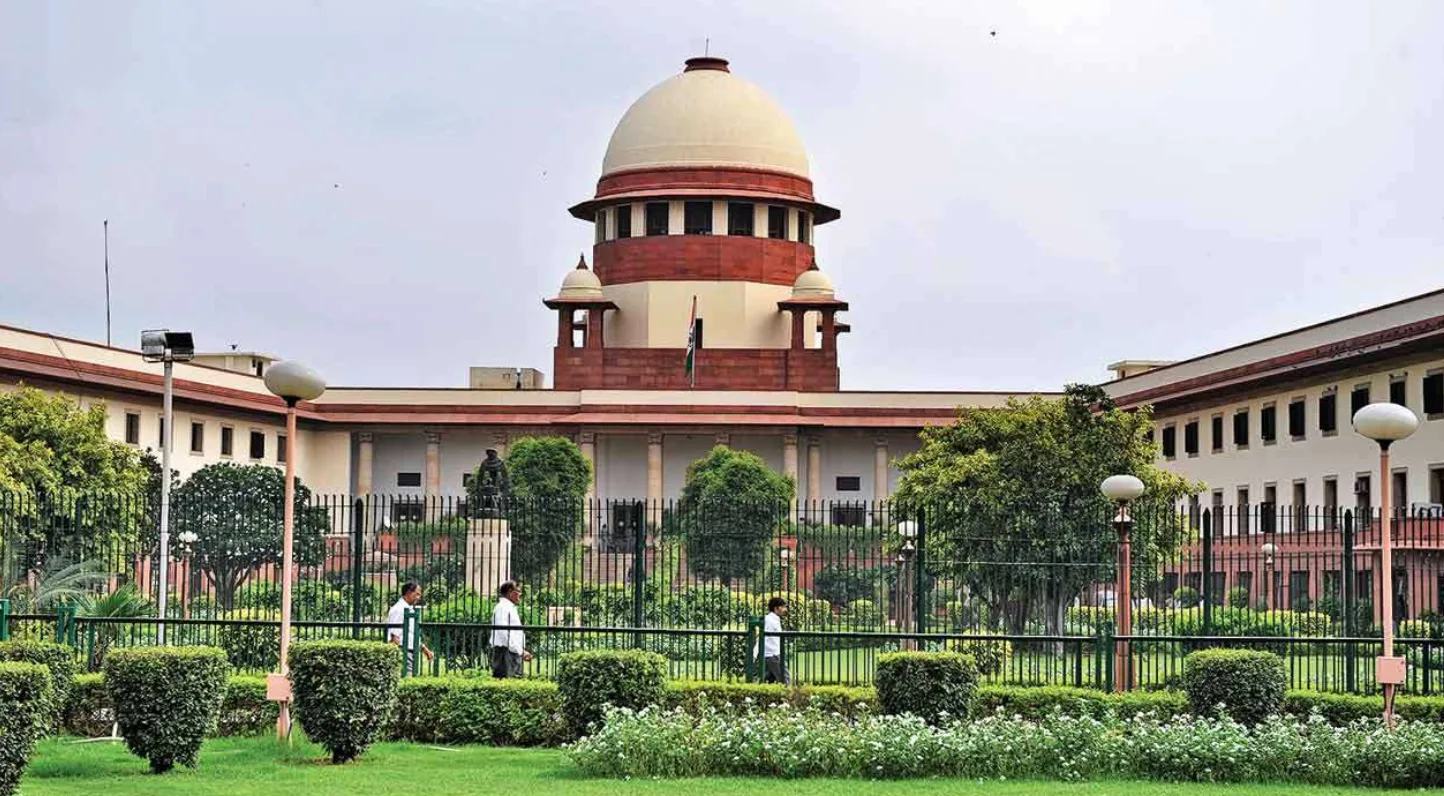
Supreme Court Says Rotation of SC/ST Reserved Constituencies Is Parliament's Domain
The Supreme Court of India has declined to direct mandatory rotation of constituencies reserved for Scheduled Castes (SCs) and Scheduled Tribes (STs) in Parliament and State Legislative Assemblies, holding that the matter falls within the legislative domain of Parliament.
On November 4, 2026, a three-judge Bench comprising Chief Justice of India Surya Kant, Justice Joymalya Bagchi and Justice V. Mohana rejected a petition challenging the continued reservation of certain constituencies without periodic rotation. The Bench refused to interfere with the Allahabad High Court's decision upholding Section 9(1)(c) of the Delimitation Act, 2002.
Background of the Case
The petition was filed by Jagdish Singh, an elector of the 191-Kadipur Assembly Constituency in Sultanpur district, Uttar Pradesh. He argued that the constituency had remained reserved for Scheduled Caste candidates for nearly seven decades.
The petitioner contended that the absence of periodic rotation restricted electoral choices and violated Articles 14, 15 and 19 of the Constitution. He also argued that the existing arrangement could concentrate political opportunities among a limited number of families rather than benefiting the wider community.
Seeking a mechanism similar to the rotation system applicable to Panchayats and Municipalities under Articles 243D and 243T, the petitioner challenged Section 9(1)(c) of the Delimitation Act, 2002.
What Does Section 9(1)(c) Provide?
Section 9(1)(c) of the Delimitation Act, 2002 provides that constituencies reserved for Scheduled Castes and Scheduled Tribes should, as far as practicable, be located in areas where their proportion of the population is comparatively large.
However, the provision does not prescribe mandatory periodic rotation of such constituencies. The petitioner argued that this could result in certain constituencies remaining reserved for several decades.
Supreme Court's Observations
The Supreme Court held that neither Articles 330 and 332 nor the Delimitation Act, 2002 provides for mandatory rotation of reserved constituencies. The Court clarified that it cannot introduce such a requirement by rewriting the constitutional or statutory framework.
The Bench also distinguished between the right to vote and the right to contest elections from a particular constituency. It observed that the continued reservation of a constituency does not take away the general right to vote, while candidates from unreserved categories remain eligible to contest from unreserved constituencies.
Chief Justice Surya Kant remarked that the petitioner was "dialling the wrong number", indicating that the demand should be taken to elected representatives and Parliament rather than pursued through judicial directions.
Final Decision
The Supreme Court found no reason to interfere with the Allahabad High Court's judgment. It permitted the petitioner to approach public representatives and build consensus for introducing the rotation principle through legislative action.
The decision reinforces the distinction between judicial review and legislative policy-making. Any introduction of mandatory rotation of SC/ST reserved constituencies would require appropriate legislative action rather than a judicial direction.