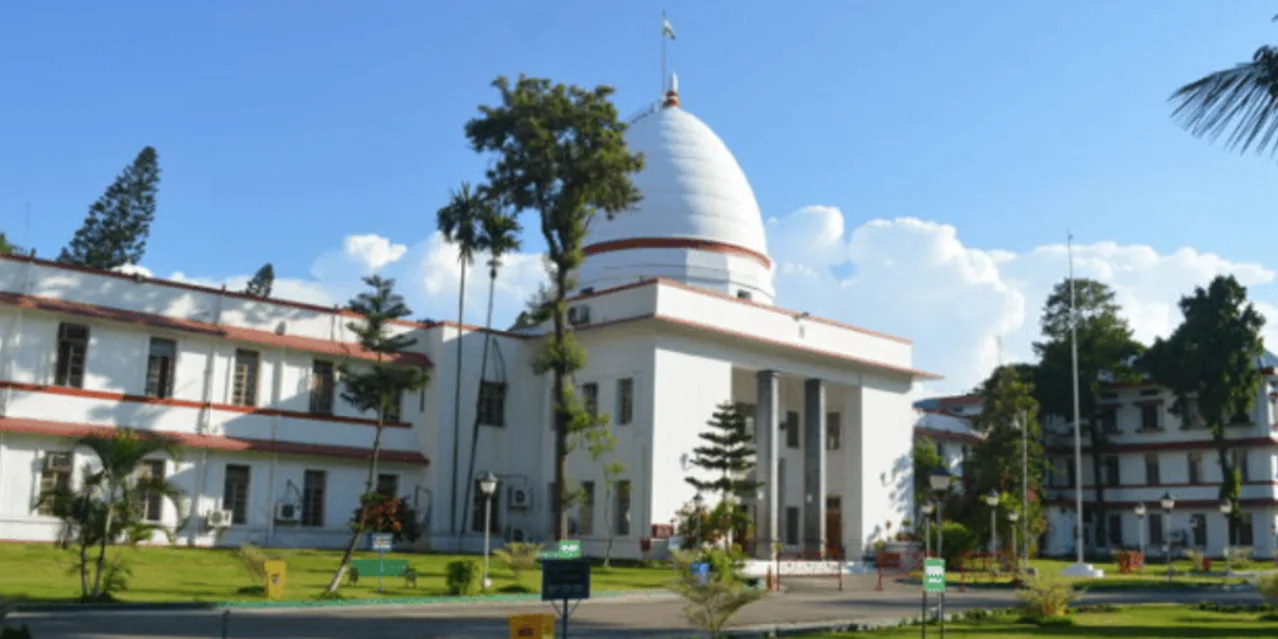
Gauhati High Court Quashes NSA Detention of Activist Pranab Doley Over Kaziranga Hotel Project Protest
The Gauhati High Court has quashed the preventive detention of indigenous and land-rights activist Pranab Doley under the National Security Act, 1980 (NSA), setting aside the Assam government's decision to keep him in custody following his participation in protests against a proposed luxury hotel project near Kaziranga National Park.
The order was passed on November 6, 2026, by a Division Bench of the Gauhati High Court comprising Justices Kalyan Rai Surana and Susmita Phukan Khaund. The proceedings concerned Doley's challenge to his preventive detention in W.P.(Crl.)/40/2026.
Background of the Case
Pranab Doley, convenor of the Greater Kaziranga Land and Human Rights Protection Committee, had been actively opposing a proposed luxury hotel development at Ingle Pathar, a village adjoining Kaziranga National Park in Assam. Indigenous communities had raised concerns regarding potential displacement, land rights, livelihoods and environmental consequences of the project.
Doley was arrested on July 12, 2026, following protests against the proposed development. The police alleged that protesters had trespassed into the project site and engaged in unlawful activities.
On July 29, 2026, a Sessions Court in Golaghat granted Doley bail. However, the Assam government invoked Section 3(2) of the National Security Act on July 30, 2026, citing concerns relating to public order and state security. Consequently, he continued to remain in custody despite the bail order.
Why Did the High Court Quash the Detention?
According to reports of the High Court's decision, the detention order suffered from significant legal and procedural defects. The grounds reported include:
- Lack of proximity: The cases relied upon by the authorities were old and lacked the necessary proximate connection with the preventive detention.
- Non-disclosure of relevant documents: The detenue was allegedly not supplied with all relevant materials relied upon by the authorities.
- Previous acquittals: Several of the earlier criminal cases cited against Doley had already resulted in acquittals or discharge orders.
- Procedural safeguards: Concerns were also reported regarding the consideration of his representation against the detention.
Legal Significance
The decision highlights the importance of judicial scrutiny over the exercise of preventive detention powers under the National Security Act, 1980. Preventive detention is an exceptional measure and must comply with statutory requirements and constitutional safeguards.
Article 21 of the Constitution protects life and personal liberty, while Article 22 provides specific safeguards against arbitrary arrest and detention, including protections applicable to preventive detention.
The ruling is particularly significant in the context of the relationship between public order, individual liberty, indigenous land rights and environmental concerns.
What Happens Next?
The High Court's decision quashing the detention paves the way for Doley's release. However, the detailed written judgment was not immediately available when the initial reports were published. The precise reasoning of the Court should therefore be verified against the official judgment once uploaded.
Source: The Indian Express, The Wire, Scroll.in and Northeast Now | Reported on November 6, 2026.