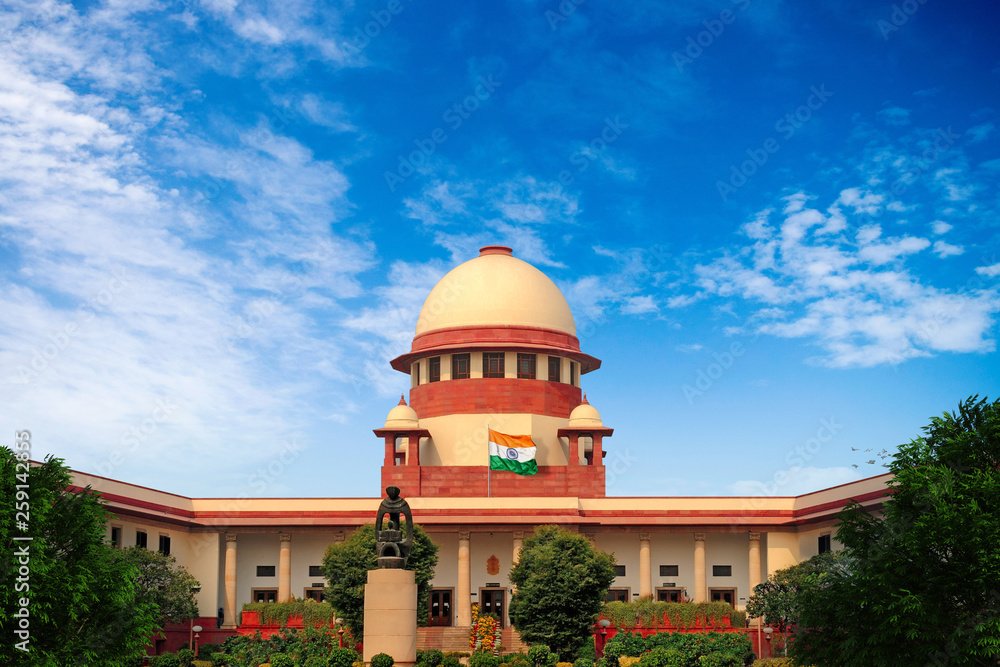
Case UpdateConstitutional Law📍 Supreme Court of India
Judicial Precedents And Judgments Are Retrospective In Operation Unless Expressly Made Prospective: Supreme Court
The Supreme Court reiterated that judicial decisions apply retrospectively from the inception of the law unless the judgment explicitly states that it will operate prospectively only.
📅 06 Aug 2026👤 For: All Legal Professionals📰 Source:
LiveLaw👁 68 views
⚖️ Case Details
Government of India & Anr. v. Sri Devraj Urs Medical College
Supreme Court of India
Justice Dipankar Datta and Justice Sheel Nagu
05 Aug 2026
2026 LiveLaw (SC) 766
Whether judicial decisions rendered by the Supreme Court apply retrospectively when the judgment does not explicitly declare prospective operation.
The Supreme Court of India has reiterated the fundamental principle of legal interpretation that judicial decisions are retrospective in operation unless the Court explicitly specifies that a ruling is to apply prospectively.
Retrospective Effect of Judicial Decisions
A Bench comprising Justice Dipankar Datta and Justice Sheel Nagu set aside a judgment of the Karnataka High Court that extended financial benefits under an unconstitutional subvention scheme. The High Court had directed the Union Government to release subvention amounts to a medical college, treating a previous Constitution Bench ruling as prospective.
Key Legal Observations
Rejecting the respondent institution's arguments, the apex court observed:
General Rule of Retrospectivity: If a decision of the Supreme Court does not expressly provide for its application to be prospective, it is settled law that the ruling applies retrospectively.
Doctrine of Prospective Overruling: The application of prospective overruling is an exception reserved solely for the Supreme Court to prevent chaos or widespread administrative disruption, and must be stated in explicit terms within the judgment.
Because the underlying scheme had been declared unconstitutional by an 11-judge bench without any prospective clause, the Court held that the scheme was void from its inception, disentitling the institution from claiming public subvention funds.
📌 Held by the Court
Held that all Supreme Court judgments are retrospective in application unless expressly declared to be prospective. The subvention scheme was unconstitutional from its inception, rendering the High Court's direction invalid.
⚡ Practical Impact
Provides definitive precedent for civil and constitutional litigation confirming that litigants cannot claim vested rights under declared unconstitutional schemes unless prospective overruling was specifically invoked.
👔 For Lawyers & Advocates
Important precedent on jurisprudence, statutory interpretation, constitutional law, and the doctrine of prospective overruling.
🤖 Key Takeaway
Judicial precedents are retrospective by default; prospective overruling must be explicitly stated in the judgment text by the Court.