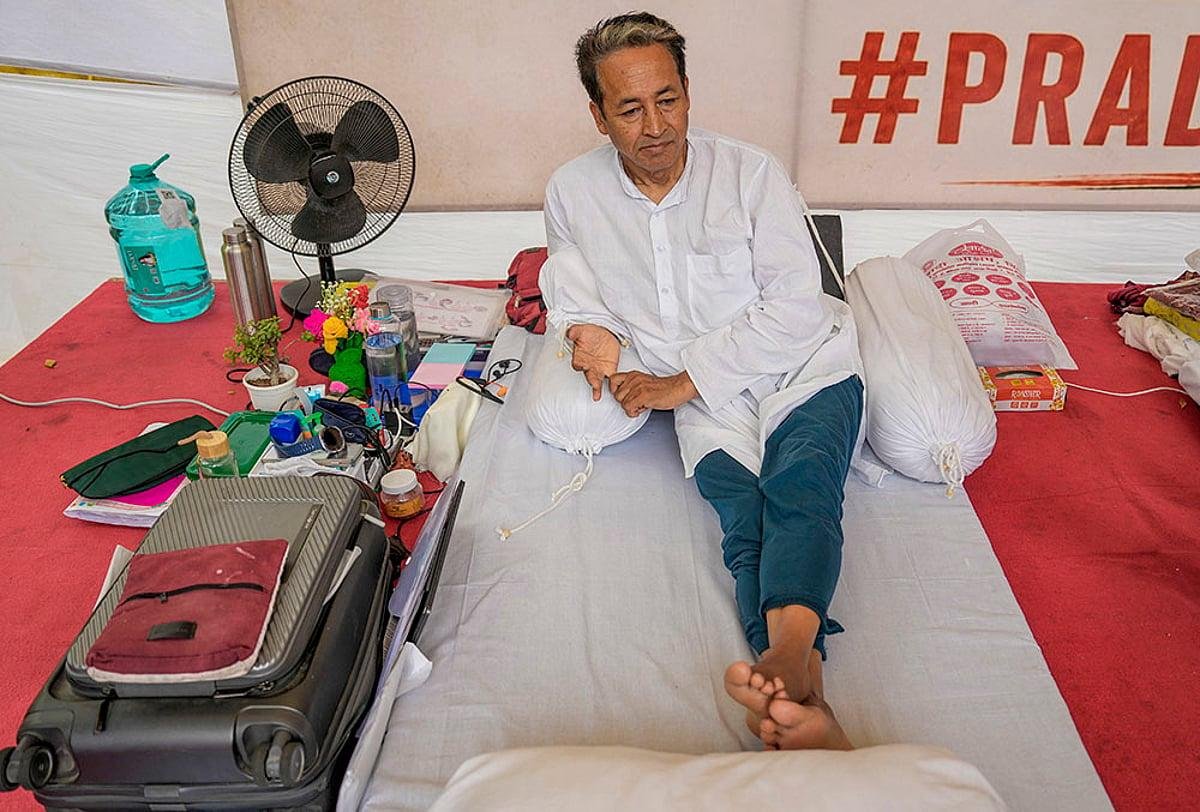
Sonam Wangchuk Shifted to Hospital Amid Questions Over Police Intervention During Hunger Strike
Climate activist and education reform advocate Sonam Wangchuk was taken from his protest site at Jantar Mantar in New Delhi and shifted to a hospital after authorities expressed concern over his deteriorating health during a prolonged hunger strike.
According to reports, the police operation was conducted swiftly, with protesters claiming that Wangchuk was removed from the site within a matter of minutes. Eyewitnesses alleged that the movement was shielded from public view and carried out with minimal opportunity for supporters to intervene or seek clarification.
Wangchuk had been on a hunger strike for over twenty days in support of demands relating to educational reforms and accountability following allegations concerning examination irregularities. Medical professionals monitoring his condition reportedly warned that his health had significantly deteriorated, creating an urgent need for medical intervention.
Authorities have maintained that the transfer was undertaken due to medical necessity and in accordance with health advisories and judicial directions requiring continuous monitoring of the activist's condition. Reports indicate that doctors expressed concerns about potentially life-threatening complications arising from prolonged fasting.
The incident has reignited debate over the legal limits of state intervention in protest movements. While the Constitution protects peaceful assembly and freedom of expression, authorities also bear responsibility for preserving life and public order. The circumstances surrounding Wangchuk's removal are therefore likely to be examined through the lens of constitutional rights, police powers, and public health obligations.
Legal observers note that courts have historically balanced the right to protest against the state's duty to protect life, particularly where prolonged hunger strikes create serious medical risks. The controversy may further fuel discussions regarding procedural safeguards that should accompany involuntary medical interventions involving protesters.
As political and civil society groups continue to react to the development, the incident highlights the recurring constitutional tension between individual autonomy, public dissent, and state responsibility in democratic governance.