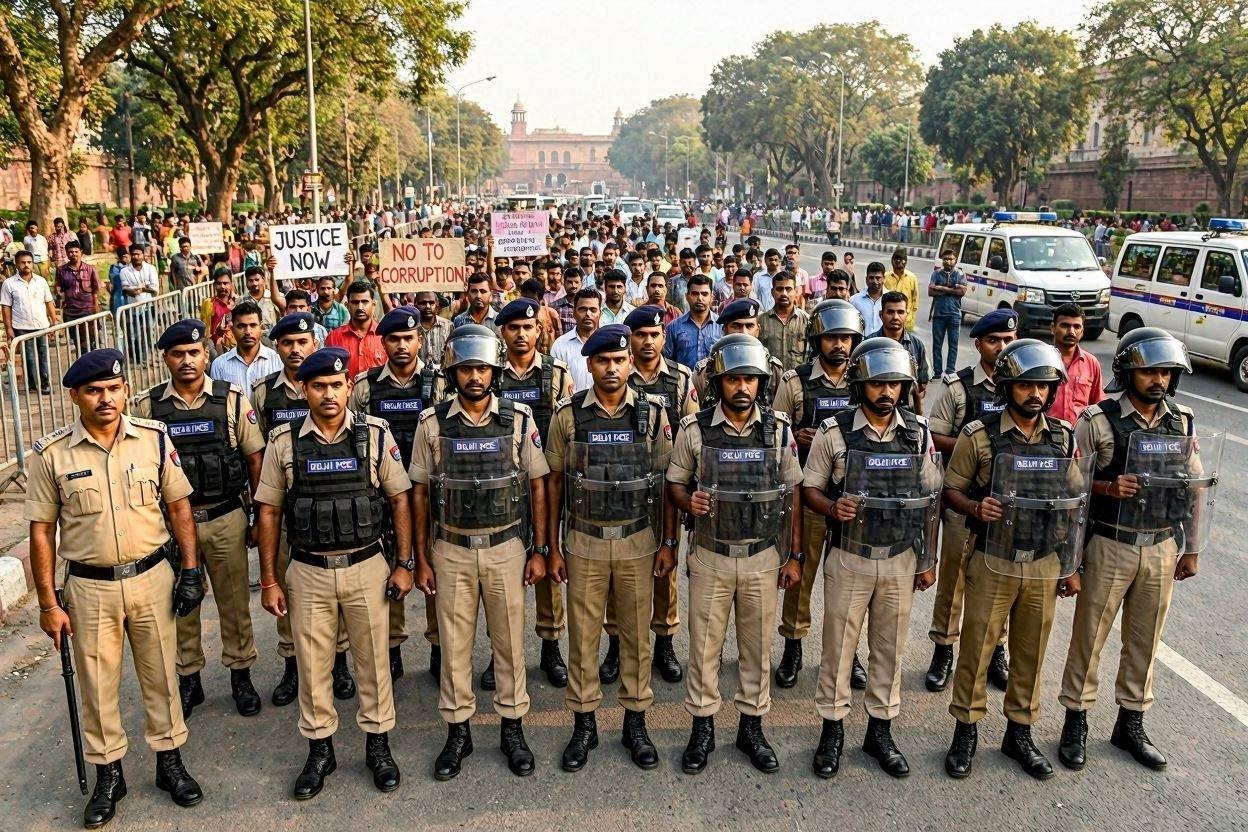
The Delhi High Court is hearing a Public Interest Litigation (PIL) challenging the alleged continuous surveillance of protesters gathered at Jantar Mantar in connection with ongoing demonstrations and hunger strikes over examination-related issues and broader public concerns.
The petitioner has alleged that Delhi Police has been subjecting peaceful protesters to continuous photography, videography, and monitoring, creating what has been described as an "atmosphere of intimidation." According to the PIL, such actions may discourage citizens from exercising their constitutional rights to freedom of speech, expression, and peaceful assembly.
Appearing before the Delhi High Court, Solicitor General Tushar Mehta defended the police action, stating that videography at the protest site was being conducted strictly for maintaining law and order and not for surveillance or "snooping." He submitted that the authorities were acting within their legal responsibilities to ensure public safety and manage large gatherings.
The case raises important constitutional questions concerning the balance between the State's duty to maintain public order and the fundamental rights of citizens, including the right to privacy and the right to protest peacefully. The petitioner argues that indiscriminate recording and monitoring of demonstrators may have a chilling effect on democratic participation.
Delhi Police has maintained that visual recording of public demonstrations is a standard policing measure used for crowd management, security assessment, and evidence preservation in the event of law-and-order disturbances. The authorities have denied allegations that the monitoring exercise was intended to identify, intimidate, or unlawfully track participants.
The High Court is expected to examine whether the nature and extent of the monitoring are proportionate and legally justified, and whether adequate safeguards exist to protect the privacy and civil liberties of protesters.
The matter highlights the growing legal debate in India regarding surveillance practices at public demonstrations and the constitutional limits on state monitoring of citizens exercising democratic rights.