Legal NewsConstitutional Law📍 Supreme Court of India
Delhi Protest Row: Supreme Court Issues Contempt Notices Over Alleged Metro Shutdown, Seeks Compliance Report
✍️ By Sajeda Zaman📅 11 Oct 2026🔄 Updated 22 Oct 2026👤 For: All Legal Professionals📰 Source:
Bar and Bench
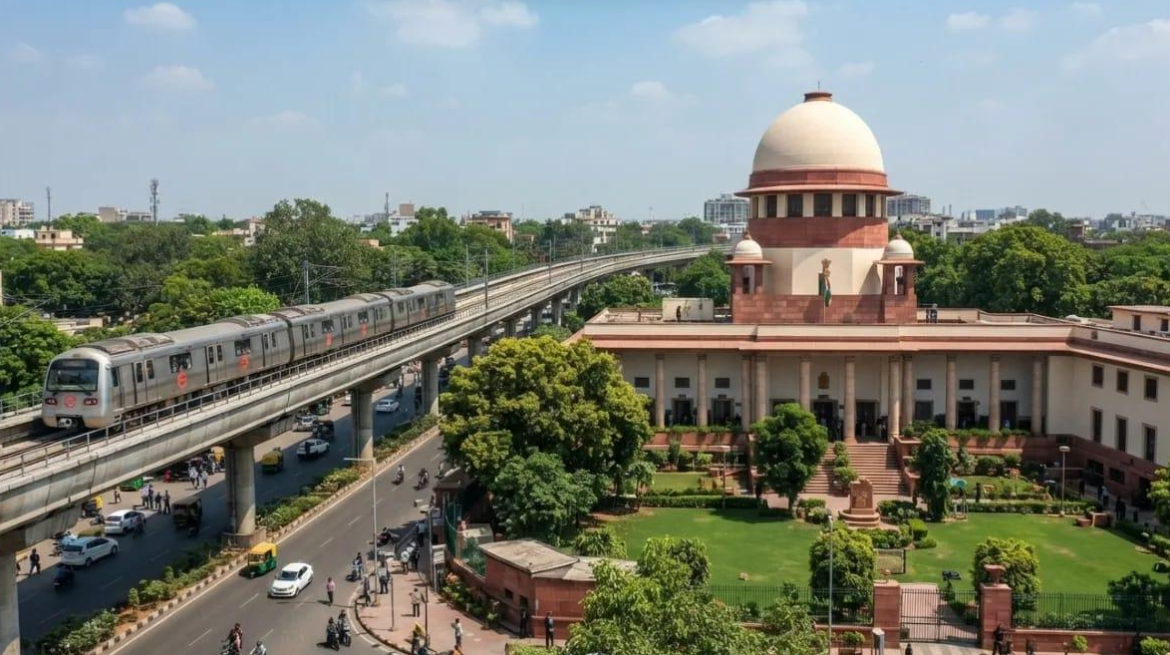
The Supreme Court of India has issued contempt notices to senior government and Delhi Metro officials over alleged non-compliance with its directions concerning Metro and railway services during protests in Delhi. The Court has sought counter-affidavits and a compliance report by 13 October 2026, bringing judicial compliance, public order and citizens’ rights into focus.
**Headline: Supreme Court Issues Contempt Notices Over Alleged Delhi Metro Shutdown During Protests**
The Supreme Court of India, on 11 October 2026, issued notices in a contempt petition alleging that authorities failed to comply with its earlier directions concerning Metro and railway services in Delhi during protests held on 10 October. A Bench comprising Justice Joymalya Bagchi and Justice V. Mohana held that the petitioners had made out a *prima facie* case and directed the alleged contemnors to file counter-affidavits, including a compliance report, by 13 October 2026.
The petition, filed by advocate Shailendra Mani Tripathi, names Union Home Secretary Govind Mohan, Delhi Police Commissioner Anurag Kumar and Delhi Metro Rail Corporation (DMRC) Chairperson D. Thara. It alleges that transport restrictions continued despite the Supreme Court’s order of 9 October, which had directed authorities to reconsider measures that effectively imposed a complete prohibition on essential public transport during the planned protests.
The restrictions followed a protest organised by the Cockroach Janta Party (CJP) and other groups at Jantar Mantar against Chief Election Commissioner Gyanesh Kumar over alleged irregularities in the functioning of the Election Commission. Several Metro stations were closed, and train services faced restrictions, prompting petitions challenging the impact of these measures on public movement and access to transport.
During the special hearing, the Supreme Court also addressed broader concerns about freedom of movement, peaceful assembly, alleged unlawful detention and access to justice. It emphasised that Metro and railway services should operate normally unless restrictions were justified by a public-order situation. The Court also addressed the removal of barricades where unnecessary, restoration of internet services and the need to ensure that lawyers could discharge their professional duties without obstruction.
The proceedings raise important questions about the balance between maintaining public order and protecting citizens’ constitutional rights. Although authorities may impose lawful and proportionate restrictions in appropriate circumstances, the allegations before the Court concern whether the measures taken were consistent with its earlier directions.
The matter is listed for further consideration on 13 October 2026. The allegations of contempt remain to be adjudicated, and the issuance of notice does not amount to a final finding that the respondents have committed contempt of court.
**Source:** India Today, ThePrint (PTI), Bar & Bench and LiveLaw reports published on 11 October 2026.
🤖 Key Takeaway
The Supreme Court's proceedings highlight that administrative authorities must act consistently with judicial directions while imposing restrictions for public order. Restrictions on public transport and peaceful assembly must have a lawful basis and be appropriately justified. The issuance of contempt notices reflects a preliminary procedural step, not a final determination of liability. The matter will test compliance with the Court's earlier order and the legal limits of emergency public-order measures.
About the author:Sajeda Zaman, Legal Content Writer, Lexnomik
Sajeda Zaman is a legal content writer at Lexnomik. She turns Supreme Court and High Court judgments and regulatory developments into clear, accurate updates for lawyers, notaries and legal professionals. Her work follows Lexnomik's editori…