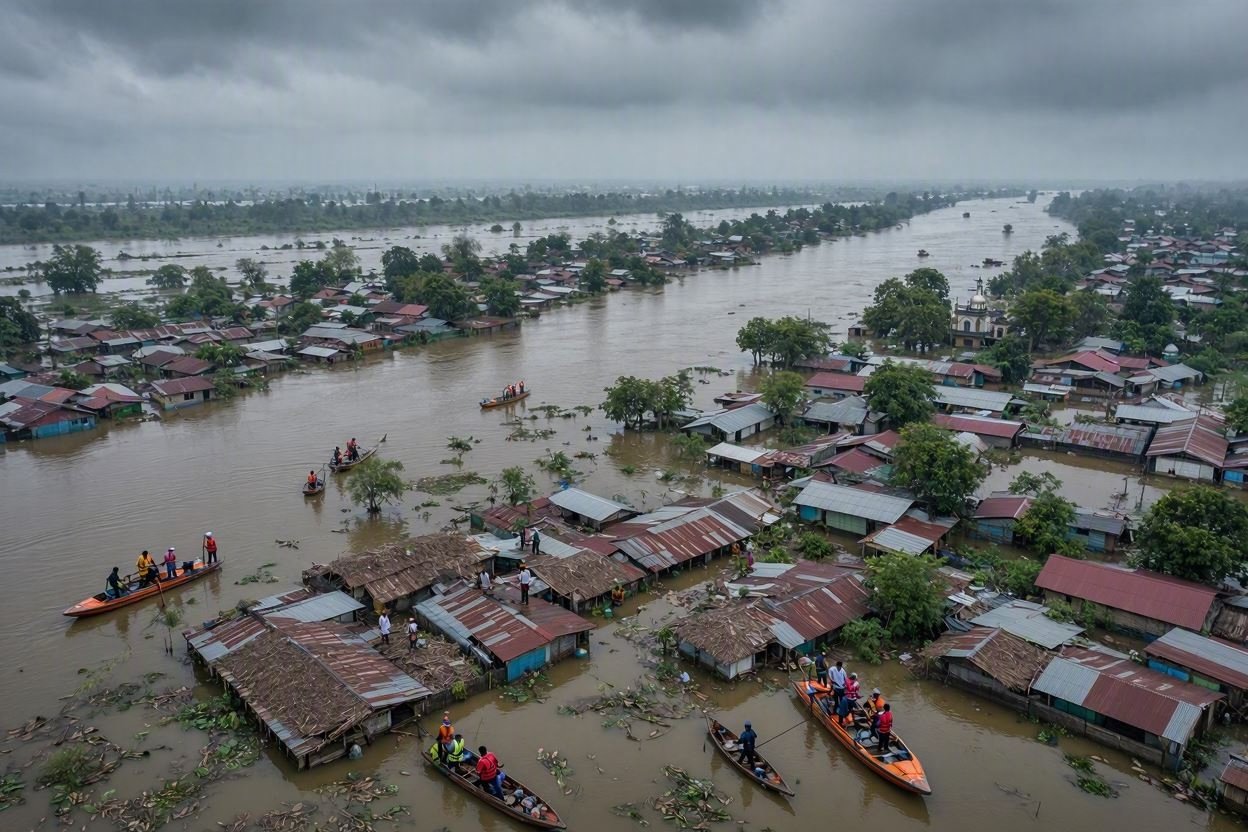
Brahmaputra Floods: Assam's Unfinished Constitutional Promise
Every monsoon, the Brahmaputra River transforms from a lifeline into a source of devastation for Assam. The 2026 flood season once again exposed the vulnerability of communities living along the river basin, with thousands displaced, critical infrastructure damaged, and livelihoods destroyed. Reports indicate that more than 700,000 people were affected during the recent flood waves, while the death toll crossed 100. :contentReference[oaicite:0]{index=0}
While floods are a natural feature of the Brahmaputra basin, the persistence of large-scale destruction raises a deeper constitutional question: has the State fulfilled its obligation to protect citizens from recurring and predictable disasters?
The Constitutional Dimension
The Constitution of India does not explicitly recognize a right to protection from floods. However, the Supreme Court has consistently interpreted Article 21—the right to life and personal liberty—to include the right to live with dignity, environmental protection, and access to basic necessities. Repeated flood-related displacement, loss of shelter, and destruction of livelihoods directly implicate these constitutional guarantees.
Directive Principles of State Policy further strengthen this obligation. Article 38 requires the State to promote social welfare, while Article 48A directs the State to protect and improve the environment. Together, these provisions create a constitutional framework that requires governments to move beyond emergency relief and toward long-term resilience and disaster mitigation.
Recurring Disaster, Recurring Questions
Assam is among India's most flood-prone states. The Brahmaputra basin receives some of the heaviest rainfall in the world, making annual flooding a recurring challenge. Experts have pointed to river erosion, sedimentation, climate change, and inadequate infrastructure planning as factors that worsen the impact of floods. :contentReference[oaicite:1]{index=1}
Recent studies have also challenged the common perception that the Brahmaputra alone causes Assam's floods, highlighting the significant role of heavy rainfall and hill torrents originating in neighbouring states. :contentReference[oaicite:2]{index=2}
The scale of recurring destruction has led to growing demands for permanent flood management strategies rather than seasonal relief measures. Political parties and civil society groups have repeatedly called for a comprehensive solution that addresses erosion control, watershed management, embankment maintenance, and climate adaptation. :contentReference[oaicite:3]{index=3}
Federalism and Disaster Governance
Flood management in Assam is not merely a state issue. The Brahmaputra is a transboundary river system flowing through Tibet (China), India, and Bangladesh, with multiple tributaries crossing state and international boundaries. Effective flood mitigation therefore requires coordinated action between the Union Government, neighbouring states, and regional institutions. :contentReference[oaicite:4]{index=4}
The Disaster Management Act, 2005 provides the legal framework for disaster preparedness and response. However, recurring flood emergencies reveal continuing gaps in long-term planning, infrastructure resilience, and environmental governance. The challenge is no longer only about emergency relief; it is about constitutional accountability for predictable risks.
An Unfinished Constitutional Promise
The recurring floods of Assam represent more than a natural disaster. They raise fundamental questions about governance, environmental justice, and the State's constitutional duty to safeguard citizens. As climate change increases the frequency and intensity of extreme weather events, the constitutional promise of dignity, security, and equal protection will increasingly be measured by the effectiveness of disaster governance.
For millions living along the Brahmaputra, the demand is not merely for compensation after disaster strikes. It is for a durable framework that transforms constitutional commitments into practical protection.