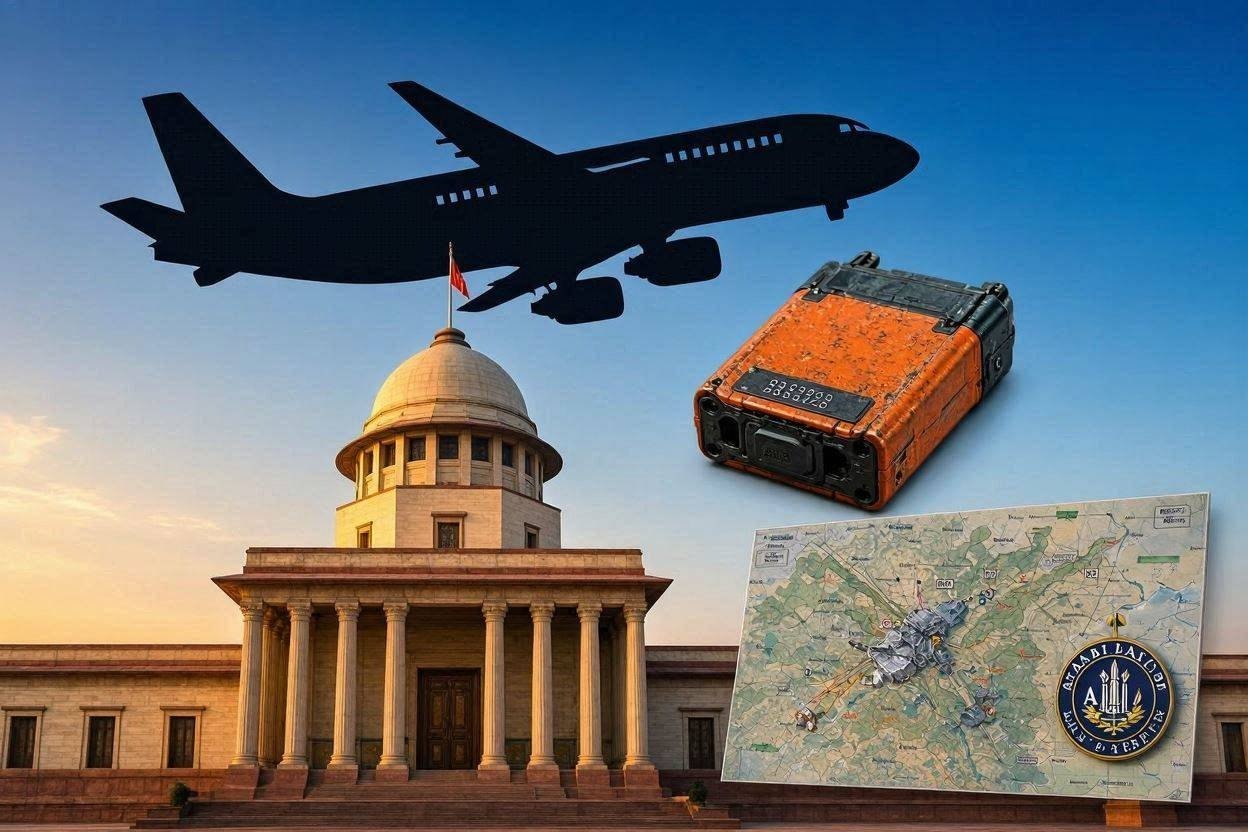
AAIB Tells Supreme Court Final Report on Air India Crash Expected by October
The Aircraft Accident Investigation Bureau (AAIB) has informed the Supreme Court of India that the draft final report into the Air India Flight AI-171 crash is expected to be ready by October 2026. The disclosure was made in response to petitions seeking a court-monitored or independent investigation into one of India's deadliest aviation disasters.
The AI-171 flight, a Boeing 787 Dreamliner operating from Ahmedabad to London, crashed shortly after take-off in June 2025, resulting in the deaths of 260 people, including passengers, crew members, and individuals on the ground. The tragedy triggered extensive investigations involving domestic and international aviation authorities.
In its affidavit before the Supreme Court, the AAIB stated that the investigation is currently in the advanced stages of evidence collection, technical examination, and forensic analysis. According to the Bureau, these activities are expected to be completed within approximately six weeks, following which the analysis phase will culminate in the preparation of the draft final report.
The AAIB emphasized that the investigation is not merely an internal exercise conducted by Indian authorities. Instead, it involves cooperation with international experts, foreign aviation regulators, aircraft manufacturers, and representatives from countries whose citizens were among the victims. The Bureau argued that such international collaboration is necessary under established aviation safety frameworks and contributes to the complexity and duration of the investigation.
Opposing calls for a parallel or court-supervised inquiry, the AAIB submitted that accident investigations are governed by statutory provisions and international treaty obligations. The Bureau contended that the existing legal framework vests exclusive investigative authority in the AAIB and that the primary objective of accident investigations is to improve aviation safety rather than determine civil or criminal liability.
The agency further highlighted the confidentiality requirements applicable to sensitive investigative material, including cockpit voice recordings, witness statements, technical data, and other evidence collected during the probe. It maintained that unrestricted disclosure could adversely affect the integrity of the investigation and future aviation safety inquiries.
The Supreme Court is presently examining petitions that seek greater transparency and independent oversight in relation to the crash investigation. The Court has indicated that it will consider the issues raised after reviewing the findings of the AAIB's final report.
The case raises important questions concerning aviation safety regulation, investigative independence, judicial oversight of statutory investigations, and the balance between transparency and confidentiality in accident inquiries. The anticipated October 2026 report is expected to provide crucial insights into the causes of the crash and recommend measures to strengthen aviation safety standards in India.