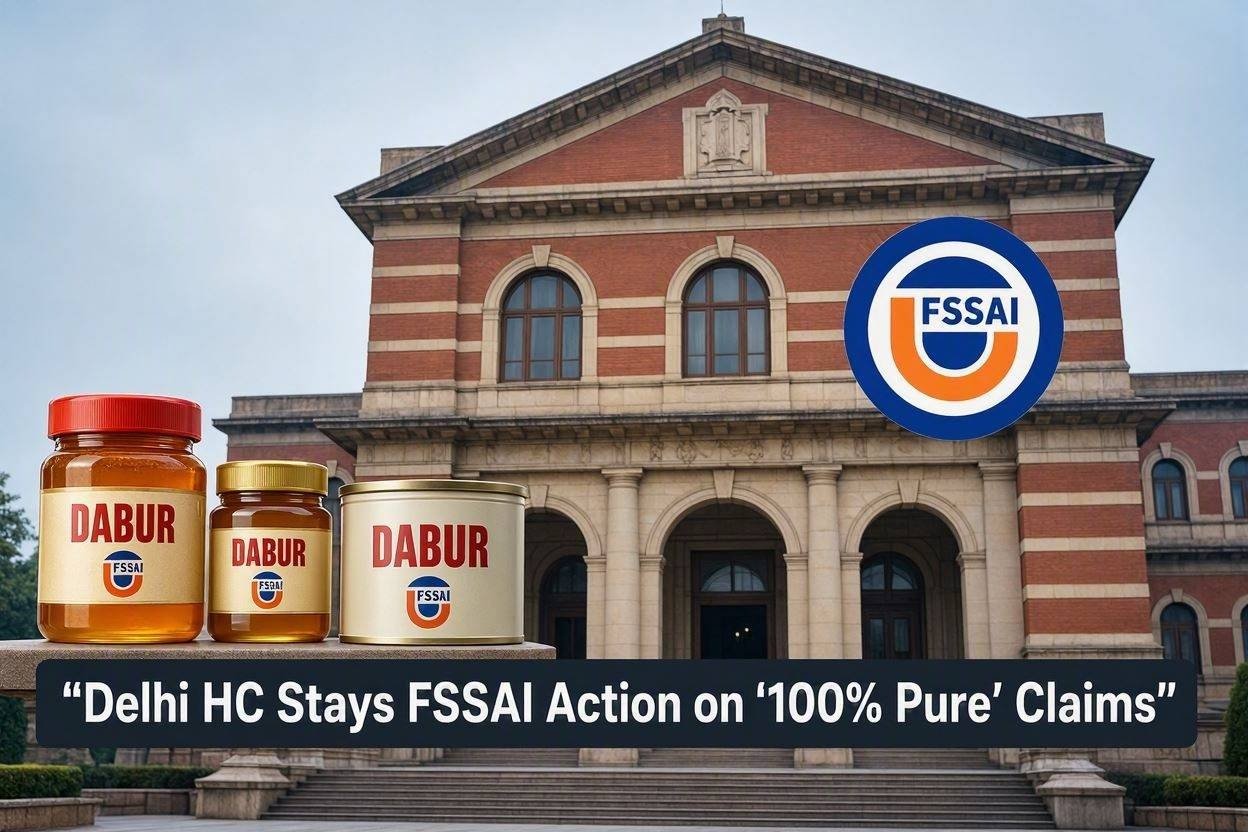
New Delhi: The Delhi High Court has granted interim relief to Dabur India by staying an order issued by the Food Safety and Standards Authority of India (FSSAI) that prohibited the company from selling food products carrying claims such as “100% Pure,” “100% Natural,” “100% Purity Guaranteed,” and “100% Organic.”
The dispute arose after FSSAI issued a directive restraining Dabur from marketing and selling several food products, including honey, cow ghee, and edible oils, bearing “100%” claims. The regulator argued that such representations could be ambiguous, unverifiable, and potentially misleading to consumers, thereby violating food labeling norms.
Challenging the directive before the Delhi High Court, Dabur contended that the order was issued without providing the company a proper opportunity to present its case. The company argued that the abrupt prohibition would adversely affect its business operations and consumer-facing product portfolio.
Hearing the matter, Justice Amit Mahajan observed that principles of natural justice require a party to be heard before such adverse action is taken. Taking note of the procedural concerns raised by the petitioner, the Court stayed the operation of the FSSAI order and granted interim protection to Dabur.
The interim order allows the company to continue selling products carrying the disputed claims until the matter is heard further. The Court has listed the case for further consideration on August 24, 2026.
The case highlights the growing regulatory scrutiny of marketing and labeling practices in India's food and consumer goods sector. In recent months, FSSAI has intensified enforcement efforts against claims that may create a misleading impression regarding product quality, purity, or superiority.
The outcome of the litigation could have far-reaching consequences for food manufacturers and FMCG companies that rely on descriptive purity and naturalness claims in product branding. It may also shape the standards governing consumer-facing advertising and labeling practices under India's food safety framework.
Legal experts note that the dispute sits at the intersection of consumer protection, food regulation, commercial speech, and administrative law. The Court's eventual ruling is expected to clarify the extent of FSSAI's powers in regulating promotional claims and the procedural safeguards that must accompany such enforcement actions.