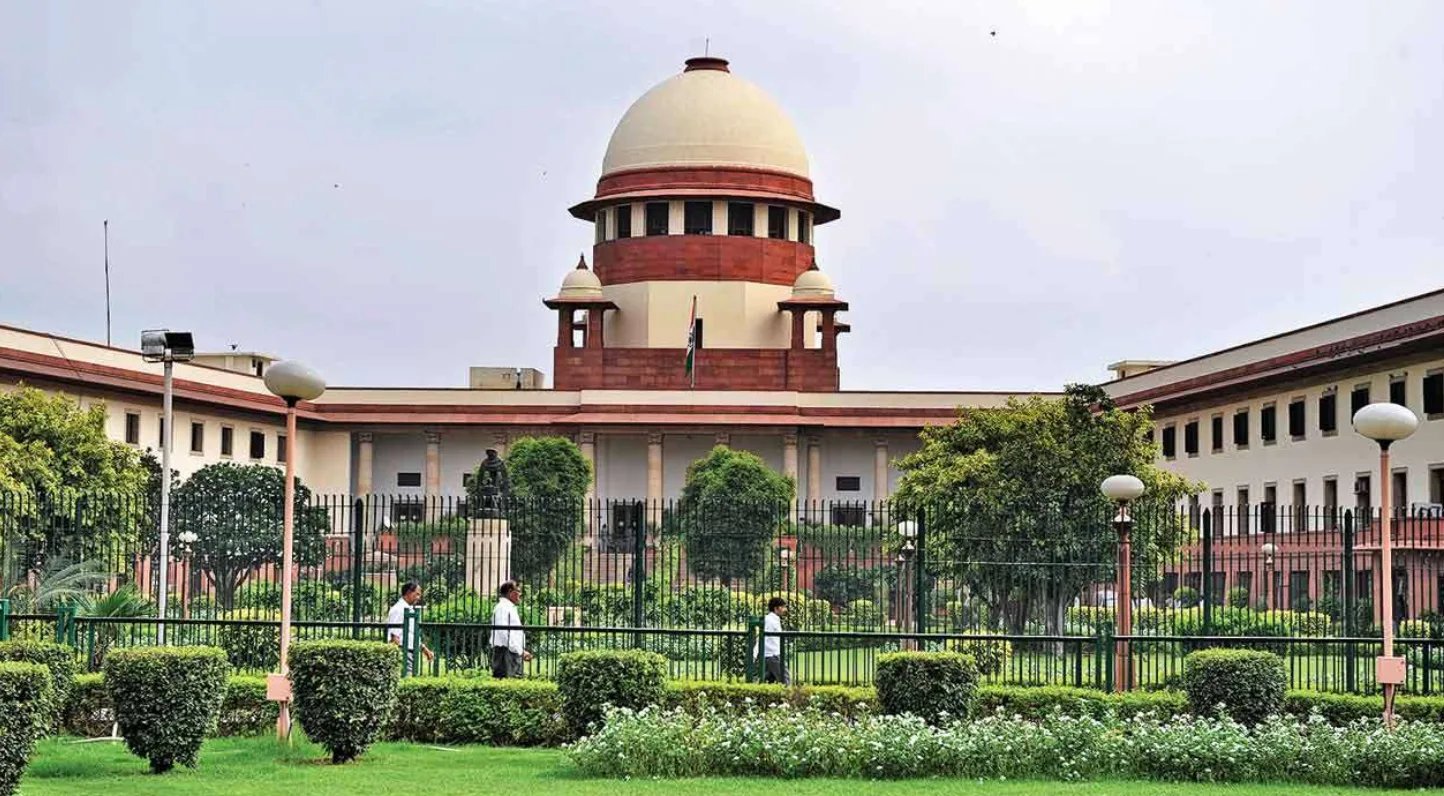
New Delhi, October 27, 2026: The Supreme Court of India has clarified that a foreign national who enters India lawfully cannot be subjected to the special bail restriction under Section 43D(7) of the Unlawful Activities (Prevention) Act, 1967 (UAPA), merely because their visa subsequently expires and their stay becomes unlawful.
A Bench comprising Justice Aravind Kumar and Justice Vipul M. Pancholi delivered the ruling in Union of India v. Mohamed Rifas @ Mohamed Rigbas, dismissing the Union government's appeal against the Madras High Court's decision restoring bail to the respondent.
What Did the Supreme Court Hold?
Section 43D(7) of the UAPA imposes a stringent restriction on granting bail to a person accused of an offence under the Act who is not an Indian citizen and has entered India unauthorisedly or illegally. The provision permits bail only in very exceptional circumstances, with reasons recorded in writing, when its conditions are satisfied.
The Court held that foreign nationality alone is insufficient to invoke this restriction. The prosecution must also establish, at least prima facie, that the person's initial entry into India was unauthorised or illegal. A subsequent visa expiry or the later loss of lawful immigration status does not retrospectively make an initially lawful entry illegal for the purposes of Section 43D(7).
Background of the Case
The respondent had received default bail in July 2018 after the investigating agency failed to file the chargesheet within the prescribed statutory period. The National Investigation Agency subsequently took over the investigation and filed a chargesheet.
A later FIR alleged that the respondent was a Sri Lankan national who had entered India in 2009, overstayed his visa and obtained Indian identity documents. In 2022, the Union government sought cancellation of his bail, arguing that his foreign nationality and the alleged suppression of his identity attracted the restriction under Section 43D(7).
The Special Court cancelled the bail in July 2022. However, the Madras High Court set aside that decision in December 2023, prompting the Union government to appeal to the Supreme Court.
Why Did the Supreme Court Reject the Appeal?
The Supreme Court found that the prosecution had failed to place sufficient material on record to establish prima facie that the respondent's initial entry into India was unauthorised or illegal. The reported allegations indicated that he had entered on a valid visa and that his stay became unlawful only after the visa expired.
The Court also clarified that Section 43D(7) does not override the statutory framework governing default bail under Section 43D(2) of the UAPA. An allegation that the accused concealed their nationality was not, by itself, sufficient to justify cancelling the bail granted in this case.
The Court further considered the delay in seeking cancellation and the distinction between challenging an allegedly unlawful bail order and cancelling bail on the basis of subsequent circumstances or conduct.
Legal Significance
The ruling distinguishes illegal entry into India from an unlawful stay that arises after a lawful entry. It clarifies that the special restriction under Section 43D(7) must be applied according to its statutory conditions and cannot be triggered solely by a person's foreign nationality or subsequent visa overstay.
However, the judgment does not remove the stringent bail requirements applicable under the UAPA. Where the conditions of Section 43D(7) are established, the threshold for granting bail remains exceptionally high, and the court must record its reasons in writing.
Final Decision
The Supreme Court dismissed the Union government's appeal and affirmed the Madras High Court's decision restoring the respondent's bail. The ruling does not amount to an acquittal or a final determination of the allegations against the respondent.
Case: Union of India v. Mohamed Rifas @ Mohamed Rigbas
Court: Supreme Court of India
Decision date: October 27, 2026
Bench: Justice Aravind Kumar and Justice Vipul M. Pancholi
Key provision: Section 43D(7), Unlawful Activities (Prevention) Act, 1967
Citation: 2026 INSC 1160