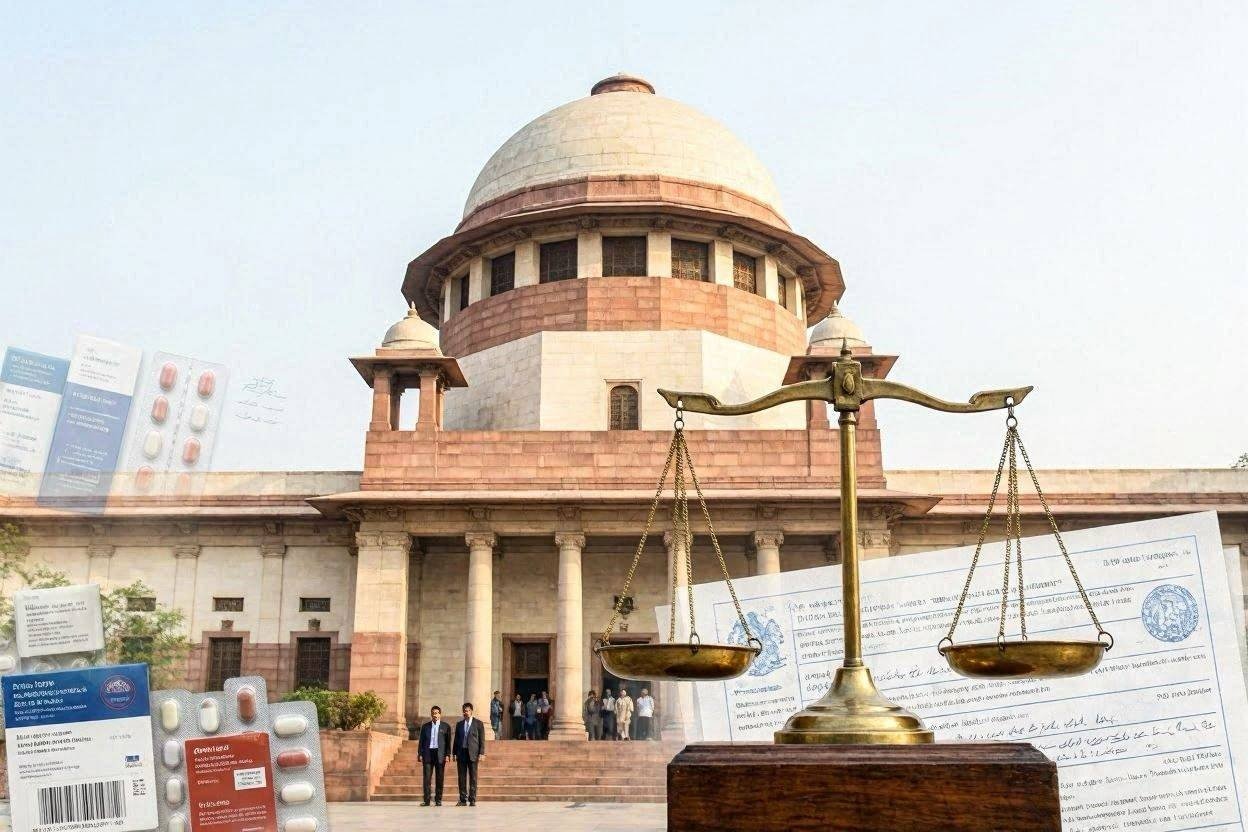
The Supreme Court of India has initiated suo motu proceedings concerning access to life-saving medicines after taking note of extraordinary delays in the adjudication of a petition before the Kerala High Court. The matter related to the affordability of a patented breast cancer medication and had reportedly been listed for hearing 57 times without a final resolution.
The case was originally filed by a breast cancer patient seeking intervention regarding the high cost of a life-saving drug. However, before the matter could be conclusively decided, the petitioner passed away. The prolonged pendency of the case drew widespread concern and prompted a letter highlighting the issue to judicial authorities.
Acting on the communication, a Bench led by Chief Justice of India Surya Kant, along with Justice Joymalya Bagchi and Justice V. Mohana, treated the issue as a matter warranting suo motu intervention. The Court observed that cases involving access to critical medical treatment require urgent consideration because they directly implicate the constitutional right to life under Article 21.
While issuing notice to the Union Government, the Supreme Court emphasized the need to examine systemic issues relating to access, affordability, and timely judicial resolution of disputes concerning life-saving medicines. The Court also sought information regarding the status of the proceedings before the Kerala High Court.
The controversy has reignited debate on the pricing of patented medicines, access to healthcare, and the impact of judicial delays on vulnerable litigants. Legal commentators have pointed out that prolonged delays in health-related litigation can effectively defeat the purpose of seeking judicial remedies, particularly where treatment decisions are time-sensitive.
The matter is expected to have wider implications for healthcare policy, pharmaceutical regulation, patent law, and judicial case management. The Supreme Court's intervention signals a willingness to scrutinize institutional delays where fundamental rights and access to essential healthcare are at stake.