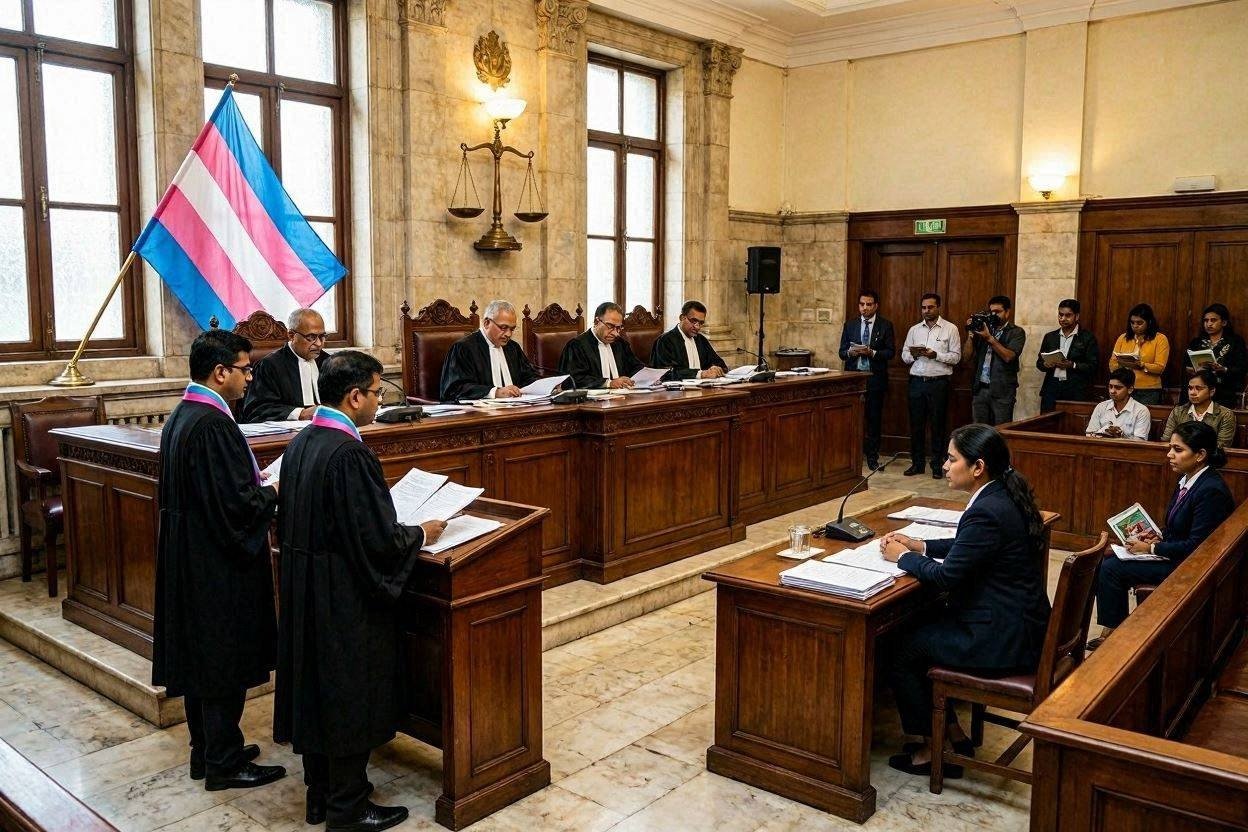
The Karnataka High Court has expressed concern over the State Government's continued delay in implementing a reservation policy for transgender persons in educational institutions, highlighting that more than twelve years have passed since the landmark Supreme Court judgment in National Legal Services Authority (NALSA) v. Union of India, which recognized transgender persons as a third gender and directed governments to take affirmative action measures.
A Division Bench comprising Justice Anu Sivaraman and Justice Venkatesh Naik T was hearing a matter concerning reservation benefits for transgender persons in educational institutions. During the proceedings, the Court questioned why a comprehensive policy had still not been finalized despite years of deliberations and governmental consideration.
The Bench observed that significant time had elapsed since the proposal for transgender reservation was first circulated among various government departments. The Court noted that the issue concerns substantive equality and access to education for a historically marginalized community.
Referring to the constitutional mandate of equality and the principles laid down in the NALSA judgment, the Court emphasized that affirmative measures are necessary to ensure meaningful participation of transgender persons in educational opportunities. The Bench urged the State Government to expedite the policy-making process and provide a clear timeline for implementation.
The matter forms part of broader efforts to secure institutional inclusion and equal access for transgender persons. Karnataka had previously become one of the first states to introduce horizontal reservation for transgender persons in public employment. However, reservation in educational institutions remains an unresolved issue despite policy discussions and judicial interventions.
The Court's observations reflect growing judicial attention toward ensuring effective implementation of transgender rights rather than limiting protections to policy declarations. The proceedings underscore the continuing responsibility of governments to translate constitutional guarantees into practical measures that address structural discrimination.
The case will continue to be monitored by the High Court as the State Government updates the Court on the progress of its proposed reservation framework for transgender students.