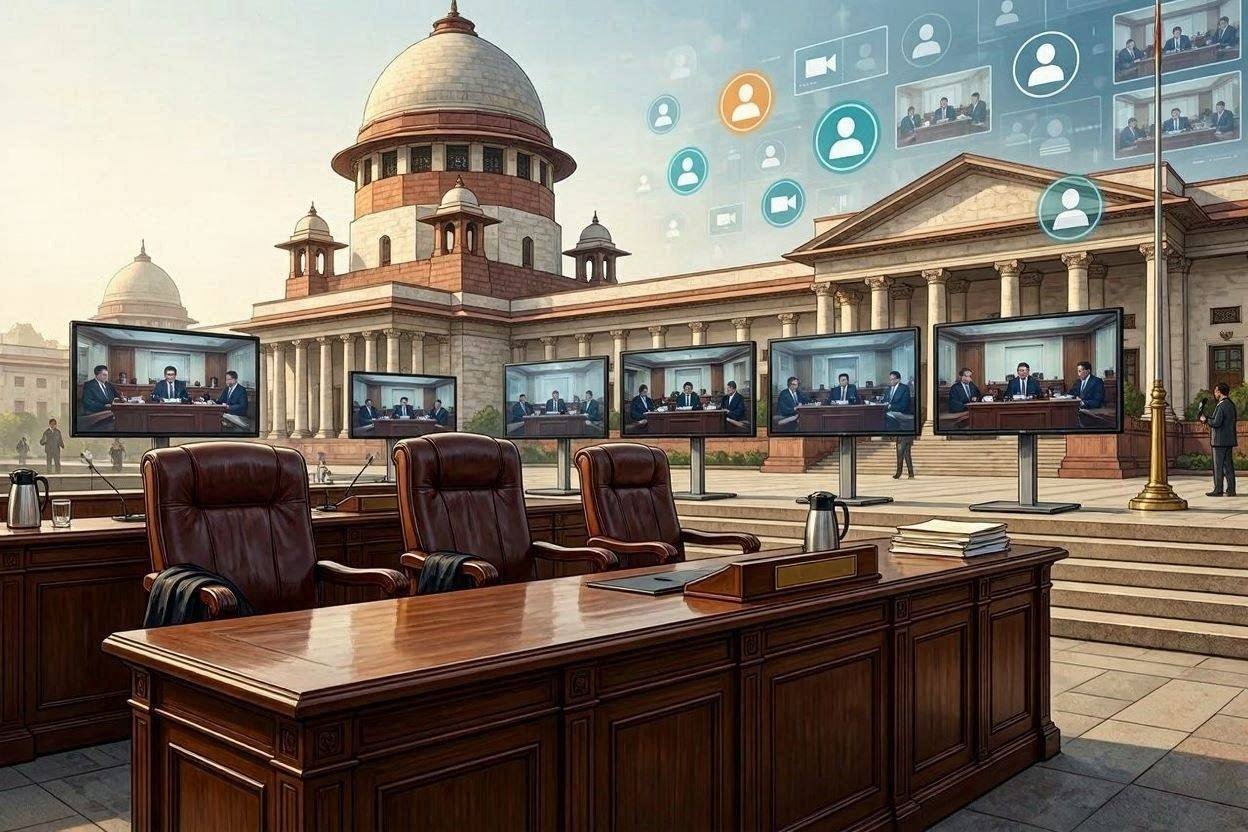
The Supreme Court of India has approved a significant procedural change governing litigants who appear before the Court without legal representation, commonly known as parties-in-person. The decision follows recent incidents of courtroom disruptions that raised concerns about maintaining decorum and the proper administration of justice.
At a Full Court meeting held on July 15, 2026, the judges resolved to amend the existing procedure under Order IV Rule 1(c) of the Supreme Court Rules, 2013. Under the revised framework, parties-in-person will first be encouraged to participate in proceedings through virtual mode. During their interaction with the Registrar, litigants will be informed of the option to appear remotely before their petitions are processed.
Where a litigant insists on appearing physically before the Court, such appearance will now be subject to specific conditions. The Supreme Court has decided that proceedings involving such litigants will not be live-streamed, and video recording of the proceedings will not be permitted.
The decision comes in the aftermath of recent instances involving unruly conduct by litigants appearing in person. One widely reported incident involved a litigant allegedly disrupting proceedings, throwing papers inside the courtroom, and using abusive language. The episode sparked concerns regarding courtroom security and the misuse of publicly accessible live-streaming facilities.
The Supreme Court's move reflects an attempt to balance the principle of open justice with the need to maintain courtroom discipline. While the Court remains committed to transparency through live-streaming in appropriate cases, it has indicated that safeguards may be necessary where there is a risk of disruption or misuse.
Legal observers note that the decision could influence future discussions on the regulation of courtroom broadcasts and the responsibilities of litigants participating directly in judicial proceedings. The policy also highlights the growing role of virtual hearings as a preferred mechanism for ensuring access to justice while minimizing operational and security concerns.
The development marks another step in the Supreme Court's ongoing efforts to modernize court administration and refine procedures governing litigants-in-person, while ensuring that judicial proceedings remain orderly, respectful, and accessible.