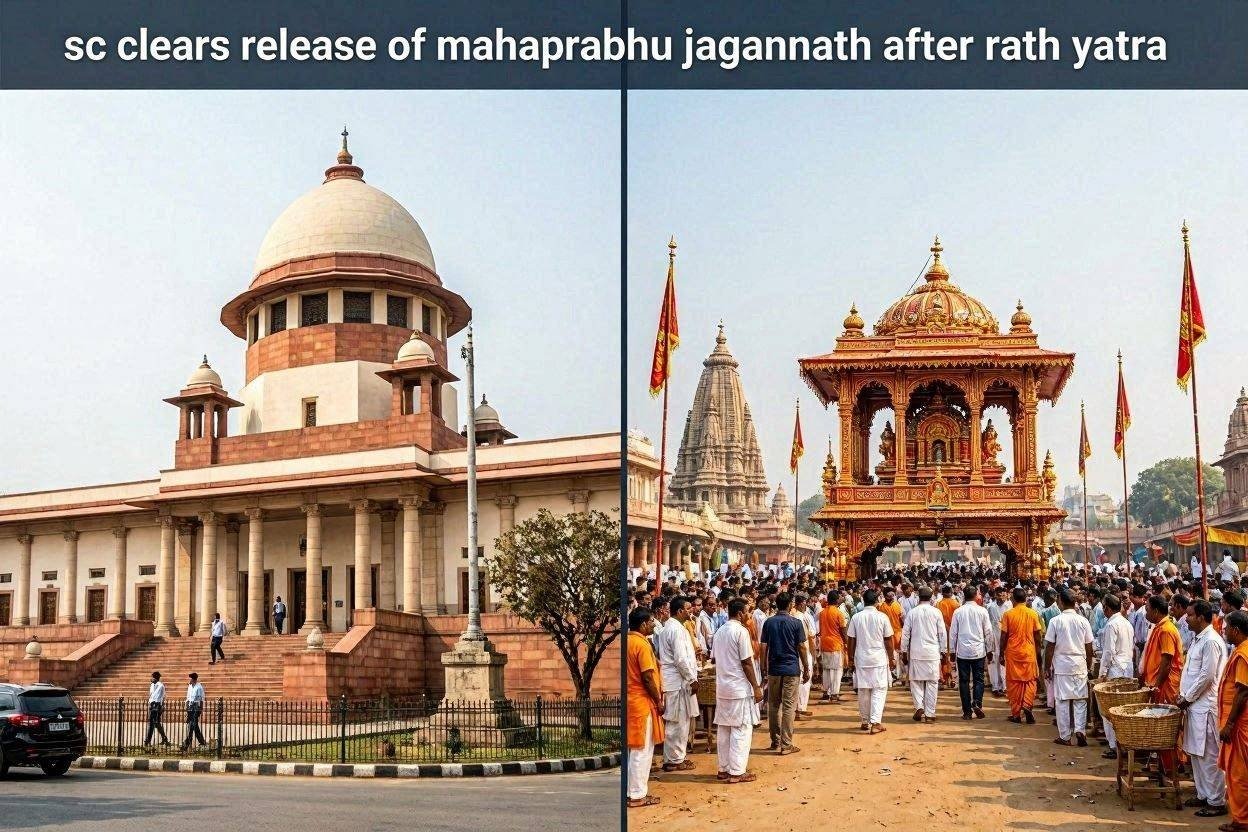
The Supreme Court on July 17, 2026, allowed the nationwide release of the animated film Mahaprabhu Jagannath on or after July 28, following the conclusion of the annual Lord Jagannath Rath Yatra festivities.
A Bench comprising Justice B.V. Nagarathna and Justice R. Mahadevan heard a petition filed by Ele Animations Pvt. Ltd., challenging an interim order of the Orissa High Court that had stayed the film's release across India. The movie was originally scheduled to be released on July 17.
Senior Advocate Devadatt Kamat, appearing for the producers, argued that substantial investments had been made in the project and that the film had already received certification from the Central Board of Film Certification (CBFC). He further submitted that the animated film, intended primarily for children, was based on an existing web series that had been available to the public.
However, the Supreme Court declined to permit the film's release during the Rath Yatra period. The Bench observed that the religious festival had already commenced and suggested that the producers postpone the release until after the festivities concluded.
The dispute arose after the Orissa High Court stayed the release while hearing a Public Interest Litigation (PIL) challenging the film's portrayal of Lord Jagannath. Petitioners alleged that certain fictional depictions, including aspects of the deity's childhood, dialogues, and adventure sequences, were inconsistent with traditional religious texts such as the Skanda Purana and Brahma Purana, as well as established temple traditions.
The High Court had expressed concern that films dealing with matters of deep religious significance could potentially affect public sentiments and therefore required closer judicial scrutiny. It also noted that the constitutional guarantee of freedom of speech and expression is subject to reasonable restrictions under Article 19(2) of the Constitution.
Before the Supreme Court, the filmmakers emphasized that the movie carried a disclaimer clarifying its fictional nature and that it was created with devotion and respect towards Lord Jagannath. They argued that the film did not seek to undermine religious beliefs and was protected under the constitutional right to free expression.
Taking a balanced approach, the Supreme Court permitted the film's release after the conclusion of the Rath Yatra celebrations, thereby accommodating religious sensitivities while preserving the producers' right to exhibit the CBFC-certified film.
The decision highlights the judiciary's continuing effort to balance artistic freedom, religious sentiments, and public order concerns in matters involving creative works based on religious subjects.