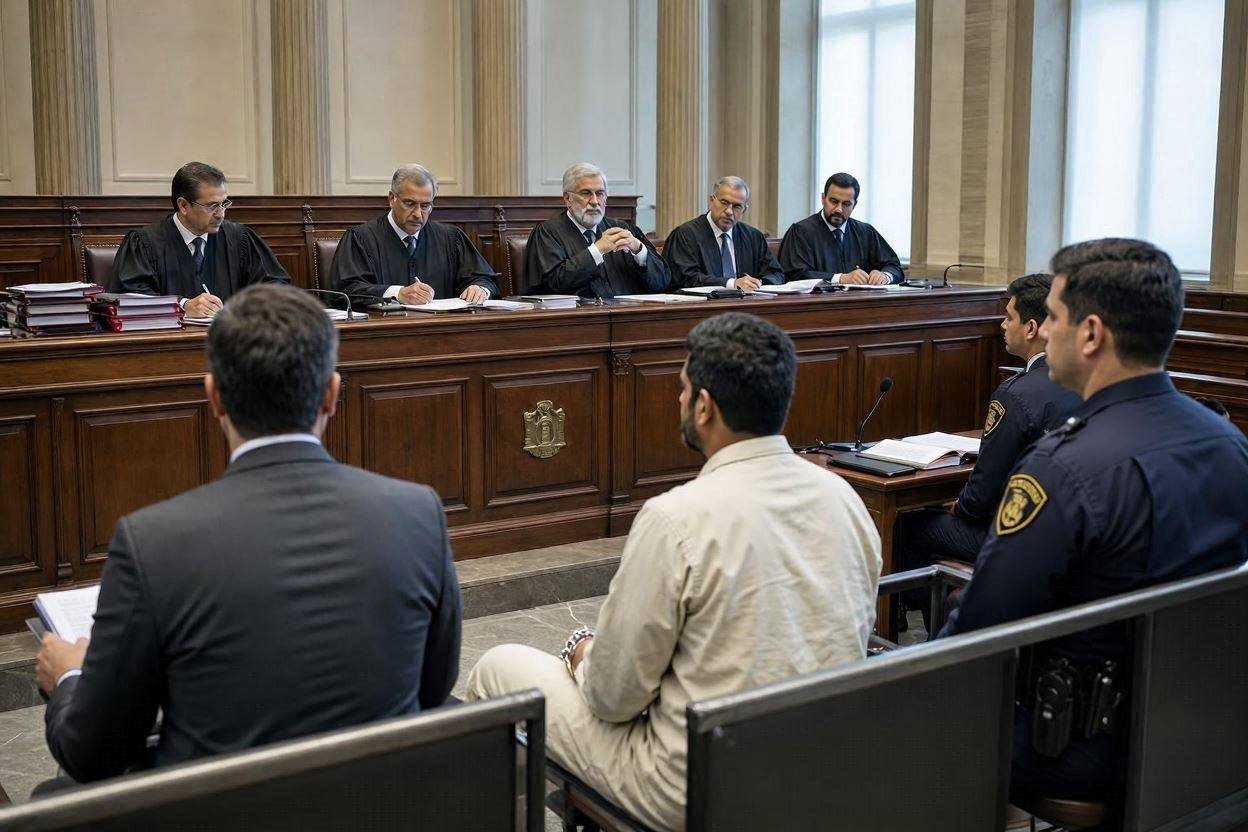
Supreme Court Reserves Verdict on Abu Salem's Premature Release Plea
The Supreme Court of India has reserved its verdict on a plea filed by Abu Salem, a convict in the 1993 Mumbai serial blasts case, seeking his premature release from prison after completing 25 years of incarceration. The matter raises significant questions regarding the interpretation of extradition assurances provided by India to Portugal at the time of Salem's extradition.
Salem contends that under the terms accepted by Indian authorities during the extradition proceedings, he cannot be subjected to imprisonment exceeding 25 years. His counsel argued before the apex court that the period of incarceration already undergone satisfies the maximum custodial limit contemplated under the extradition arrangement.
The case has its origins in Salem's extradition from Portugal in 2005. Portuguese courts had approved his extradition on the understanding that he would not be subjected to punishment exceeding the limitations prescribed under the extradition assurances furnished by India. Salem has consistently relied on these assurances in seeking release from custody.
Opposing the plea, the Central Bureau of Investigation (CBI) submitted that Salem remains liable to serve the sentence imposed by the competent court and further pointed out that a fine of approximately ₹16.51 lakh remains payable. The agency urged the Court to reject the plea for premature release.
The issue has generated extensive litigation over the years. Earlier judicial proceedings examined whether prison remissions could be counted towards the 25-year period claimed by Salem. Courts have previously observed that the extradition-related limitations and remission policies operate in distinct legal spheres.
After hearing detailed submissions from all parties, the Supreme Court reserved its order. The forthcoming judgment is expected to clarify the legal effect of extradition assurances, the scope of remission benefits, and the manner in which international obligations interact with domestic sentencing laws.
The decision is likely to have wider implications for future extradition cases involving diplomatic assurances and sentence limitations imposed by foreign jurisdictions.