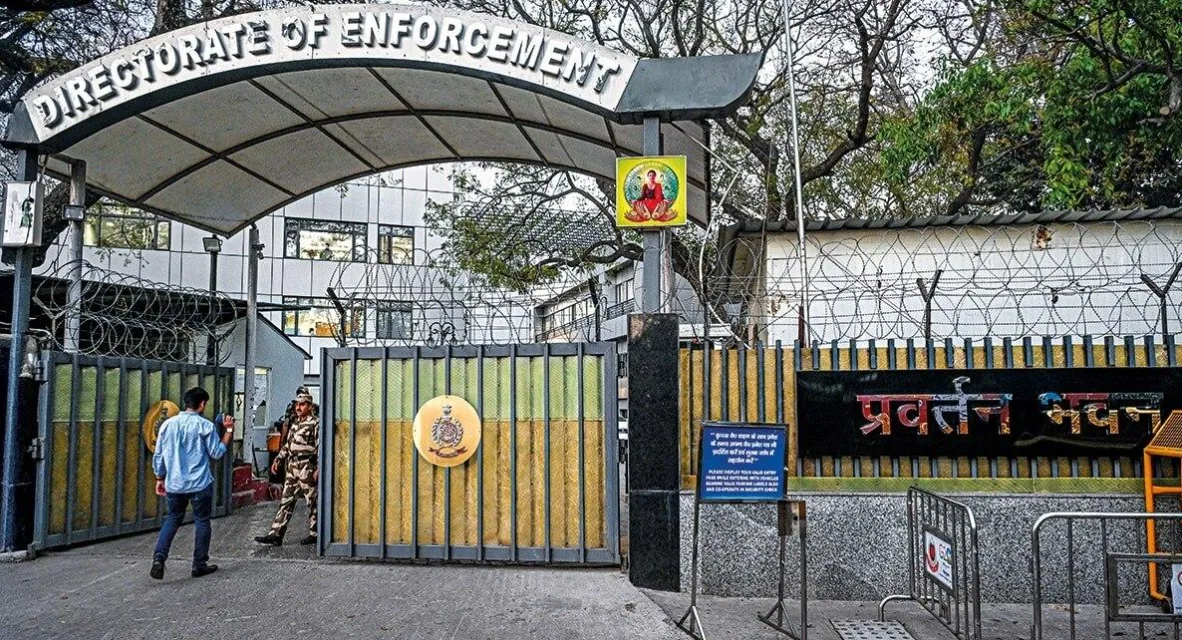
ED Moves Supreme Court Against Quashing of Money-Laundering Case Against NewsClick
New Delhi, 25 October 2026: The Enforcement Directorate (ED) has approached the Supreme Court of India challenging the Delhi High Court's decision to quash a money-laundering case against digital news platform NewsClick, its parent company PPK Newsclick Studio Private Limited, and its founder-editor, Prabir Purkayastha. The agency has questioned the High Court's assessment of the allegations and the material collected during the investigation.
Background of the Case
The dispute originated from a 2020 complaint investigated by the Delhi Police's Economic Offences Wing (EOW). The allegations concerned foreign direct investment (FDI) received by PPK Newsclick Studio Private Limited from US-based Worldwide Media Holdings LLC during the 2018–19 financial year.
Investigators alleged that the investment involved an inflated valuation of company shares intended to circumvent restrictions governing foreign investment in digital news media. The complaint also raised allegations concerning the use of the funds for salaries, consultancy fees, rent and other expenses.
Following the police investigation, the Enforcement Directorate initiated proceedings under the Prevention of Money Laundering Act, 2002 (PMLA), treating the alleged underlying offences as predicate offences for its investigation.
Delhi High Court's Decision
On 29 May 2026, the Delhi High Court, in a judgment delivered by Justice Neena Bansal Krishna, quashed the relevant FIR registered by the EOW and the connected money-laundering proceedings.
The High Court concluded that the allegations did not establish the essential ingredients of the offences invoked in the FIR. It also examined the circumstances surrounding the foreign investment and observed that the material before it did not sufficiently establish the alleged criminal wrongdoing.
The Court further held that the connected money-laundering proceedings could not survive once the underlying FIR was quashed in the circumstances of the case.
Why Has the ED Approached the Supreme Court?
In its appeal, the ED has contended that the High Court erred in quashing the proceedings without properly examining the allegations and material relevant to the money-laundering investigation.
The agency argues that, at the stage of considering whether criminal proceedings should be quashed, courts should examine whether the allegations disclose the ingredients of an offence rather than conduct a detailed assessment of the evidence as though the matter were at trial.
The ED has also questioned the delay between the reservation of the High Court's judgment and its pronouncement. According to reports, the judgment was reserved on 3 December 2025 and delivered on 29 May 2026. The agency alleges that the delay may have contributed to important submissions being overlooked or left unaddressed.
These are grounds advanced by the ED in its challenge and have not yet been accepted by the Supreme Court.
Legal Issues Involved
The dispute raises important questions concerning the scope of judicial review at the stage of quashing an FIR, the relationship between predicate offences and money-laundering proceedings under the PMLA, and the extent to which courts may examine investigative material before a trial.
It also raises a procedural question regarding the time taken to pronounce judgments after hearings have concluded. The Supreme Court's consideration of these issues may clarify the applicable principles governing challenges to orders that terminate criminal investigations.
Current Status and Significance
As reported on 25 October 2026, the matter had not yet been listed for hearing before the Supreme Court. The filing of the appeal does not, by itself, set aside the Delhi High Court's judgment.
The case is significant for criminal law practitioners, media organisations and investigators because it concerns the threshold for quashing criminal proceedings and the legal requirements for sustaining a money-laundering investigation.
Conclusion
The ED's challenge places the legality of the Delhi High Court's decision before the Supreme Court. The final outcome will depend on the Court's examination of the agency's grounds and the applicable law. Until then, the allegations should not be treated as established criminal wrongdoing.
Sources: The Times of India, NDTV and The Indian Express, reports published on 24–25 October 2026.