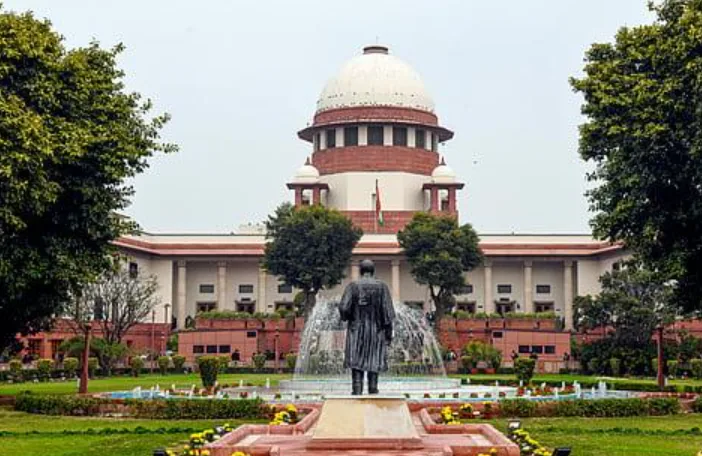
Supreme Court Pushes for National Database to Detect and Remove Child Sexual Abuse Material Online
New Delhi, 17 October 2026: The Supreme Court of India has directed the Union Government to establish a comprehensive national database to help detect and remove child sexual exploitation and abuse material (CSEAM) across online platforms. The directions form part of an order dated 15 October 2026 in Just Rights for Children Alliance & Anr. v. S. Harish & Ors.
A Bench comprising Justice J.B. Pardiwala and Justice K. Vinod Chandran addressed gaps in the existing mechanisms for identifying and removing such material, noting that isolated reporting systems do not ensure that content removed from one platform is also detected and removed from others.
National Hash and URL Database
The Court directed the Union Government to establish a National Hash and URL List Database, either within the existing Sahyog Portal or as a separate repository. The database is intended to contain digital identifiers and URLs associated with verified CSEAM, rather than the harmful material itself.
Hash identifiers act as digital fingerprints that help identify matching images or videos when they are uploaded again. URL listing helps identify web addresses associated with confirmed material. By enabling platforms to compare content against a common database, these methods can improve coordinated detection and removal.
Human Verification and Safeguards
The Court emphasised that database entries require reliable verification. Specialised software may assist with preliminary screening, but the final assessment must be conducted independently by at least three trained human analysts.
The order also addresses safeguards against mistaken identification and the removal of lawful content. These include appropriate record-keeping, access logs, independent audits and mechanisms through which affected users can challenge removals or incorrect database entries.
Reporting Obligations for Online Intermediaries
The Court reiterated that online intermediaries must comply with reporting obligations under the Protection of Children from Sexual Offences Act, 2012, and the applicable POCSO Rules. Reports must be made to the appropriate authorities, including the Special Juvenile Police Unit, local police or the cybercrime portal, as applicable.
The order specifies reporting timelines for different circumstances. In particular, certain removals involving material of unknown origin are subject to a two-hour reporting requirement, while removals resulting from matches against the national database are to be covered by consolidated weekly reports to the database authority.
The Court also addressed grievance-handling procedures, requiring trained grievance officers to examine complaints, acknowledge them within 24 hours with a reference number, and communicate decisions and reasons to complainants.
Accountability of Digital Platforms
The Bench asked the Union Government to consider a framework for exemplary monetary penalties against intermediaries that persistently fail to meet their obligations under the Information Technology Act and the Information Technology Rules. The seriousness, duration and recurrence of violations, along with the size and turnover of the intermediary, may be considered in determining penalties.
The Court also addressed the circulation of prohibited material through subscription-based and paywalled services, calling for stronger scrutiny and consideration of measures concerning revenue derived from such material.
Children's Right to Internet Access
The order also considered children's access to the internet. The Court recognised the importance of online access for learning, information and expression, while emphasising that children's safety must be protected through proportionate safeguards rather than blanket exclusion from the digital environment.
It called for age-appropriate digital safety and sex education, including education on consent, safe and unsafe touch, online exploitation and ways to report abuse. The directions also address curriculum development and support for affected children.
Next Steps
The Union Government was directed to take appropriate implementation measures, including guidelines, standard operating procedures and any necessary amendments to the Information Technology framework. It must file an affidavit detailing progress before the next hearing scheduled for 10 December 2026.
Conclusion
The Supreme Court's order seeks to strengthen coordinated detection and removal of CSEAM through a shared national database, human verification, defined reporting procedures and greater platform accountability. Its implementation will be significant for online child protection, intermediary compliance and the balance between digital safety and lawful internet access.
Case: Just Rights for Children Alliance & Anr. v. S. Harish & Ors.
Order date: 15 October 2026
Reference: 2026 INSC 1149
Source: Supreme Court order dated 15 October 2026, as reproduced by LiveLaw.