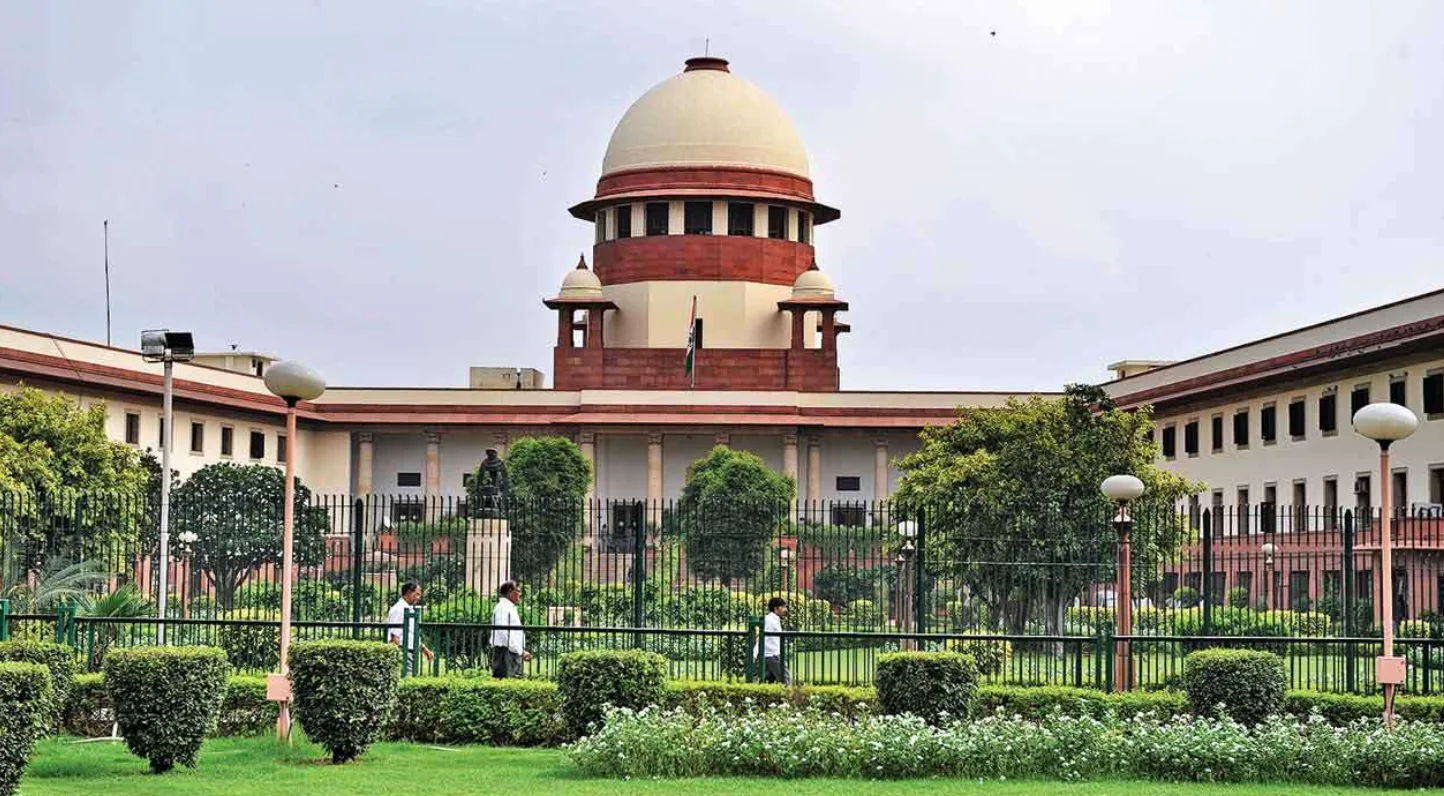
Supreme Court Directs Centre to Frame Measures Against Misuse of Live-Streamed Court Proceedings
The Supreme Court of India has directed the Ministry of Electronics and Information Technology (MeitY) to incorporate enforcement measures into its proposed policy to address violations involving the unauthorised extraction, circulation and commercial exploitation of audio-video recordings of judicial proceedings.
A three-judge Bench comprising Chief Justice of India Surya Kant and Justices Joymalya Bagchi and V. Mohana issued the direction on October 30, 2026, while hearing petitions concerning the misuse of live-streamed courtroom proceedings in Harshita Grover v. Union of India & Ors.
Background of the Case
The matter concerns the unauthorised use of recordings of court proceedings, particularly their extraction, modification, circulation and commercial exploitation on social media and other digital platforms. Concerns have also been raised regarding misleading captions, selective editing, misrepresentation and the use of courtroom footage for personal or professional promotion.
On July 24, 2026, the Supreme Court had issued interim directions prohibiting the extraction, dissemination, monetisation, posting, reposting, uploading, transmission, modification, storage or hosting of audio-video recordings of judicial proceedings on social media or other digital platforms without prior permission from the Secretary General of the Supreme Court or the Registrar Generals of the jurisdictional High Courts.
Supreme Court Seeks Enforcement Measures
During the October 30 hearing, Solicitor General Tushar Mehta informed the Bench that suggestions received from various High Courts and other stakeholders had been forwarded to MeitY for preparing a comprehensive policy framework. He also brought to the Court's attention instances of violations of its earlier interim directions.
Taking note of these submissions, the Bench directed MeitY to ensure compliance with the existing judicial directions and incorporate appropriate measures for taking action against individuals and entities violating the restrictions.
The Court specifically observed that:
"Necessary measures for taking action against those who fail to comply with the directions will also be incorporated in the policy regime."
The Bench also indicated that the authorities concerned under the Information Technology (Intermediary Guidelines and Digital Media Ethics Code) Rules, 2021, should act to implement the Court's directions.
Concerns Regarding Digital Misuse and Commercial Exploitation
Advocate Prashant Bhushan suggested that official courtroom recordings should incorporate digital watermarking and cryptographic signatures. Such safeguards could help users and digital platforms distinguish authentic courtroom footage from manipulated or misleading recordings.
The Bench discussed the difficulties associated with unauthorised extraction of recordings, including the possibility of individuals duplicating official live streams through secondary devices and subsequently circulating edited clips.
Justice Joymalya Bagchi also highlighted concerns regarding the commercial exploitation of courtroom footage. The Court indicated that the extent of extracted material and the purpose for which it is used may require judicial supervision.
Clarification on Media Reporting
The Supreme Court's earlier restrictions were not intended to impose a blanket prohibition on recognised news organisations reporting judicial proceedings. Media organisations may continue reporting on hearings and informing the public about legal developments and judicial pronouncements.
However, the Court clarified that audio or video clips of judicial proceedings cannot be used in such reportage without the requisite permission. The distinction is between reporting on court proceedings and independently extracting or circulating recordings of those proceedings.
Legal Significance
The development highlights the evolving relationship between judicial transparency, freedom of the press and digital accountability. Although live-streaming promotes open justice and public access to judicial proceedings, unauthorised manipulation and commercial exploitation of courtroom recordings may undermine the integrity of judicial institutions.
The proposed policy framework is expected to address enforcement mechanisms and provide greater clarity regarding compliance with the Supreme Court's existing directions. The matter also raises important questions about the regulation of digital content, intermediary responsibilities and the permissible use of publicly accessible judicial recordings.
The Supreme Court's latest direction reinforces that transparency in judicial proceedings must operate alongside safeguards against unauthorised distribution, misleading representation and commercial misuse of courtroom footage.