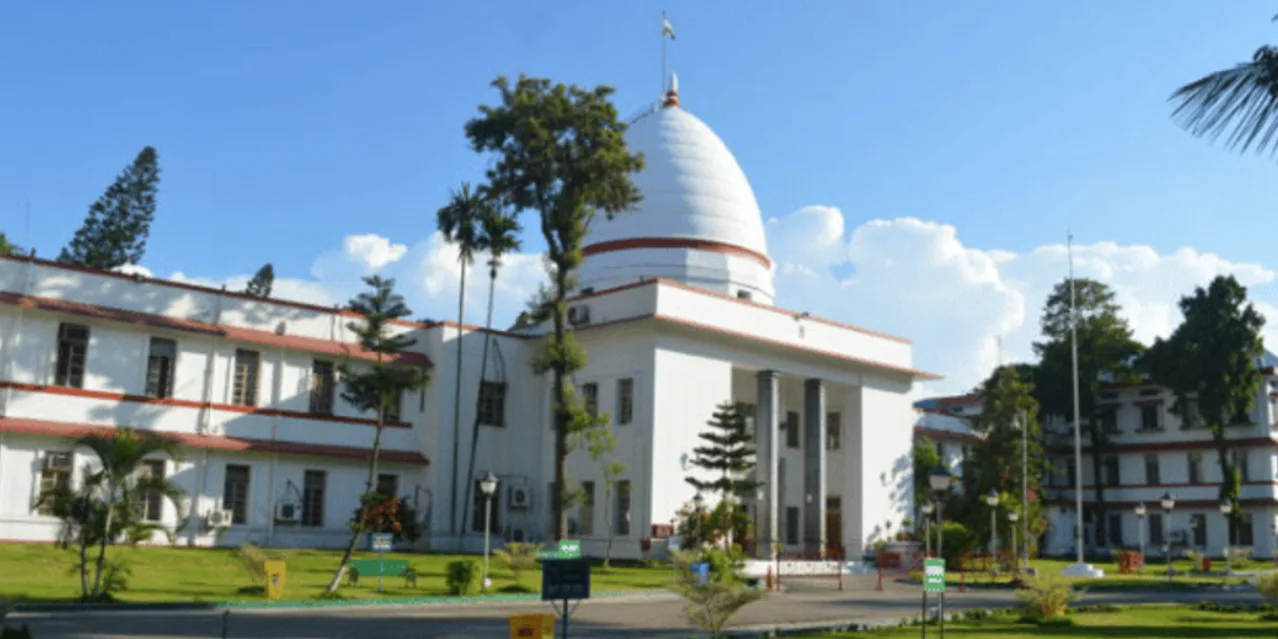
Gauhati High Court Rules That Non-Governmental Bodies Cannot Restrict Freedom of Movement
Guwahati, October 30, 2026: The Gauhati High Court has held that non-governmental organisations and customary village institutions cannot impose restrictions on individuals' fundamental right to freedom of movement. The Court set aside the excommunication of 42 residents and their families from Yaongyimsen village in Nagaland, emphasising that customary practices must comply with constitutional protections.
In an order dated October 27, 2026, Justice Yarenjungla Longkumer observed that the petitioners and their families have the right to move freely throughout the territory of India. The Court clarified that reasonable restrictions on this right can only be imposed by the State through a valid law and cannot be independently enforced by private institutions.
Background of the Dispute
The matter arose from a dispute concerning the establishment year of the Chumoukedima Yaongyimsen association, representing residents of Yaongyimsen village living in Chumoukedima, Nagaland. Disagreements emerged between local associations over whether the organisation was established in 1989 or 2001.
The dispute escalated following a meeting on March 18, 2024, and subsequent disagreements involving traditional village institutions, including the Putu Menden and Yaongyimsen Senso Mungdang.
In October 2024, the Senso Mungdang announced the excommunication of 42 individuals and their families from the village. The decision was subsequently endorsed by the Putu Menden. Further restrictions were imposed through another announcement in December 2024, permanently removing the affected individuals and their families from village citizenship.
Challenging these decisions, the petitioners argued that the village institutions lacked the authority to deprive them of their rights and that the excommunication violated their fundamental freedoms.
Customary Practices Cannot Override Fundamental Rights
The High Court observed that customary orders must be examined in light of fundamental rights. Referring to Article 13 of the Constitution, the Court noted that customs and usages having the force of law must comply with constitutional guarantees.
The Court further observed that even where village institutions are neither government authorities nor statutory bodies, their decisions may be examined under Article 226 when they exercise pervasive control over individuals and affect legally protected interests.
It noted that the consequences of the excommunication extended beyond voluntary social association and affected the petitioners' village identity, civil status, identity documents, access to public benefits and other legally protected interests.
Impact on Fundamental Rights
The Court found that the impugned circulars and publications adversely affected the petitioners' fundamental rights under Article 19 of the Constitution. It also expressed concern that the restrictions extended to the wives and children of the petitioners, who had no involvement in the underlying dispute.
Rejecting the justification of maintaining village harmony, the Court observed that the customary institutions had failed to demonstrate how the excommunication restored harmony or what specific customary law had been violated.
Significance of the Decision
The ruling reinforces the constitutional principle that traditional authority and customary practices cannot be exercised in a manner that infringes legally protected rights. It also highlights the High Court's power under Article 226 to examine the actions of non-governmental bodies where their decisions have significant consequences for individuals' legal interests.
By setting aside the excommunication, the Gauhati High Court reaffirmed that fundamental rights cannot be displaced by the unilateral decisions of private or customary institutions.