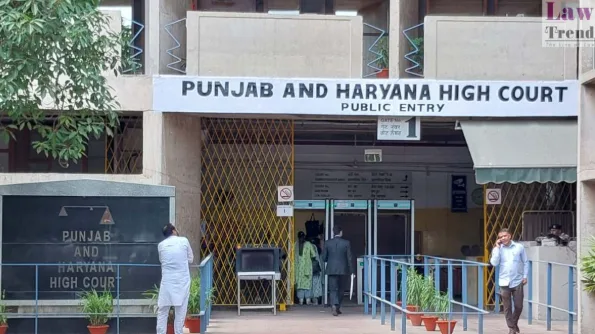
Punjab & Haryana High Court Flags Courtroom Shortage as Barrier to Appointment of Judges
The Punjab and Haryana High Court has raised serious concerns over the shortage of courtroom infrastructure, observing that the lack of adequate facilities is preventing it from recommending additional candidates for appointment as High Court judges.
A Bench comprising Chief Justice Ashwani Kumar Mishra and Justice Sanjiv Berry made these observations on November 27, 2026, while hearing a Public Interest Litigation (PIL) concerning inadequate infrastructure at the High Court.
85 Sanctioned Judges, Only 69 Courtrooms
The High Court has a sanctioned strength of 85 judges but currently has only 69 courtrooms. Some of these courtrooms are also being utilised by Permanent Lok Adalats and Mediation Centres, further reducing the space available for regular judicial proceedings.
The Bench highlighted that the existing infrastructure was insufficient to accommodate the required number of judges. It observed that the Court was unable to recommend additional names for judicial elevation because of the shortage of adequate courtroom facilities.
The Court also expressed concern over inadequate parking facilities and insufficient space for lawyers and essential administrative activities.
High Court Questions Bureaucratic Delays
After examining the minutes of a recent meeting chaired by the Union Home Secretary, the Court expressed dissatisfaction with the handling of the proposed infrastructure expansion.
The Bench emphasised that assessing the infrastructure requirements of the High Court was primarily the responsibility of the judiciary and not something for government authorities to determine independently.
The Court asked Additional Solicitor General Satya Pal Jain to personally meet the Union Home Secretary and communicate the urgency of the matter to the concerned officials.
Infrastructure Expansion Plan Under Consideration
The proposed holistic development plan envisages additional courtrooms, expanded parking facilities, administrative and judicial offices, and additional space for lawyers' chambers.
However, the expansion faces challenges because the existing High Court building forms part of the Chandigarh Capitol Complex, which has UNESCO World Heritage status. Consequently, the proposed development requires consideration of heritage-related restrictions and approvals.
The Union Government has asked the Chandigarh Administration to share the financial proposal with the governments of Punjab and Haryana. The Court clarified that the comprehensive development plan had originated with the High Court itself and did not require fresh consideration of its views.
Court Warns of Impact on Administration of Justice
The Bench stressed that the absence of adequate infrastructure could compromise the effective functioning of the High Court and ultimately affect the administration of justice.
The Court expressed hope that the Union Government would accord priority to the infrastructure requirements and ensure that the proposed development receives timely attention.
The matter, titled Vinod Dhattewal and Others v. Union of India and Others, is scheduled to be heard next on December 11, 2026.
Why This Matters
The observations highlight an important institutional concern: judicial vacancies cannot be addressed effectively without providing the physical infrastructure necessary for judges to discharge their responsibilities. Adequate courtrooms, administrative facilities and supporting infrastructure are essential to ensuring the efficient functioning of constitutional courts and protecting access to justice.