Published: 28 November 2026
A renewed debate over India's juvenile justice framework has emerged following observations made by the Kerala High Court suggesting that the legislature consider reducing the age of juvenility from 18 to 16 years. The remarks have triggered political discussion and a request by the Kerala Government to the Union Government to consider amending the Juvenile Justice (Care and Protection of Children) Act, 2015.
Understanding the Legal Distinction
The debate involves two distinct legal concepts: the minimum age of criminal responsibility and the age threshold for being treated as a child under the juvenile justice system. Under Sections 20 and 21 of the Bharatiya Nyaya Sanhita, 2023, children below seven years are exempt from criminal liability, while children between seven and twelve receive a qualified defence based on their maturity of understanding.
Separately, the Juvenile Justice (Care and Protection of Children) Act, 2015 generally treats individuals below 18 years as children in conflict with law. This does not grant them immunity from criminal responsibility. Instead, it establishes a specialised procedure, forum and rehabilitative framework for dealing with offences committed by children.
Existing Law Already Provides for Serious Offences
Section 15 of the Juvenile Justice Act, 2015 provides for a preliminary assessment when a child aged 16 to 18 is alleged to have committed a heinous offence. The Juvenile Justice Board examines the child's mental and physical capacity, ability to understand the consequences of the alleged offence and the circumstances in which it was committed.
Following this assessment, the Board may transfer the matter to the Children's Court under Section 18(3), which can independently determine whether the child should be tried as an adult under Section 19. Therefore, the existing framework already provides a mechanism for dealing with serious offences while retaining an individualised assessment.
Constitutional Concerns and Supreme Court Precedents
The proposed reduction raises questions concerning Articles 14 and 21 of the Constitution. A general reduction of the threshold to 16 could remove the individualised assessment currently available under the Act and expose all individuals aged 16 and 17 to ordinary criminal proceedings, irrespective of the nature of the offence or their individual maturity.
In Salil Bali v. Union of India (2013), the Supreme Court declined to reduce the age of juvenility, recognising the rehabilitative philosophy underlying juvenile justice legislation. Similarly, in Dr. Subramanian Swamy v. Raju (2014), the Court upheld the constitutional validity of the juvenile age classification.
International Obligations Under the UN Convention
India acceded to the United Nations Convention on the Rights of the Child in 1992. Article 1 defines a child as every human being below 18 years, while Articles 37 and 40 address protections against certain punishments and the requirement of a distinct juvenile justice framework focused on rehabilitation and reintegration.
The UN Committee on the Rights of the Child, through General Comment No. 24 (2019), has also emphasised the importance of maintaining child-sensitive justice systems and discouraging the transfer of children into adult criminal justice systems.
What Lies Ahead?
The debate highlights the need to strengthen the implementation of existing juvenile justice mechanisms rather than relying solely on harsher legal treatment. Better functioning Juvenile Justice Boards, qualified psychological assessments, improved observation homes, effective age verification and meaningful aftercare services remain important areas for reform.
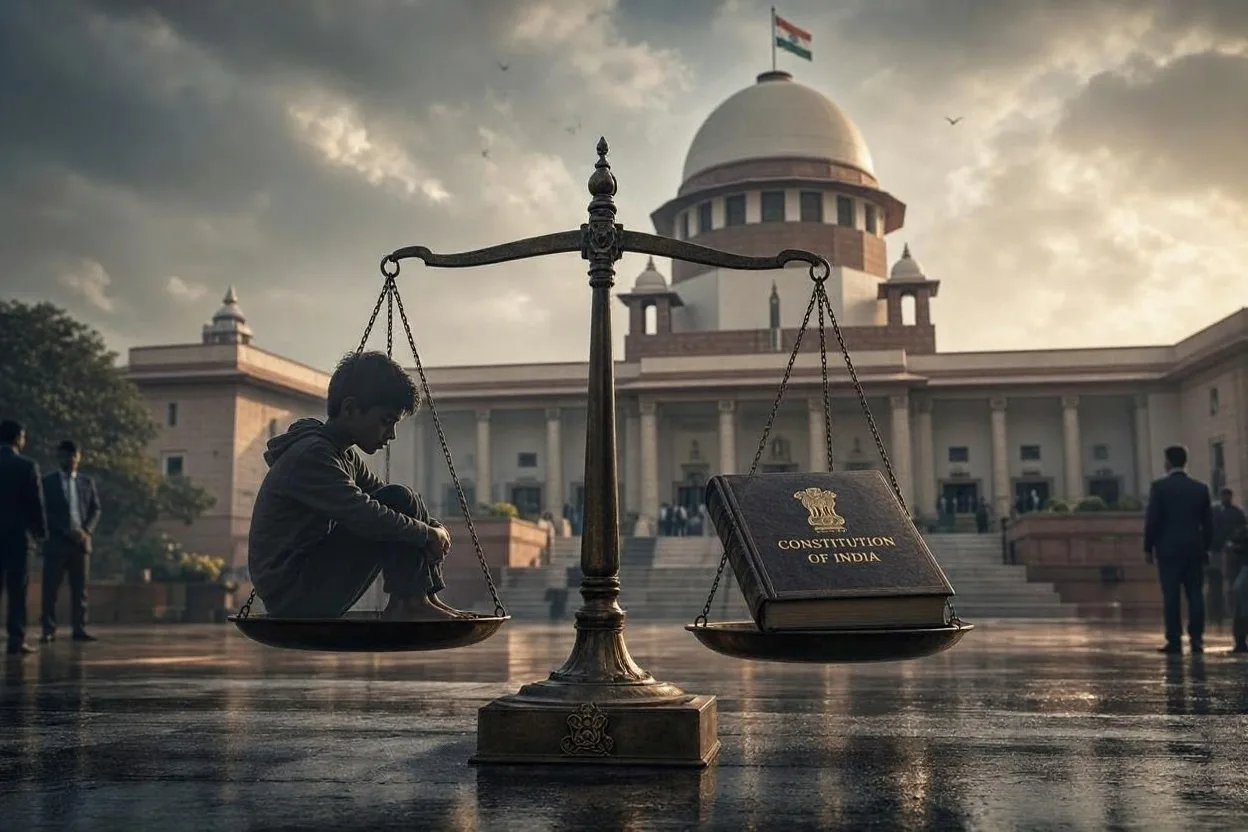
Ultimately, the controversy raises a fundamental question: should public outrage determine the boundaries of childhood, or should juvenile justice continue to be guided by constitutional protections, individual assessment and rehabilitation?
Source: Based on the legal analysis published by LiveLaw on 28 November 2026. The authors' views are their own.