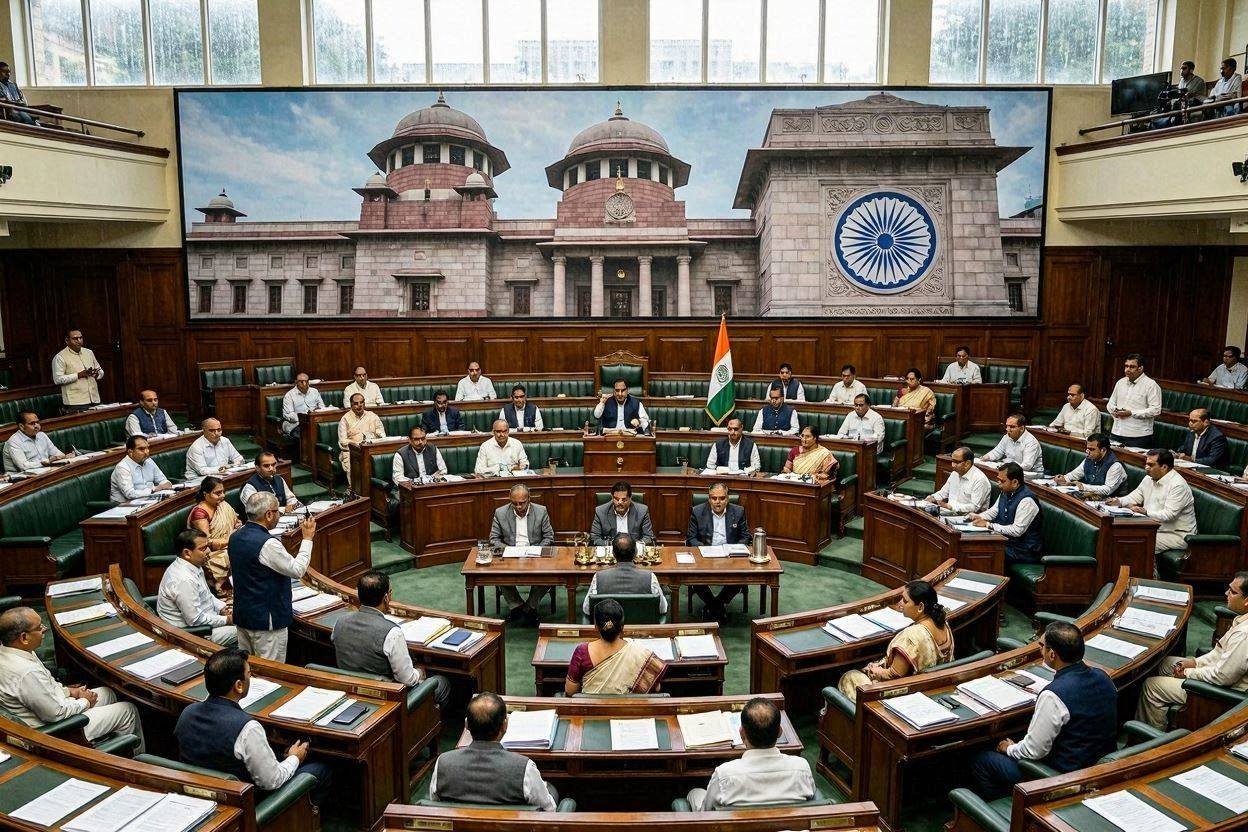
The Monsoon Session of Parliament, scheduled to commence on July 20, 2026, is expected to witness significant legislative activity with the Union Government listing several key Bills for introduction, consideration, and passage. The agenda reflects a broad push toward judicial efficiency, regulatory reform, economic modernization, and institutional governance.
One of the most notable proposals is the Supreme Court (Number of Judges) Amendment Bill, which seeks to increase the sanctioned strength of judges in the Supreme Court. The move is aimed at addressing mounting case backlogs and improving judicial efficiency.
The legislative agenda also includes the Foreign Contribution (Regulation) Amendment Bill, 2026, which proposes changes to the framework governing foreign contributions received by non-governmental organizations and other entities. The government has indicated that the amendments are intended to strengthen transparency and accountability in the management of foreign funds.
Another major proposal is the Income-tax (Amendment) Bill, 2026, which is expected to introduce reforms in India's taxation framework. Additionally, lawmakers are set to consider the MSME Development (Amendment) Bill, 2026, aimed at strengthening support mechanisms for micro, small, and medium enterprises.
The session agenda further includes amendments relating to the registration of births and deaths and proposals concerning higher education governance. Together, these measures demonstrate the government's focus on institutional reform and administrative modernization.
Political observers expect extensive debate in both Houses, particularly on issues relating to judicial capacity, regulatory oversight, economic policy, and federal governance. The session is likely to serve as an important platform for shaping India's legal and policy landscape for the coming years.
With several legal and constitutional issues expected to dominate discussions, the Monsoon Session is poised to be one of the most consequential parliamentary sittings of 2026.