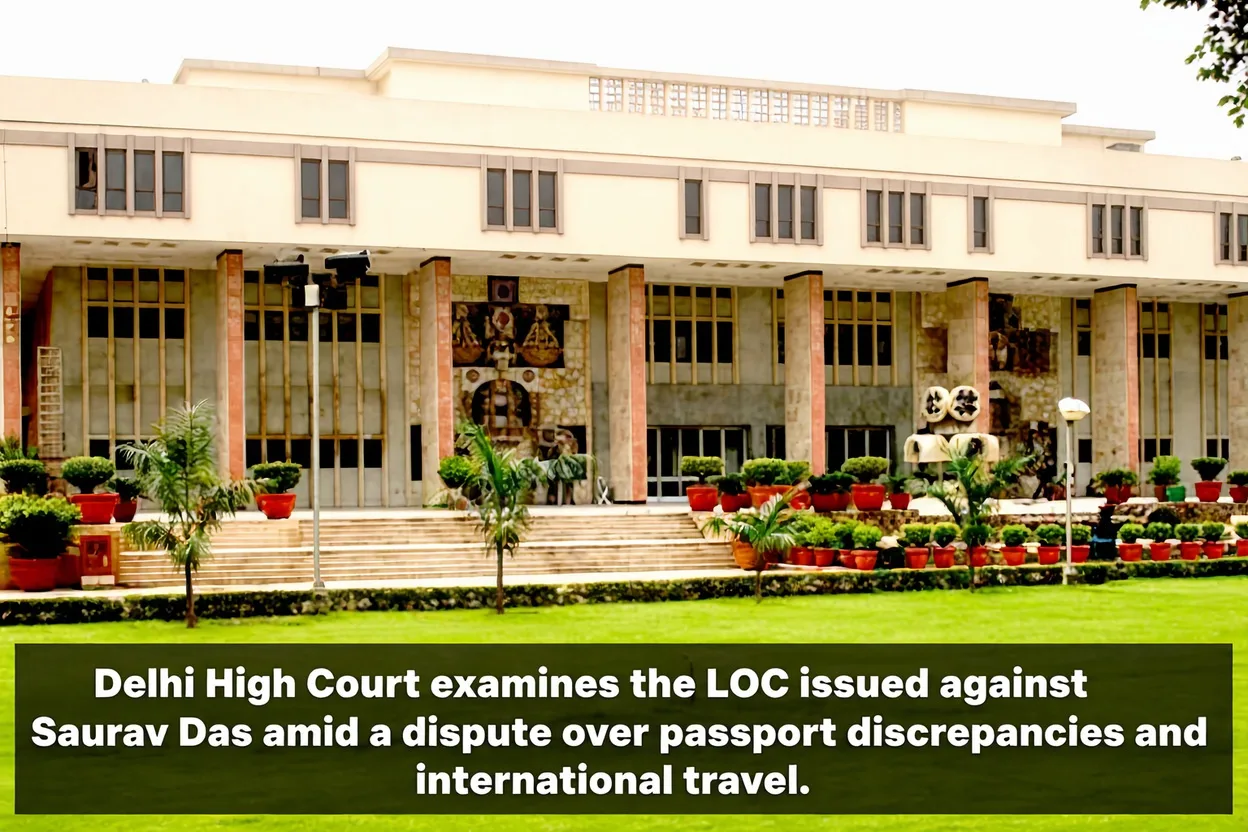
Look Out Circular Issued Against Saurav Das: Centre Informs Delhi High Court Amid Passport Dispute
The Union Government has informed the Delhi High Court that a Look Out Circular (LOC) was issued against Saurav Das, co-convener of the Cockroach Janata Party (CJP), at the request of Maharashtra Police. The disclosure came during proceedings initiated by Das after he was stopped from travelling to the United Kingdom.
The matter has raised important questions concerning the issuance of Look Out Circulars, passport verification procedures, procedural fairness and an individual's right to travel abroad.
Why Was Saurav Das Stopped at the Airport?
Das was stopped by immigration authorities at Delhi airport on November 24, 2026, while preparing to travel to the United Kingdom for a university engagement. He alleged that he was prevented from boarding his flight without being shown a formal order restricting his travel.
The controversy followed a show-cause notice issued by the Regional Passport Office in Chennai on November 23, 2026. The notice reportedly sought an explanation regarding discrepancies in his passport records, particularly concerning his place of birth and other personal particulars.
Centre Confirms Look Out Circular Before Delhi High Court
During the hearing on November 26, the Centre informed Justice Amit Mahajan of the Delhi High Court that Maharashtra Police had issued a Look Out Circular against Das during the intervening night of November 22 and 23.
Additional Solicitor General Chetan Sharma, appearing for the Centre, submitted that an inquiry had raised questions regarding discrepancies in Das's schooling records, residential address and parentage. The government argued that these discrepancies could also have implications for determining his Indian citizenship.
The Centre maintained that the LOC had been issued at the request of Maharashtra Police and contended that Das would have to challenge the circular before the appropriate forum.
What Did Saurav Das Argue?
Representing Das, Senior Advocate Akhil Sibal questioned how authorities could prevent a citizen from travelling abroad without informing him about the existence or grounds of an LOC.
His counsel sought disclosure of the circular and the reasons behind its issuance, arguing that the individual concerned should have access to an effective legal remedy against such restrictions.
The petition also raised concerns regarding the timing of the show-cause notice and the travel advisory, which were reportedly issued shortly before his scheduled departure.
Government's Stand on Passport Discrepancies
The Centre referred to an inquiry initiated following inputs received from law-enforcement authorities. It highlighted alleged inconsistencies in Das's passport-related records, including his place of birth, residential address and details concerning his parentage.
The government also stated that a show-cause notice had been issued by the Regional Passport Office, Chennai, giving Das an opportunity to explain the discrepancies. He was advised not to use the passport until the issue was addressed.
However, the existence of a show-cause notice does not itself amount to a final order cancelling or impounding a passport.
What Is a Look Out Circular?
A Look Out Circular is an administrative mechanism used by law-enforcement and other authorised agencies to alert immigration authorities about a person whose movement across international borders requires monitoring or action in accordance with the applicable directions.
Depending on the instructions contained in the LOC, immigration authorities may take specified action, including preventing a person from leaving the country. Its issuance and operation must comply with the applicable government guidelines and legal requirements.
What Happens Next?
The Delhi High Court issued notices to the Centre, the Ministry of Home Affairs and the concerned authorities, seeking their responses to Das's petition. The matter has been listed for further hearing on December 9, 2026.
As of November 26, the Court had not delivered a final ruling on the legality of the LOC or the passport-related allegations. The dispute therefore remains pending.
Legal Significance
The proceedings bring attention to the relationship between immigration restrictions, passport regulation and the fundamental right to travel abroad, which has been recognised as part of the right to personal liberty under Article 21 of the Constitution of India.
The case may also raise important questions about transparency, communication of administrative restrictions and access to judicial remedies when an individual is prevented from travelling overseas.
The next hearing on December 9 is expected to bring further clarity regarding the government's position and the legal challenge to the travel restriction.