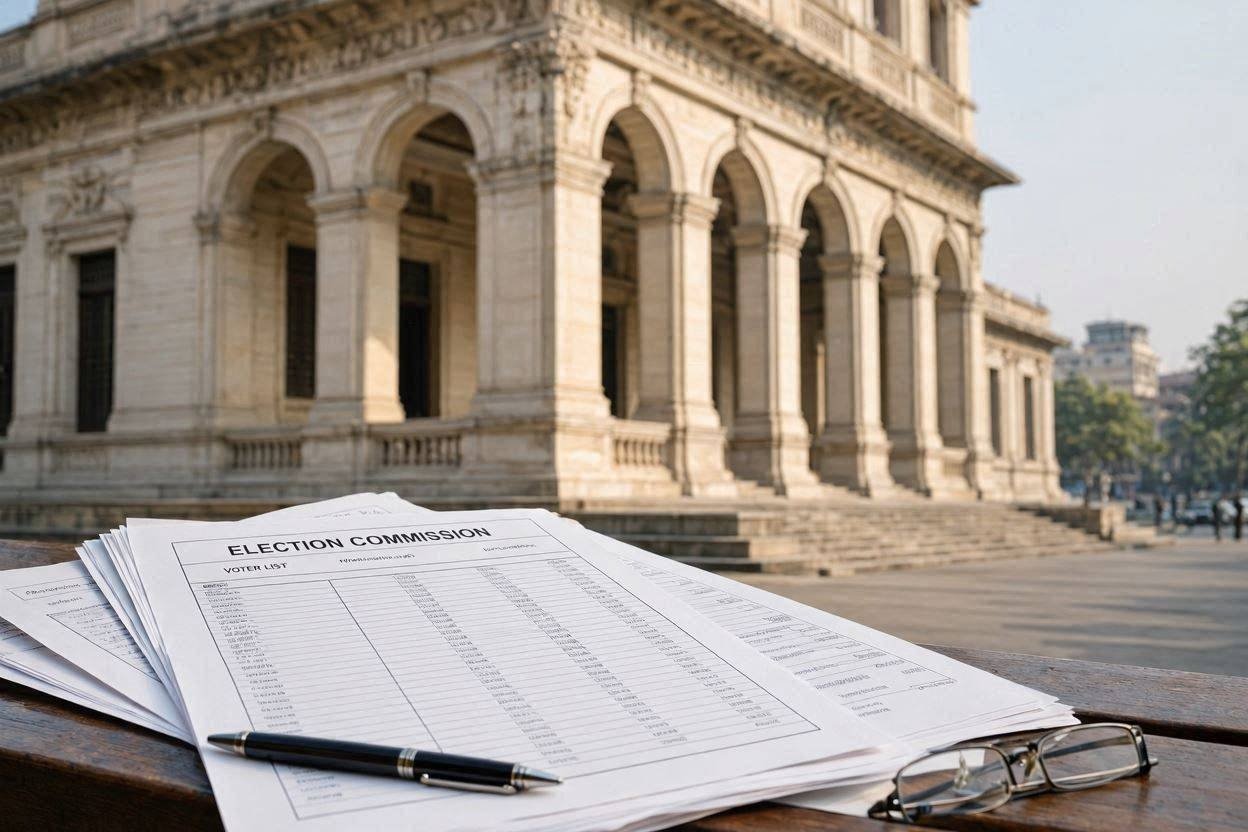
The Karnataka High Court has sought clarification on the scope and applicability of directions issued by the Supreme Court while hearing a Public Interest Litigation (PIL) challenging the ongoing Special Intensive Revision (SIR) of electoral rolls in the State.
The PIL alleges that approximately 67 lakh voters have been categorized under classifications such as "Absent", "Shifted", "Dead", and other categories that may lead to deletion of their names from electoral rolls without adequate notice or opportunity to be heard.
The petitioners argued that the exercise risks disenfranchising genuine voters and undermining the constitutional right to participate in the democratic process. According to the PIL, large-scale deletions without proper verification could adversely affect eligible electors and compromise the integrity of electoral rolls.
During the hearing, the Karnataka High Court sought clarification regarding earlier directions issued by the Supreme Court concerning voter-list revisions and safeguards available to affected voters. The Court examined whether the present electoral revision exercise complies with the procedural protections envisioned by the apex court.
The matter assumes significance in light of ongoing nationwide efforts by the Election Commission of India to update electoral rolls through Special Intensive Revision exercises aimed at identifying duplicate, deceased, shifted, or otherwise ineligible voters.
The Election Commission has maintained that electoral roll revisions are necessary to ensure accuracy and integrity of voter databases. However, the petitioners contend that the process must be conducted transparently and in a manner that protects legitimate voters from wrongful exclusion.
The High Court has not expressed any final opinion on the merits of the allegations and has sought further clarification before proceeding with the matter. The case is expected to have wider implications for electoral administration, voter rights, and judicial oversight of electoral roll revision exercises.
The matter remains pending before the Karnataka High Court.