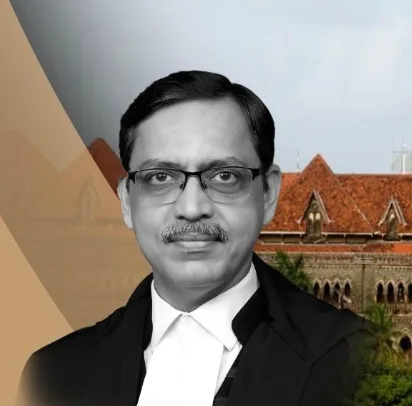
Justice Manish Pitale Calls for Institutional and Cultural Reforms to Make India a Preferred Arbitration Seat
India is yet to establish itself as one of the preferred seats for international commercial arbitration, and a significant cultural shift across the judiciary and the legal profession is necessary to change this position, Bombay High Court Justice Manish Pitale observed.
Delivering a special address at the ICC India Arbitration Conference 2026, held in Mumbai on October 31, 2026, Justice Pitale emphasised that India's ambition to become a leading international arbitration hub requires more than legislative amendments. It requires coordinated efforts from the judiciary, legislature, arbitration practitioners and institutions.
Judicial Specialisation and Limited Court Intervention
Tracing the evolution of Indian arbitration law, Justice Pitale discussed the transition from the interventionist approach under the Arbitration Act, 1940, to the framework established under the Arbitration and Conciliation Act, 1996.
Referring to judicial developments, including Bhatia International v. Bulk Trading S.A. (2002) and Bharat Aluminium Co. v. Kaiser Aluminium Technical Service, Inc. (2012), he explained how judicial interpretation and subsequent legislative amendments have shaped India's arbitration regime.
He highlighted the importance of judicial specialisation, particularly in proceedings challenging arbitral awards under Section 34 of the Arbitration and Conciliation Act, 1996. According to him, judges accustomed to ordinary appellate civil proceedings may sometimes approach arbitration challenges with an appellate mindset, despite the limited scope of judicial interference contemplated under the law.
He welcomed the development of specialised commercial divisions and greater judicial exposure to arbitration matters.
Need for a Dedicated Arbitration Bar
Justice Pitale also emphasised the importance of developing a specialised arbitration Bar. He questioned the practice of treating arbitration as a part-time or post-court-hours professional activity, observing that complex commercial disputes require dedicated expertise and experienced legal professionals.
He stressed that a stronger arbitration profession, supported by trained practitioners and institutional mechanisms, would contribute to greater confidence in India's dispute resolution framework.
Harmonising Domestic Law with International Standards
Addressing the relationship between domestic public policy and international arbitration, Justice Pitale discussed the challenges arising from differences in legal standards governing the enforcement and setting aside of arbitral awards.
He referred to the Fifth and Seventh Schedules of the Arbitration and Conciliation Act, 1996, which address disclosures, independence and impartiality of arbitrators. He also discussed the relevance of the 2014 IBA Guidelines on Conflicts of Interest in International Arbitration.
He highlighted potential ethical concerns arising from double-hatting, where professionals perform multiple roles as counsel, arbitrators or expert witnesses in different proceedings. He emphasised the need for appropriate ethical standards to preserve the integrity and credibility of arbitration.
Standardisation of Monetary Remedies and Digital Asset Recovery
Justice Pitale also discussed the technical sessions at the conference concerning monetary remedies and the recovery of digital assets.
He suggested that commonly applicable principles relating to compensation, restitution, interest and costs could be organised into standardised frameworks or reference modules. Such frameworks could help reduce disputes concerning monetary relief and improve efficiency in arbitral proceedings.
On digital assets, he highlighted the difficulties associated with identifying, tracing and recovering cryptocurrencies and other digital property. He referred to developments in jurisdictions such as the United Kingdom and Singapore, as well as the Madras High Court's consideration of cryptocurrency as property in Ruti Kumari v. Zanmai, Original Application No. 194 of 2025.
India's Position as an International Arbitration Destination
Concluding his address, Justice Pitale highlighted the importance of collective institutional responsibility. He referred to an instance involving two Indian parties who had selected Singapore as the seat of arbitration, raising questions about why domestic commercial entities continue to choose foreign jurisdictions for resolving disputes.
He emphasised that the judiciary, legislature and Bar must work together to create an arbitration-friendly environment that inspires confidence among domestic and international commercial parties.
His observations underline that India's emergence as a preferred international arbitration seat depends not merely on statutory reforms but also on judicial consistency, professional expertise, ethical standards and institutional confidence.