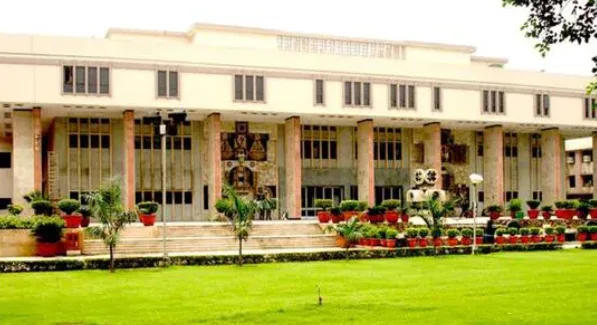
Delhi High Court Sets Aside Mohalla Clinic Arbitration Award Over Unilateral Appointment of Arbitrator
New Delhi, October 31, 2026: The Delhi High Court has set aside an arbitral award arising from a contractual dispute concerning the construction of Aam Aadmi Mohalla Clinics in Delhi. The Court held that the unilateral appointment of a sole arbitrator by the Public Works Department (PWD) was invalid in the absence of an express written waiver under Section 12(5) of the Arbitration and Conciliation Act, 1996.
A Division Bench comprising Justice Anil Kshetarpal and Justice Bharat Parashar delivered the judgment on October 31, 2026, in Government of NCT of Delhi v. M/s. Ram Krishan Yudhister Prakash. The Bench set aside the arbitral award dated January 20, 2025, as well as the Commercial Court's judgment dated May 8, 2026, which had rejected the government's challenge to the award.
Background of the Dispute
The dispute arose from a contract awarded by the Public Works Department for the construction of Aam Aadmi Mohalla Clinics at various locations in Delhi. The agreed contract value was approximately Rs. 2.96 crore. Following the completion of the work, the contractor raised monetary claims relating to escalation, additional work, watch and ward expenses, and expenditure incurred during the extended contract period.
On October 18, 2023, the PWD appointed its retired Principal Chief Engineer, Avendra Kumar Garg, as the sole arbitrator under the contractual arbitration clause. The government participated in the arbitration proceedings by filing its defence and counterclaim. However, after the award was passed in favour of the contractor, the government challenged it before the Commercial Court.
High Court's Findings on Unilateral Appointment
The principal issue before the High Court concerned the validity of appointing a sole arbitrator unilaterally and whether participation in arbitration proceedings could amount to a waiver of the statutory restriction under Section 12(5) of the Arbitration and Conciliation Act, 1996.
Section 12(5), read with the Seventh Schedule of the Act, renders certain persons ineligible to act as arbitrators because of circumstances that may give rise to justifiable doubts regarding their independence or impartiality. The proviso to this provision permits parties to waive the restriction only through an express agreement in writing, entered into after disputes have arisen between them.
The Division Bench found that there was no material on record establishing that the parties had entered into such an express post-dispute written agreement. Merely participating in arbitration proceedings, filing a defence or counterclaim, or failing to object before the arbitrator could not substitute the statutory requirement of an express waiver.
Even the Appointing Party Can Challenge the Appointment
An important aspect of the ruling is the Court's clarification that a party which itself appointed the arbitrator is not automatically barred from subsequently challenging the appointment on the ground of statutory ineligibility.
The Court observed that an objection concerning the inherent jurisdiction of an arbitral tribunal may be raised even at the stage of challenging the arbitral award. The act of making a unilateral appointment does not, by itself, constitute the express written waiver required under the proviso to Section 12(5).
The Bench also relied on the legal principles discussed in earlier decisions, including Bharat Broadband Network Limited v. United Telecoms Limited and the Delhi High Court's ruling in M/s. Ahluwalia Contracts (India) Limited v. Airports Authority of India.
Final Decision
Holding that the unilateral appointment was invalid in the absence of the mandatory written waiver, the Delhi High Court set aside the arbitral award dated January 20, 2025, along with the Commercial Court's judgment dated May 8, 2026. The appeal filed by the Government of NCT of Delhi was allowed, with no order as to costs.
The Court did not adjudicate the merits of the contractor's individual monetary claims, as the matter was disposed of on the issue concerning the validity of the arbitral tribunal's constitution.
Legal Significance
The ruling reinforces the importance of impartiality and independence in arbitration proceedings. It reiterates that statutory safeguards governing the appointment of arbitrators cannot be bypassed merely through participation in proceedings or conduct of the parties. An express written waiver, executed after disputes have arisen, remains essential under Section 12(5) of the Arbitration and Conciliation Act, 1996.
Case: Government of NCT of Delhi v. M/s. Ram Krishan Yudhister Prakash
Court: Delhi High Court
Bench: Justice Anil Kshetarpal and Justice Bharat Parashar
Case Number: FAO (COMM) 198/2026
Decision Date: October 31, 2026