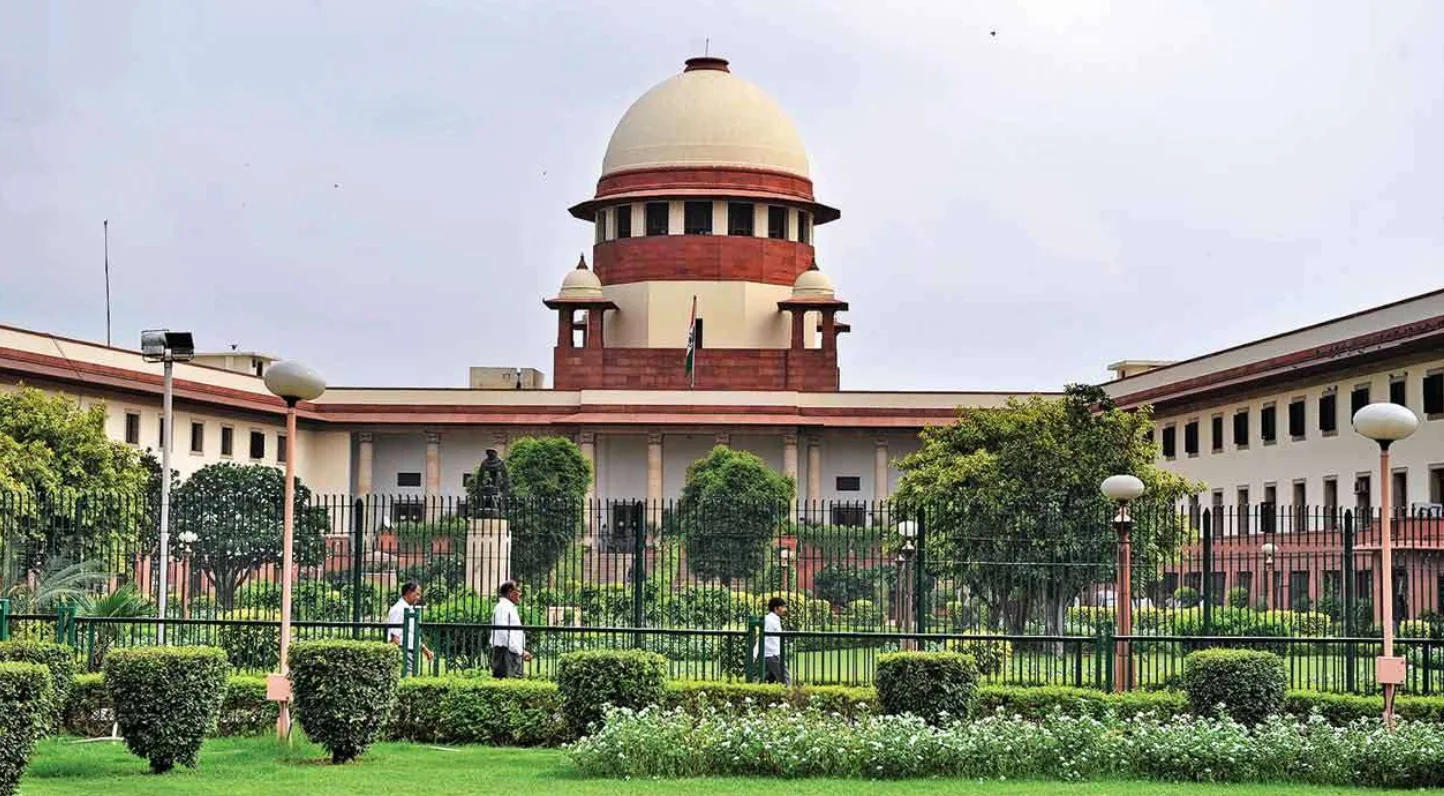
Supreme Court Asks Law Commission to Examine Delays in Enforcing Arbitral Awards
New Delhi, October 28, 2026: The Supreme Court of India has requested the Law Commission of India to examine the legal and procedural framework governing the enforcement of arbitral awards and recommend measures to ensure their timely execution. The Court expressed concern that prolonged litigation after an arbitration award can undermine the effectiveness of arbitration as an alternative dispute resolution mechanism.
A three-judge Bench comprising Justices Vikram Nath, Sandeep Mehta and Aparesh Kumar Singh made the observation while dealing with a dispute involving Royal Construction Company Private Limited and National Projects Construction Corporation. The matter arose from an arbitral award dated August 10, 2002, and enforcement proceedings that continued for more than two decades.
Supreme Court Highlights Delays in Award Enforcement
The Court observed that the effectiveness of arbitration cannot be measured solely by the time taken to deliver an award or the limited grounds available to challenge it. The ability of the successful party to obtain the benefit of the award within a reasonable period is equally important.
The Bench emphasised that a party should not be compelled to undergo another prolonged course of litigation merely to enforce an award after completing the arbitration process.
Section 36 of the Arbitration and Conciliation Act, 1996
Section 36 of the Arbitration and Conciliation Act, 1996, provides for the enforcement of arbitral awards in the same manner as court decrees, subject to the applicable statutory requirements. Consequently, execution proceedings may involve the ordinary procedures under the Code of Civil Procedure, 1908.
The Supreme Court identified several matters requiring closer examination, including the identification and disclosure of the award-debtor's assets, coordination between different methods of execution, the disposal of repetitive or dilatory objections, and the time required to complete enforcement proceedings.
Law Commission Asked to Consider Possible Reforms
The Court requested the Law Commission to identify practical obstacles to timely recovery, examine enforcement practices in other jurisdictions, and consider whether domestic and foreign arbitral awards should follow separate procedures or a common framework with appropriate safeguards.
The Commission may recommend legislative or procedural changes that it considers necessary to strengthen the enforcement framework and advance the objectives of the Arbitration and Conciliation Act, 1996.
Dispute Must Continue Before the Competent Executing Court
In the underlying dispute, the Supreme Court also clarified that its earlier consideration of a specific question of law did not authorise it to supervise continuing execution proceedings or decide every factual dispute concerning payments and adjustments. Such issues must be raised before the competent executing court in accordance with law.
The Court directed its Registry to forward a copy of the judgment to the Chairman of the Law Commission of India. The request for a study does not, by itself, amend the existing law or establish a new statutory deadline for enforcement.
Significance of the Development
The development could have implications for businesses, infrastructure companies, investors and other parties relying on arbitration to resolve commercial disputes. Any recommendations arising from the Law Commission's examination may inform future reforms aimed at making arbitral awards more effective in practice.
Source: Supreme Court proceedings as reported by Bar & Bench and LiveLaw on October 28, 2026.