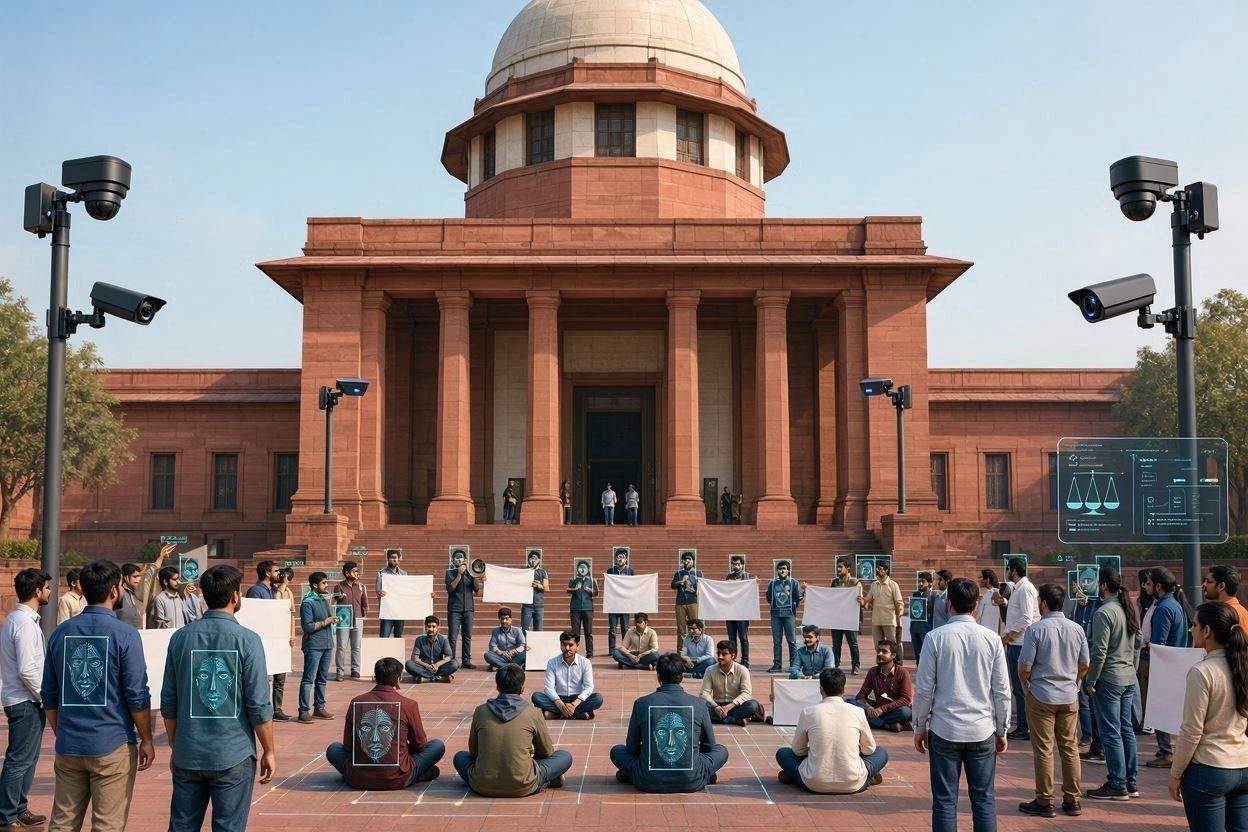
New Delhi: The Delhi High Court is examining a significant constitutional challenge concerning the use of artificial intelligence-powered surveillance systems during recent student-led protests against examination irregularities and paper leaks.
The petition, filed by student activists and supported by digital rights advocates, questions the legality of facial recognition technology, AI-enabled monitoring systems, and biometric data collection allegedly deployed by authorities during demonstrations held at Jantar Mantar and other locations in the national capital.
According to the petitioners, the surveillance measures amounted to mass monitoring of peaceful protesters and created a chilling effect on the exercise of fundamental rights guaranteed under Articles 19 and 21 of the Constitution. The plea seeks a declaration that indiscriminate facial recognition and AI-driven surveillance of protesters are unconstitutional in the absence of a comprehensive statutory framework.
The petition further requests deletion of personal and biometric data allegedly collected during the protests and calls for judicially enforceable guidelines governing the use of emerging surveillance technologies by law-enforcement agencies.
During the proceedings, concerns were raised regarding proportionality, transparency, accountability, and safeguards against misuse of facial recognition systems. Petitioners argued that individuals participating in peaceful demonstrations should not be subjected to blanket surveillance without adequate legal authorization.
The Union Government and Delhi Police defended the surveillance measures, contending that videography and monitoring were undertaken solely to maintain public order and ensure security during large-scale demonstrations. Government representatives maintained that the measures were not intended to infringe privacy rights but were necessary for law-enforcement purposes.
The controversy gained prominence after reports emerged that AI-enabled surveillance systems were used to identify participants and track crowd movements during student protests. Civil liberties organizations have expressed concerns regarding the absence of a dedicated legal framework regulating facial recognition technologies in India.
The case is expected to have far-reaching implications for the future regulation of AI-powered surveillance, facial recognition systems, digital privacy rights, and the permissible limits of state monitoring in public spaces. Legal experts believe the outcome may contribute significantly to India's evolving jurisprudence on privacy and technology governance.
The matter remains pending before the Delhi High Court.