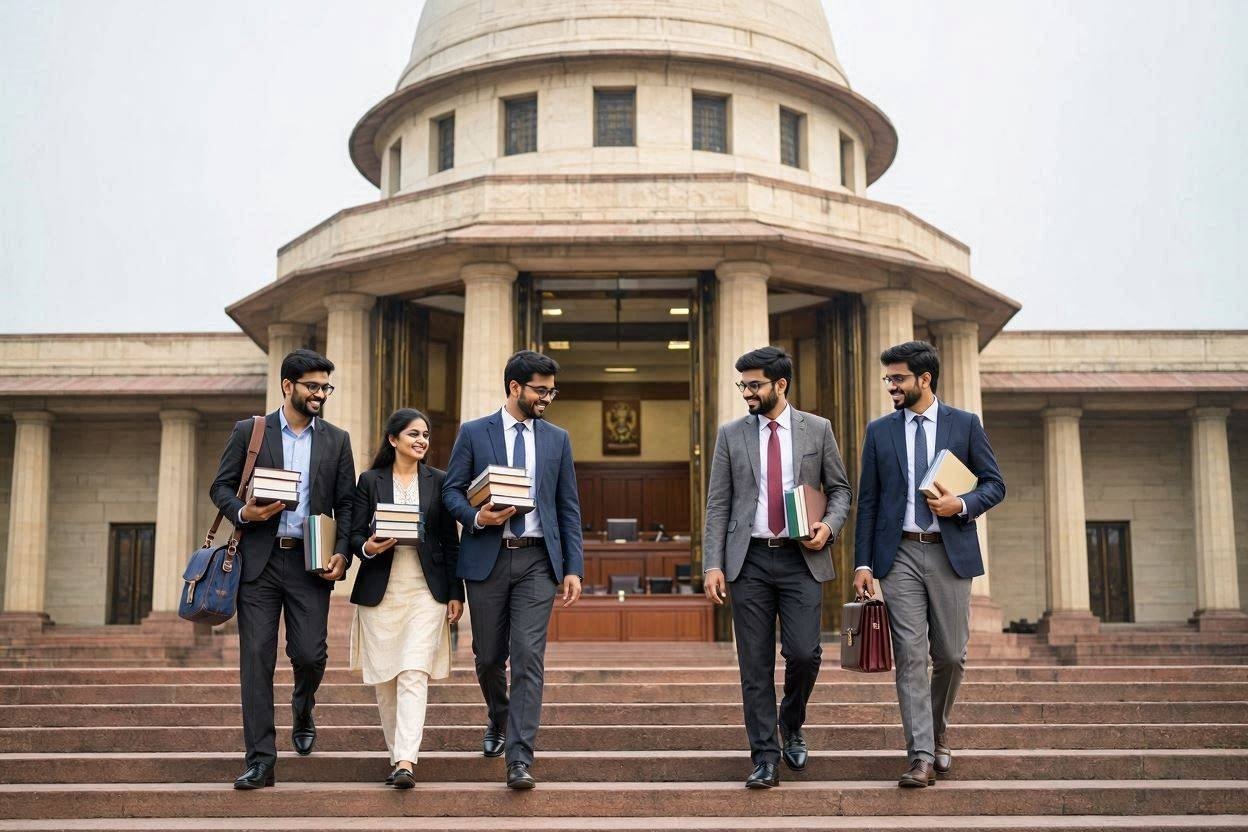
The Supreme Court of India has granted significant relief to law students affected by attendance shortages by permitting eligible students to appear in their final and supplementary examinations for the ongoing academic session.
The decision was delivered in a batch of matters led by Prakruthi Jain v. Bar Council of India, addressing the confusion created by judicial proceedings concerning mandatory attendance requirements in law colleges.
The dispute traces its origins to a Delhi High Court judgment that held law students should not be barred from examinations solely due to attendance shortages. Subsequently, the Bar Council of India challenged the ruling before the Supreme Court, which stayed portions of the High Court's decision.
Recognising the uncertainty faced by students during the pendency of the litigation, the Supreme Court observed that students whose academic sessions were already underway should not be made to suffer irreparable academic consequences. The Court therefore granted a one-time relaxation, allowing such students to sit for examinations despite attendance deficiencies.
At the same time, the Court clarified that the relief was limited to students covered by the ongoing academic session and should not be treated as a blanket dilution of attendance requirements prescribed by the Bar Council of India.
The ruling attempts to balance the need for maintaining academic standards in legal education with the principles of fairness and equity for students caught in regulatory uncertainty.
The judgment is expected to benefit numerous law students across the country who were facing the prospect of losing an academic year because of attendance-related disputes.