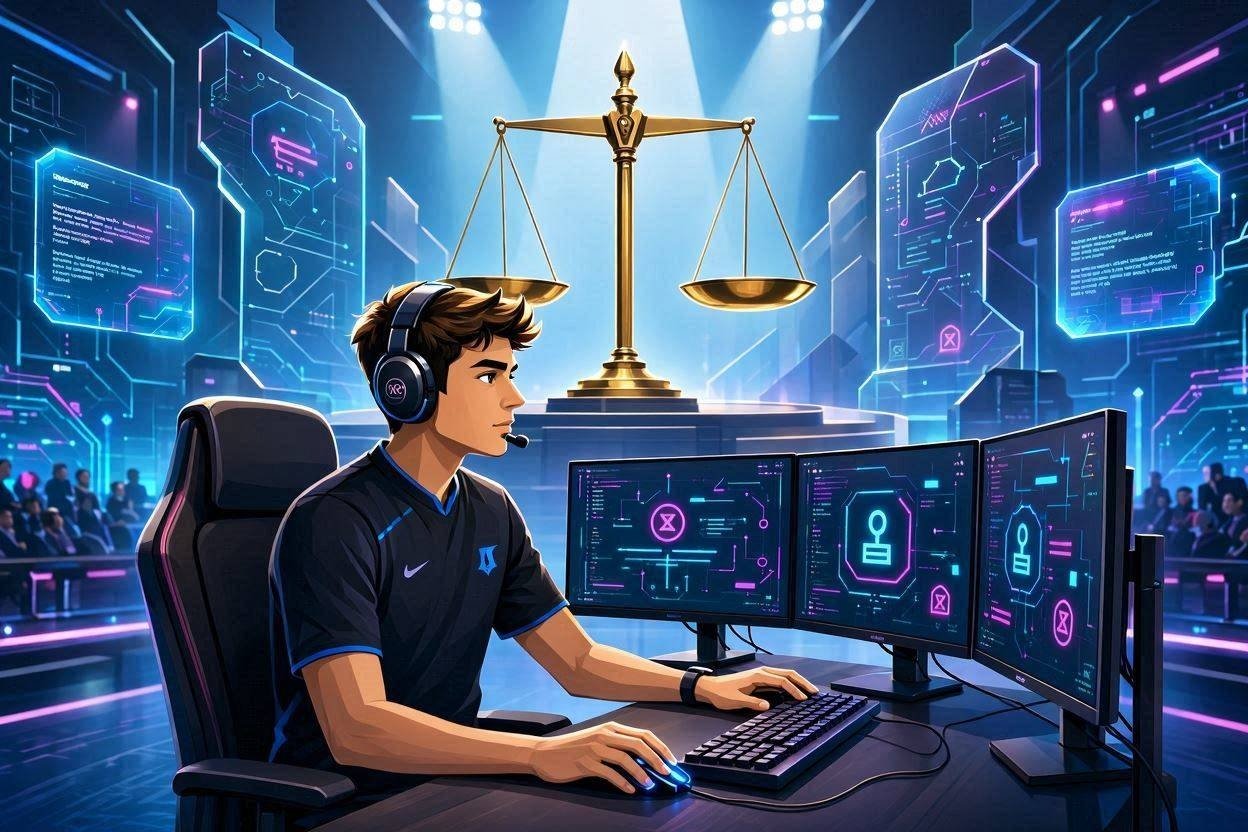
India's esports industry has emerged as one of the fastest-growing segments of the digital economy, attracting millions of players, viewers, sponsors, and investors. Yet a fundamental legal question remains unresolved: who truly owns the gameplay that fuels the esports ecosystem?
Unlike traditional sports, esports competitions occur entirely within proprietary digital environments created and controlled by game publishers. Publishers own the copyright in the game's software, characters, maps, graphics, and audiovisual elements. This ownership grants them extensive authority over tournaments, broadcasts, commercial exploitation, and licensing arrangements.
At the same time, professional esports players contribute skill, strategy, creativity, and performance that transform ordinary gameplay into competitive entertainment. Their efforts generate viewership, sponsorship revenue, and brand value. This raises an important question: should esports players enjoy rights comparable to performers under Indian copyright law?
Publisher Copyright Dominance
Under copyright principles, creators of original works enjoy exclusive rights over reproduction, distribution, communication to the public, and commercial exploitation. In esports, game publishers retain control over the underlying game and often determine who may organize tournaments, stream gameplay, or monetize competitive events.
This distinguishes esports from traditional sports such as cricket or football, where no private entity owns the rules of the game itself. In esports, the playing field is copyrighted intellectual property.
Can Esports Players Claim Performers' Rights?
Indian copyright law recognizes performers' rights for actors, singers, musicians, dancers, and other individuals who deliver performances. These rights protect certain economic and moral interests connected with performances.
However, esports players do not fit neatly within existing statutory definitions. While their gameplay is undoubtedly a skilled performance, the law was drafted long before competitive gaming emerged as a major industry. Consequently, uncertainty exists regarding whether esports athletes can claim independent rights over recorded gameplay, live broadcasts, or commercial exploitation of their performances.
The Emerging Conflict
The conflict becomes more apparent when gameplay recordings, tournament broadcasts, highlights, and content creation generate significant revenue. Publishers may argue that all gameplay remains derivative of their copyrighted work. Players, meanwhile, may contend that their individual skill, strategy, and in-game decision-making create unique performances deserving legal recognition.
As esports evolves into a professionalized industry, these competing interests are likely to generate disputes involving tournament organizers, streaming platforms, teams, sponsors, and players.
Need for Regulatory Clarity
India currently lacks a dedicated esports intellectual property framework. Existing copyright provisions, performers' rights doctrines, and contractual arrangements provide only partial solutions. Legal scholars increasingly argue that policymakers must address ownership questions before disputes become more frequent and commercially significant.
A future regulatory framework could clarify the scope of publisher control, player rights, licensing structures, broadcasting arrangements, and revenue-sharing mechanisms. Such reforms would enhance legal certainty and support sustainable growth within India's expanding esports ecosystem.
Conclusion
The debate over who owns esports gameplay reflects a broader challenge at the intersection of intellectual property, technology, and entertainment law. Until Indian law explicitly addresses the relationship between publisher copyright and player performance, ownership of competitive gameplay will remain one of the most important unresolved questions in esports regulation.