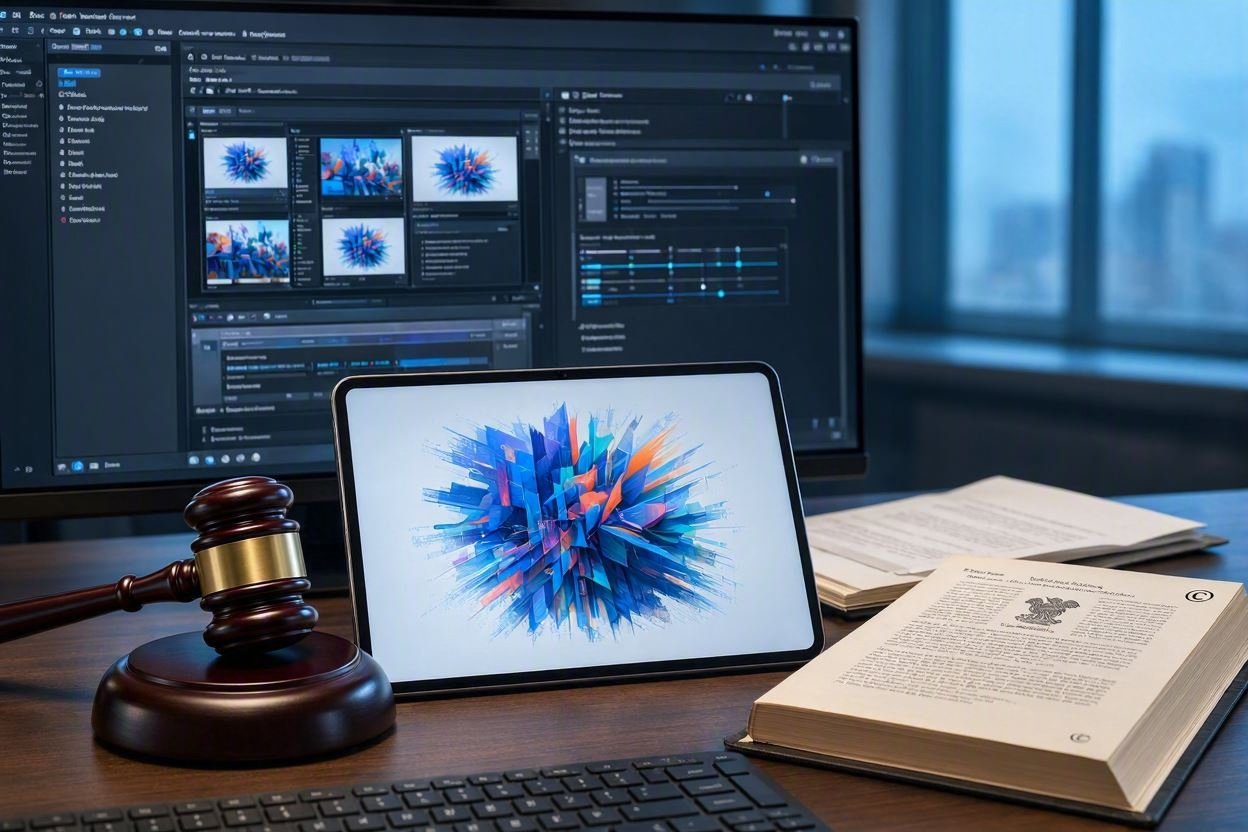
The Indian Copyright Office has reiterated a significant principle in the evolving intersection of artificial intelligence and intellectual property law: while AI-assisted creations may be eligible for copyright protection, an artificial intelligence system cannot be recognized as an author under Indian law.
The clarification came while examining a copyright application that identified the AI system "DABUS" as the author of a creative work. The application was ultimately rejected after the applicant declined to amend the authorship details. The Copyright Office emphasized that copyright protection is rooted in human authorship and that an AI system lacks legal personality required for recognition as an author.
The development is important as generative AI tools are increasingly being used to create literary, artistic, musical, and other creative works. The Office's position indicates that copyright eligibility may still be available where a human exercises meaningful creative control, direction, selection, or arrangement in the final output.
The decision aligns with emerging global trends where copyright authorities and courts have generally refused to recognize AI systems as authors. However, jurisdictions continue to examine the extent to which human involvement in AI-assisted works can support copyright protection.
In India, the Copyright Act, 1957 recognizes authors in relation to different categories of works and generally presupposes human authorship. The latest clarification is expected to influence future copyright filings involving generative AI technologies and provide guidance to creators, technology companies, and policymakers navigating AI-generated content.
The issue remains part of a broader legal debate regarding ownership, originality, and protection of AI-generated content. As AI adoption expands across industries, lawmakers and regulators may face increasing pressure to develop more specific legal frameworks governing AI-assisted creativity.